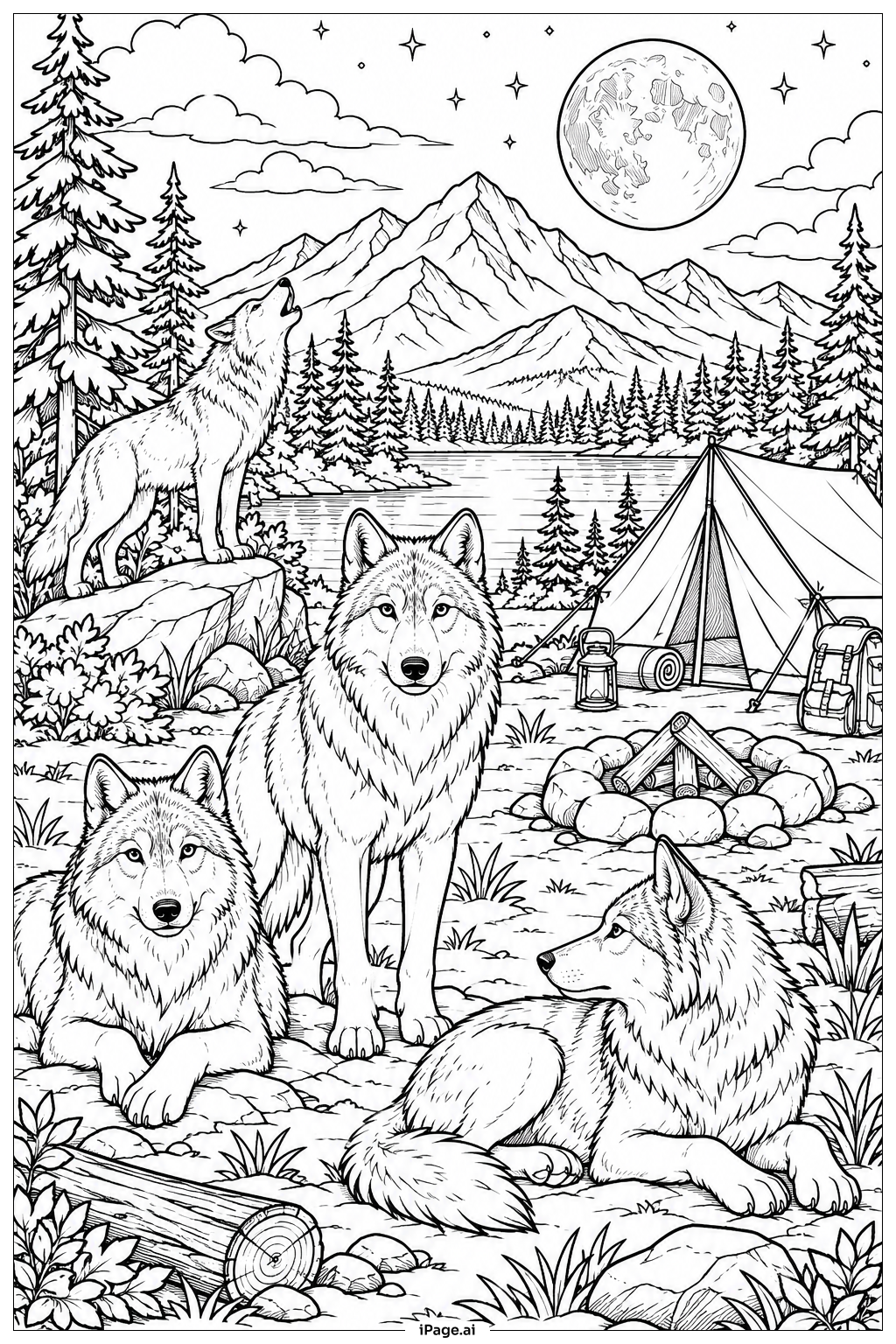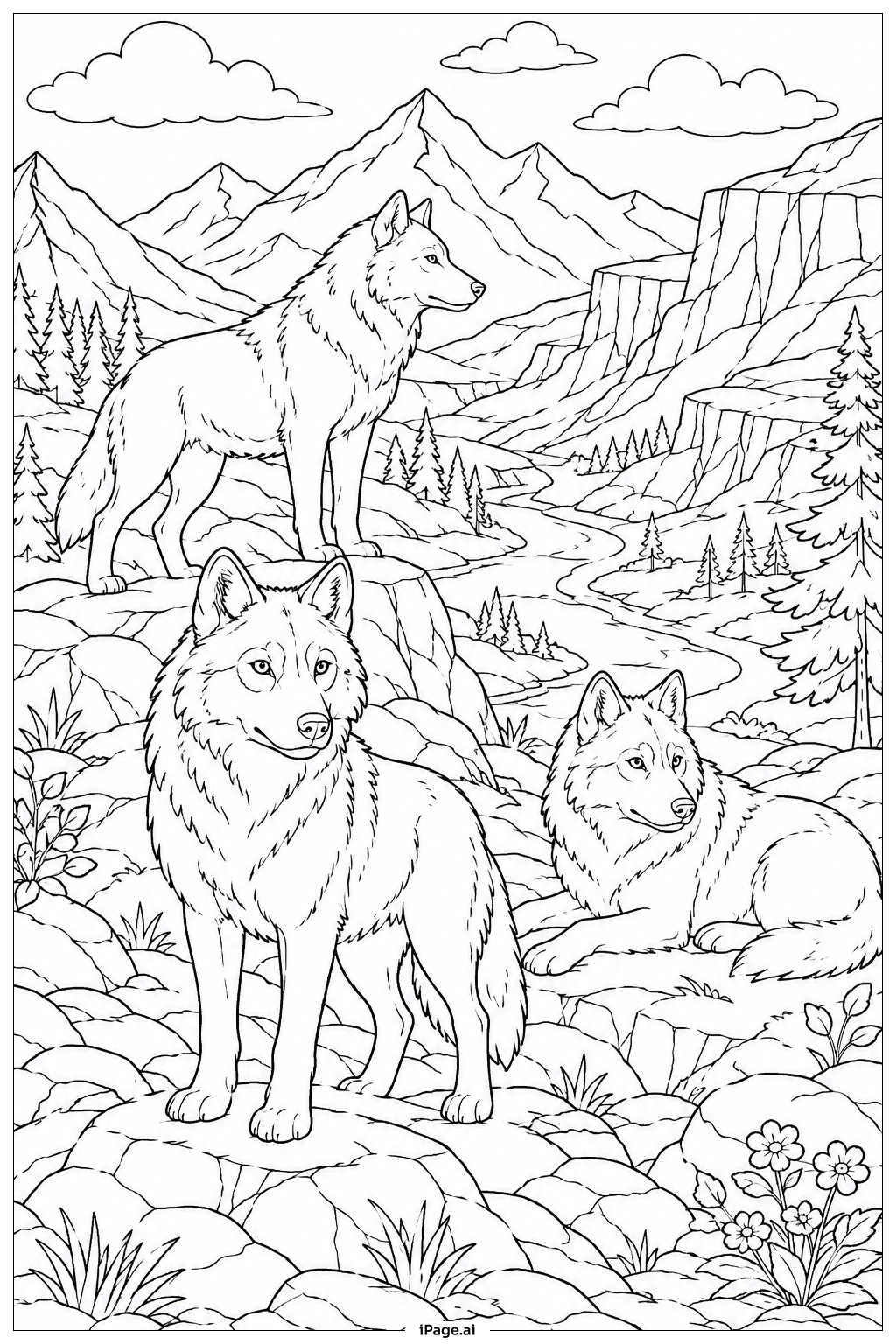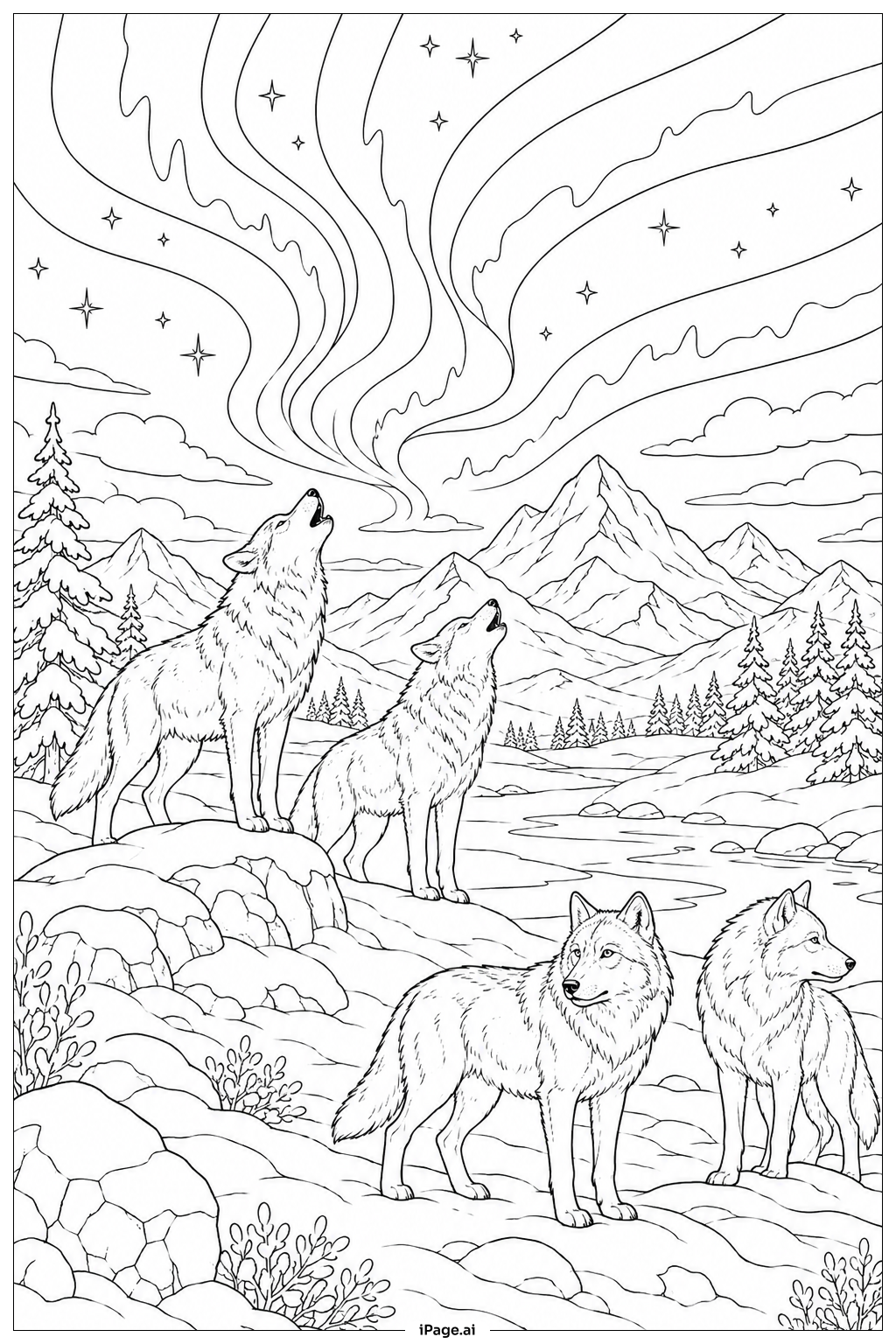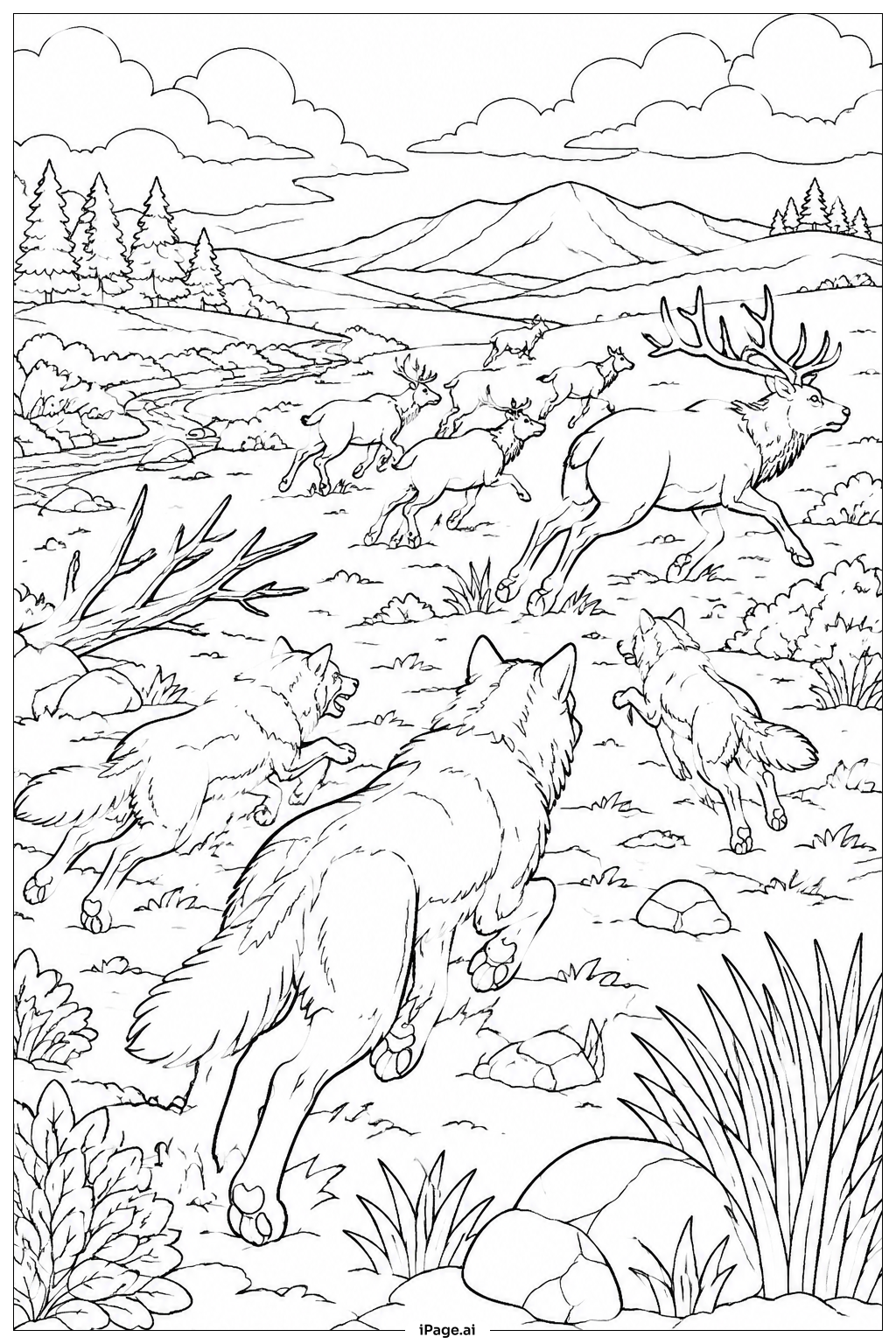
Coloring tips: How to color Wolf Near Pine Trees coloring page well?
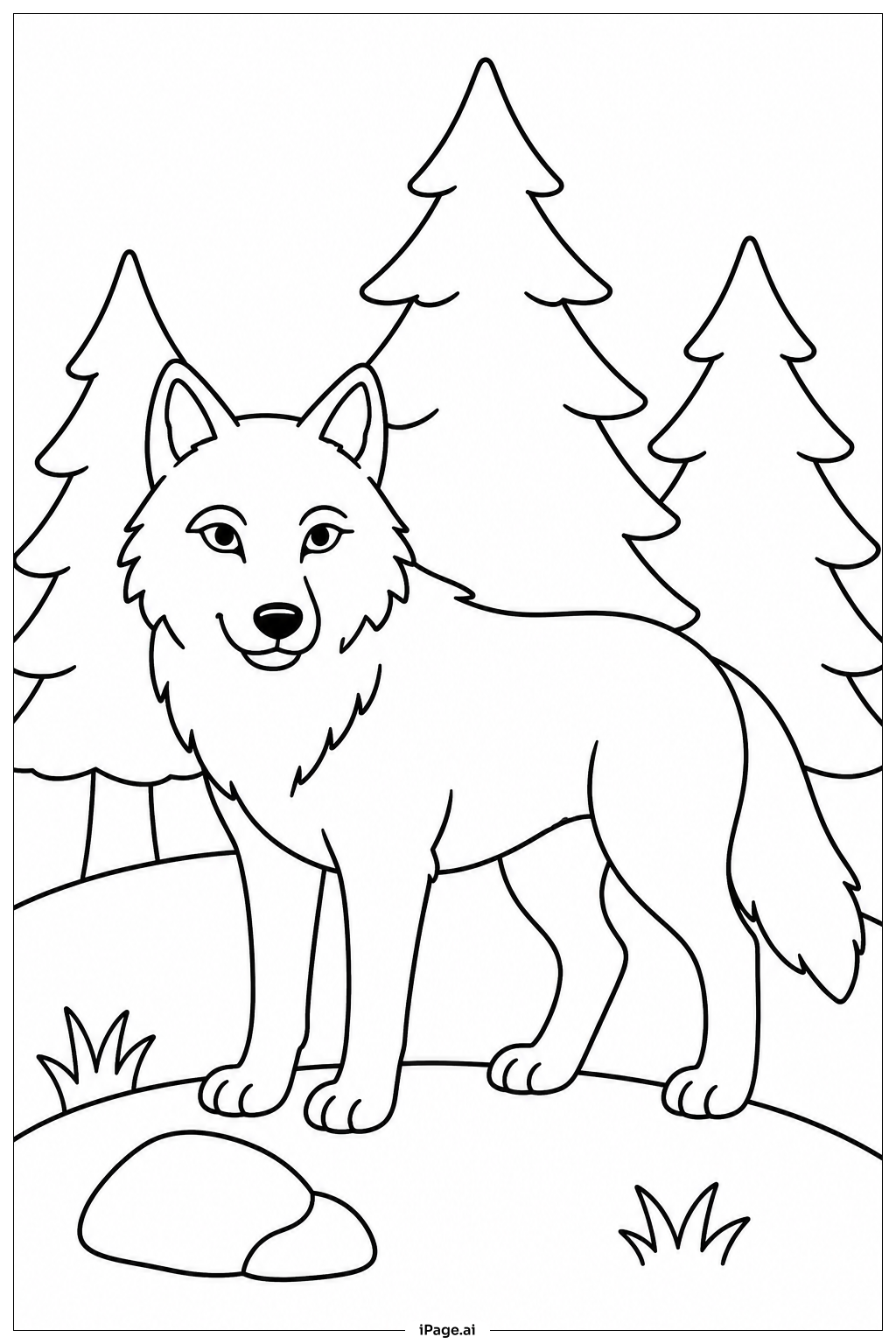
Start with the wolf's body using shades of gray, brown, and white. Use a lighter gray or cream for the chest and belly area to show contrast. Add darker gray or black along the back and tail for depth. For the pine trees, use several shades of green — dark green for shadowed areas and lighter green for the tips of the branches. The tree trunks look great in medium brown or reddish-brown. Color the ground with earthy tones like tan, brown, and olive green. You can add pops of color with pinecones in warm brown. Try using a cool blue or purple for shadows on the ground to make the scene feel like dusk or dawn. Boys and Girls alike can experiment with different sky tones peeking through the trees, like pale blue or golden yellow for a sunrise effect.
Coloring challenges: Which parts are difficult to color and need attention for Wolf Near Pine Trees coloring page?
• Wolf Fur Texture: The wolf's coat has many overlapping layers of fur that flow in different directions. Coloring each layer separately takes patience. You need to blend multiple shades of gray, white, and brown carefully to make the fur look realistic and full of life. Rushing through this area can make the wolf look flat or dull.
• Pine Tree Branch Details: The pine branches are filled with dense needle clusters and pinecones. These tiny details are closely packed together, making it hard to stay inside the lines. Using a fine-tipped marker or a sharpened colored pencil will help you fill in these small spaces without going over the edges.
• Depth and Shadows: Creating a sense of depth in the forest requires using darker shades where trees overlap and lighter shades where light would naturally fall. Without shading, the trees and the wolf may all blend together. Understanding where the light source is coming from helps you decide where to add shadows and highlights.
• Ground Texture Variety: The ground includes grass, rocks, and fallen pine needles, all with different textures. Switching between green, gray, and brown in small, tight spaces can be tricky. Taking your time with each element and using short strokes can help bring the forest floor to life.
• Blending Colors on the Wolf's Face: The wolf's face has many small features like the eyes, nose, and muzzle with subtle color transitions. Blending around these details without muddying the colors is one of the most delicate challenges in this image.
Benefits of coloring books: Advantages of drawing Wolf Near Pine Trees coloring page
Coloring this image of a wolf near pine trees offers many wonderful benefits for kids and Adults alike. For children, it helps build fine motor skills as they carefully color within the detailed lines of the wolf's fur and pine needles. Focusing on a single image also trains attention and patience, which are important skills for school and everyday life.
Learning about nature through art is another great benefit. As Boys and Girls color the wolf and the forest, they naturally learn about wildlife, ecosystems, and the beauty of the natural world. This can spark curiosity and a love for animals and the outdoors.
For older colorists and Adults, this image provides a calming, meditative activity. The process of choosing colors and carefully filling in details helps reduce stress and quiet a busy mind. It encourages creative thinking as you decide how to use color to bring the scene to life.
Working on a detailed image like this also builds confidence. Finishing a complex coloring page gives a strong sense of accomplishment. Whether you are a beginner or experienced, this wolf scene is a rewarding and enjoyable creative experience for everyone.