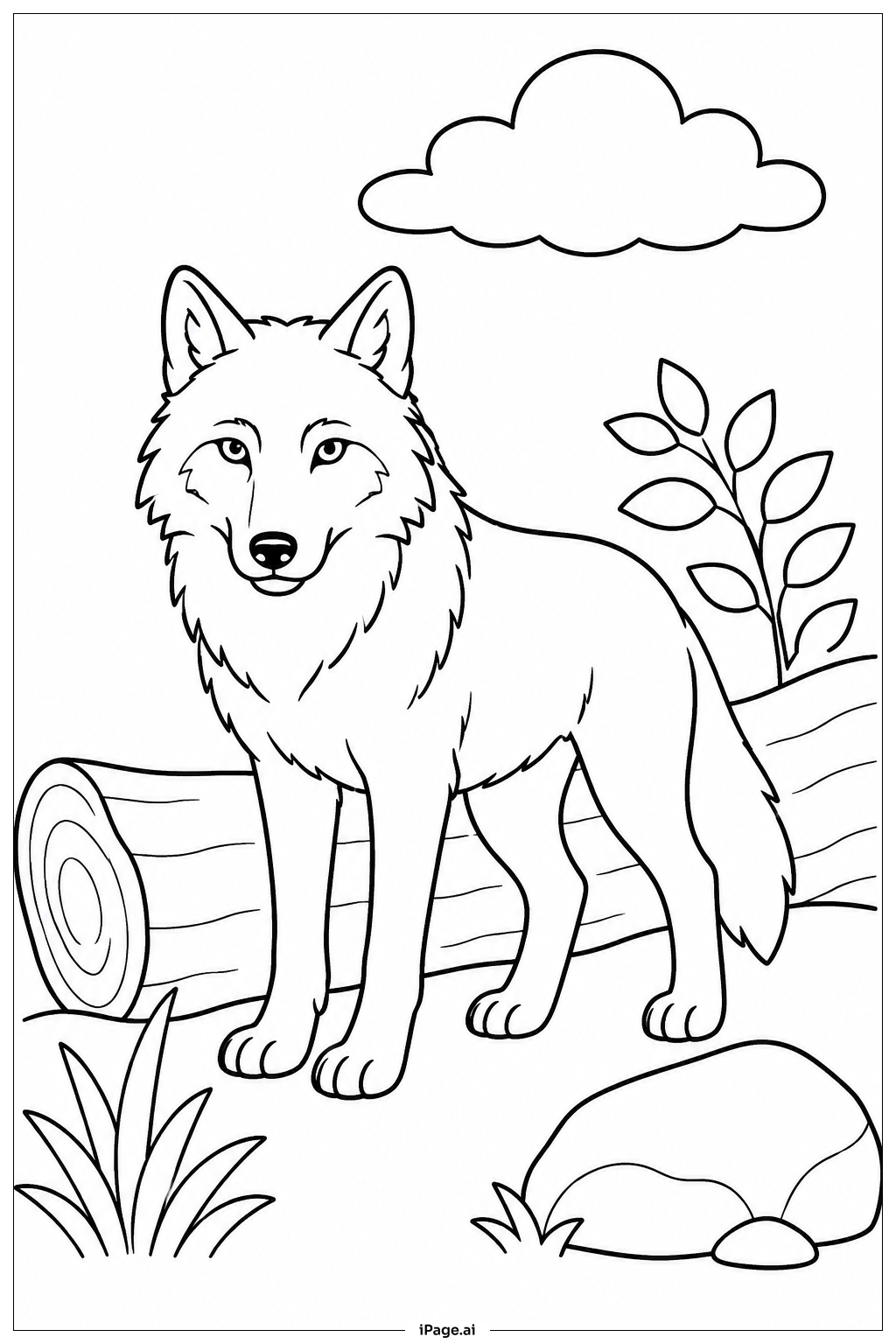
Coloring tips: How to color Wolf Near Fallen Log coloring page well?
Start with the wolf's body by choosing warm gray or cool silver tones for the main coat. Use darker shades of gray or brown on the back and along the spine to show depth. Add lighter creamy white on the chest and belly area to give the fur a natural look. For the eyes, try golden yellow or amber to bring the wolf to life. Color the fallen log with rich browns — use darker brown for the shadows and crevices, and a lighter tan for the raised surfaces of the bark. Add mossy green patches to the log to show age and dampness. The ground can be colored in earthy tones like sandy brown and soft green for the grass. Older kids can try blending two colors together to create smooth fur gradients. Younger kids can keep it simple with flat colors and still get a great result. Have fun choosing your own color combinations!
Coloring challenges: Which parts are difficult to color and need attention for Wolf Near Fallen Log coloring page?
• Wolf Fur Texture: The wolf's coat is made up of many overlapping layers of fur, which means you need to use short, directional strokes to make it look realistic. Coloring all the individual tufts and fur lines takes patience, especially around the neck, chest, and tail area where the fur is the thickest and most layered.
• Creating Depth on the Coat: The wolf's body needs light and shadow to look three-dimensional. The top of the back should be darker, while the belly and face sides should be lighter. Blending two or more similar shades smoothly is tricky and requires careful control of your coloring tool, whether it is colored pencils, markers, or crayons.
• Bark Details on the Fallen Log: The log has many fine cracks, ridges, and uneven surfaces. Coloring each groove with a slightly darker shade while keeping the raised areas lighter adds realistic texture. This requires switching between at least two or three shades of brown and staying within the small spaces without going over the lines.
• Background Vegetation: The grass, leaves, and ground elements around the wolf and log involve many small shapes close together. Keeping each element its own distinct color without muddying the overall scene takes focus. Children need to slow down and work carefully in these tight corner areas.
• Wolf's Facial Features: The face has fine details like the eyes, nose, and the fur lines around the muzzle. These small areas need precise coloring with a sharp pencil tip or a fine marker. Accidentally coloring outside the lines in the face area can change the wolf's expression, so extra care is needed here.
Benefits of coloring books: Advantages of drawing Wolf Near Fallen Log coloring page
Coloring this wolf and fallen log scene brings many wonderful benefits for kids of all ages. First, it helps build focus and concentration as children work carefully within the detailed lines of the wolf's fur and the bark of the log. This kind of focused activity trains the brain to stay on task in a calm and enjoyable way. Second, it supports creativity by encouraging kids to choose their own color combinations, whether realistic or imaginative. A purple wolf in a rainbow forest is just as valid as a gray one! Third, fine motor skills improve as children practice controlling their coloring tools around small, detailed areas like the wolf's face and the log's cracks. These hand movements strengthen the muscles needed for writing and other school tasks. Fourth, coloring nature scenes like this one sparks curiosity about wildlife. Kids may become more interested in learning about wolves, forests, and woodland ecosystems after spending time with this image. Finally, the calm and repetitive nature of coloring helps reduce stress and anxiety, making it a great quiet-time activity after a busy school day. It gives children a healthy creative outlet and a proud finished artwork to display.