Coloring tips: How to color Wolf In Meadow Flowers coloring page well?
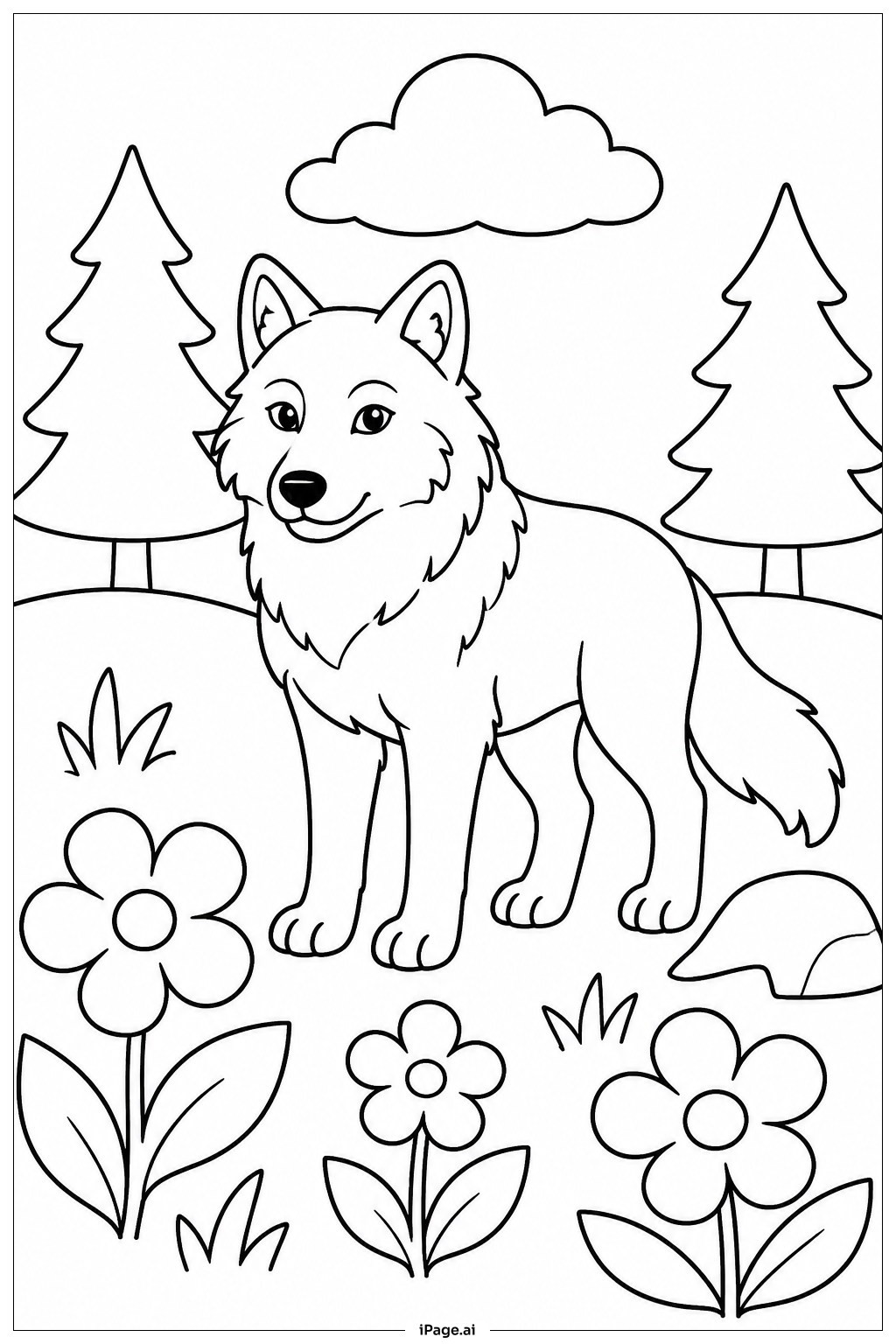
Start with the wolf's fur. Use light gray or tan for the base coat. Add darker gray or brown shading along the back, neck, and tail to give it depth. Leave the chest and belly area lighter to show softness. For the face, use light beige or cream tones around the muzzle, and darker shades near the ears and forehead. Color the eyes amber or golden yellow to bring the wolf to life. For the meadow flowers, use bright, cheerful colors — yellow for daisies, pink and red for tulips, and purple for wildflowers. The grass and leaves can be different shades of green to make the scene feel fresh and full of life. Mixing light and dark greens adds a natural look. Feel free to use your favorite colors for the flowers — this is your meadow, so make it as colorful as you like!
Coloring challenges: Which parts are difficult to color and need attention for Wolf In Meadow Flowers coloring page?
• Wolf Fur Texture: The wolf's coat is made up of many overlapping layers of fur strokes. Coloring each strand neatly while keeping the overall shape natural can be tricky. Try using short, light pencil strokes that follow the direction the fur grows. Layering two or three shades of the same color family will make the fur look more realistic and full.
• Facial Details: The wolf's face has many small features close together — the eyes, nose, muzzle, and inner ear markings. These tiny areas require a fine-tipped coloring tool and a steady hand. Take your time with each section and avoid pressing too hard so colors don't bleed into each other.
• Flower Variety: The meadow contains many different types of flowers with petals of different shapes and sizes. Keeping each flower looking distinct while maintaining a harmonious overall color palette takes some planning. Try sketching out your color choices before you begin so the scene feels balanced and not too busy.
• Overlapping Elements: Flowers, grass blades, and the wolf's legs overlap in several places throughout the scene. Knowing where one element ends and another begins can be confusing. Look carefully at the outlines and color one layer at a time, starting with background elements like grass before moving to foreground flowers and finally the wolf itself.
• Background Balance: The meadow background needs to feel open and natural without overpowering the wolf as the main subject. Using softer, lighter colors for the background and saving the bolder, richer colors for the wolf and front flowers helps the composition stay focused and visually pleasing.
Benefits of coloring books: Advantages of drawing Wolf In Meadow Flowers coloring page
Coloring this wolf in a meadow scene offers many wonderful benefits for kids and young artists. First, it helps build focus and patience. The detailed fur and many small flowers require careful attention, which trains the brain to stay on task. Second, it sparks creativity. Choosing colors for the flowers, the wolf's coat, and the sky encourages kids to think imaginatively and express their own style. There are no wrong choices — every version is unique! Third, it improves fine motor skills. Carefully coloring small petals and fur details helps develop hand strength and pencil control, which supports writing and drawing skills too. Fourth, it introduces children to the natural world. Learning about wolves and wildflower meadows through art builds curiosity and appreciation for wildlife and the environment. Finally, coloring is a calming activity. It helps reduce stress and brings a sense of quiet joy and accomplishment when the page is finished. Whether you are coloring alone or with friends, this peaceful wolf scene is a wonderful way to relax and have fun with color.