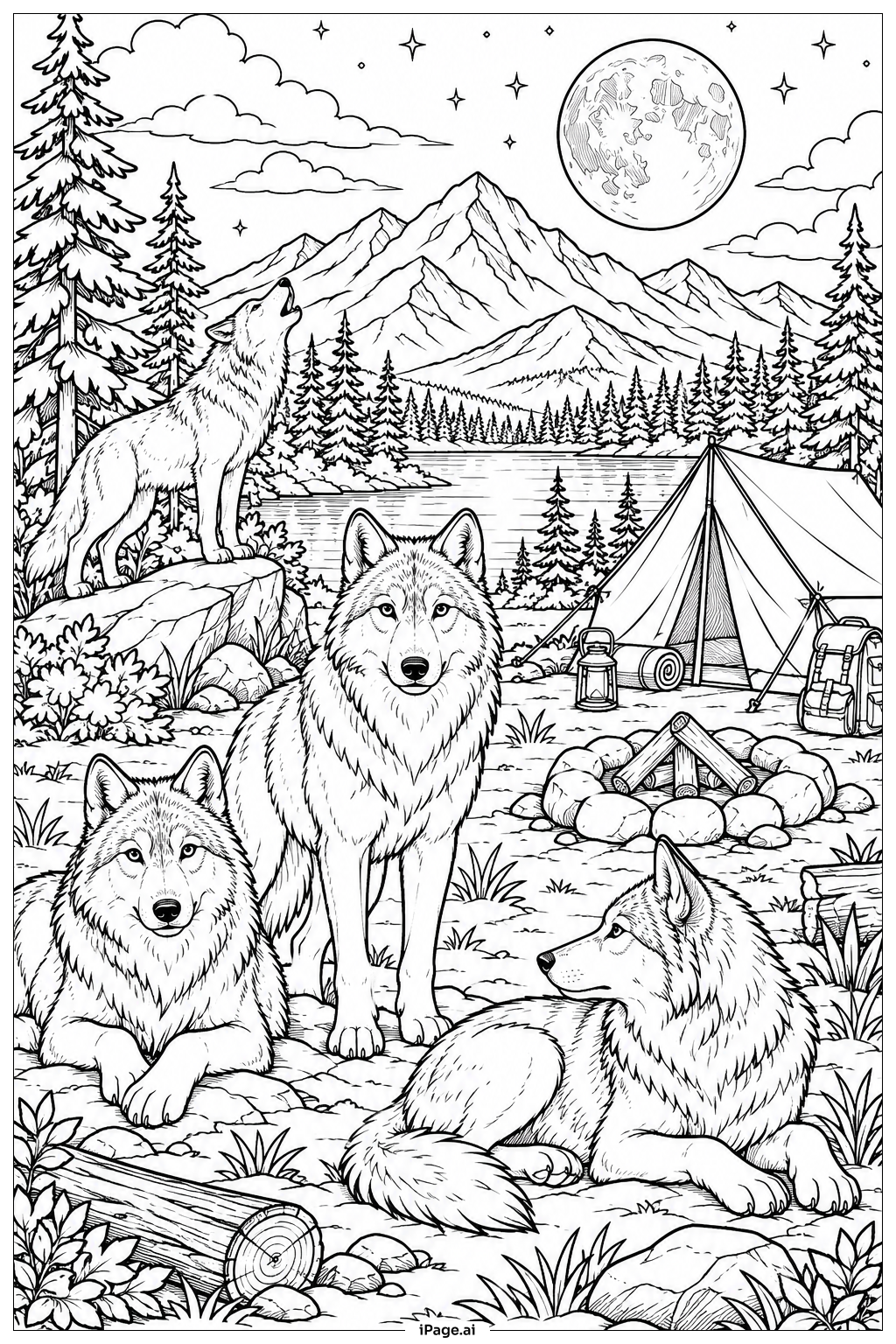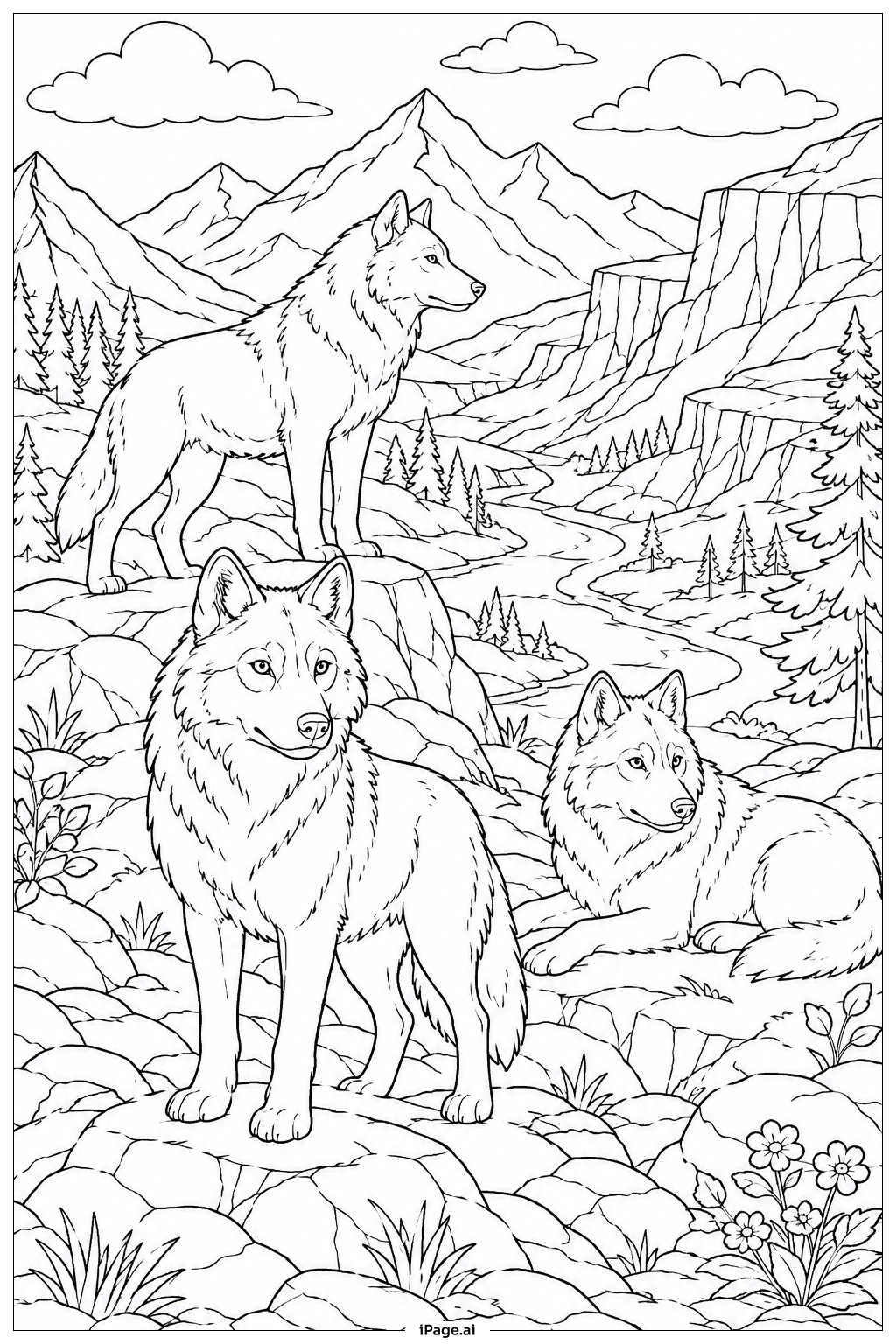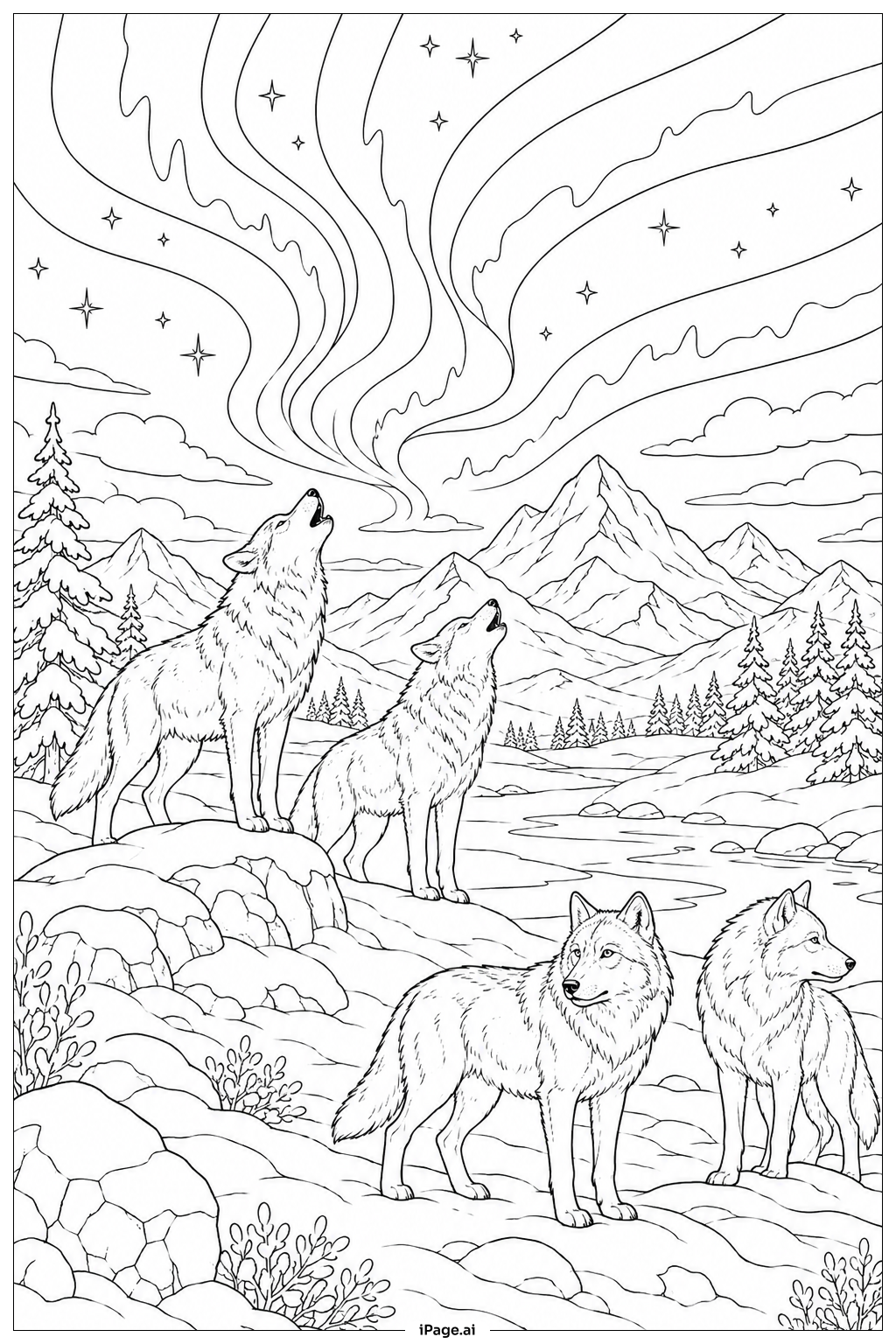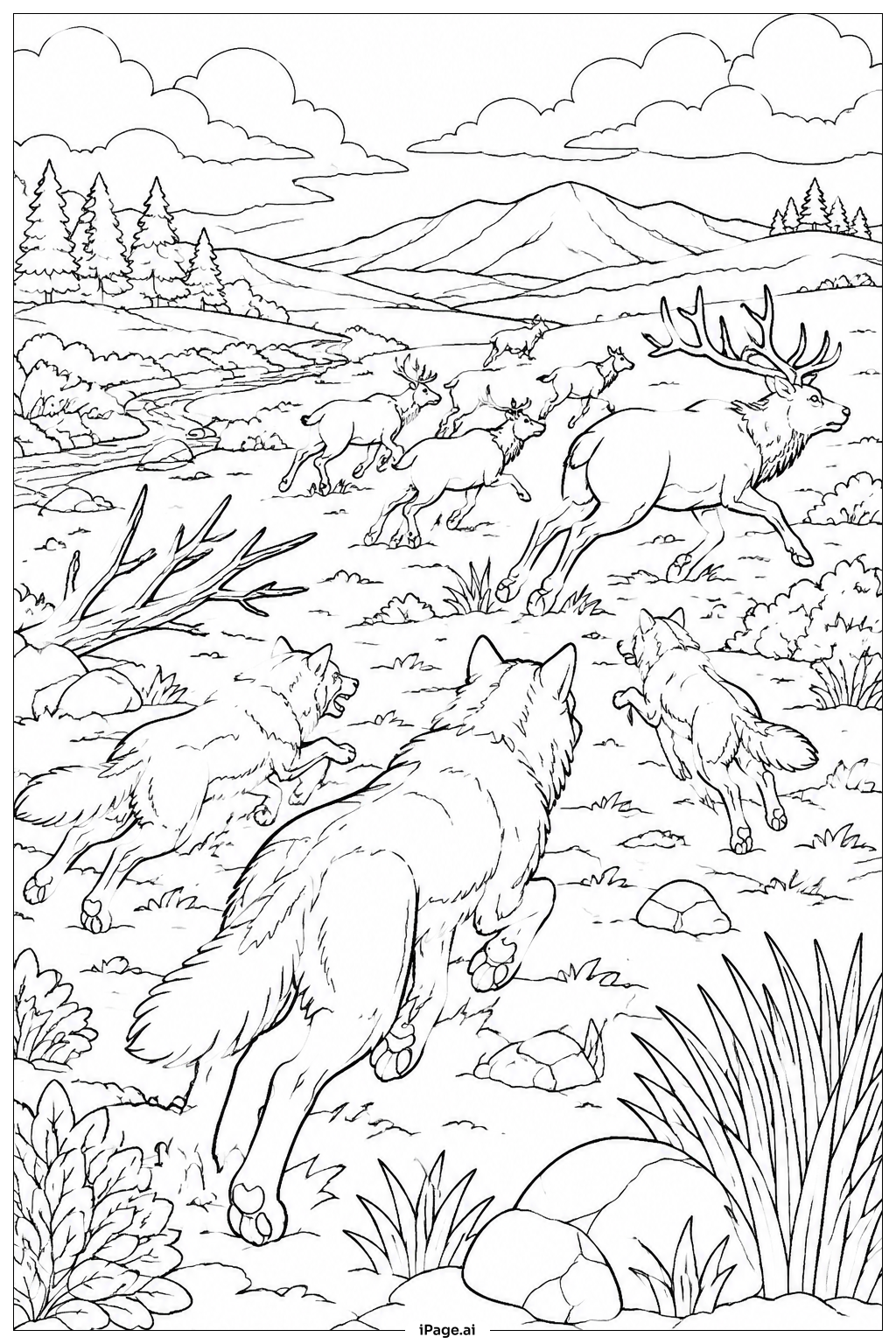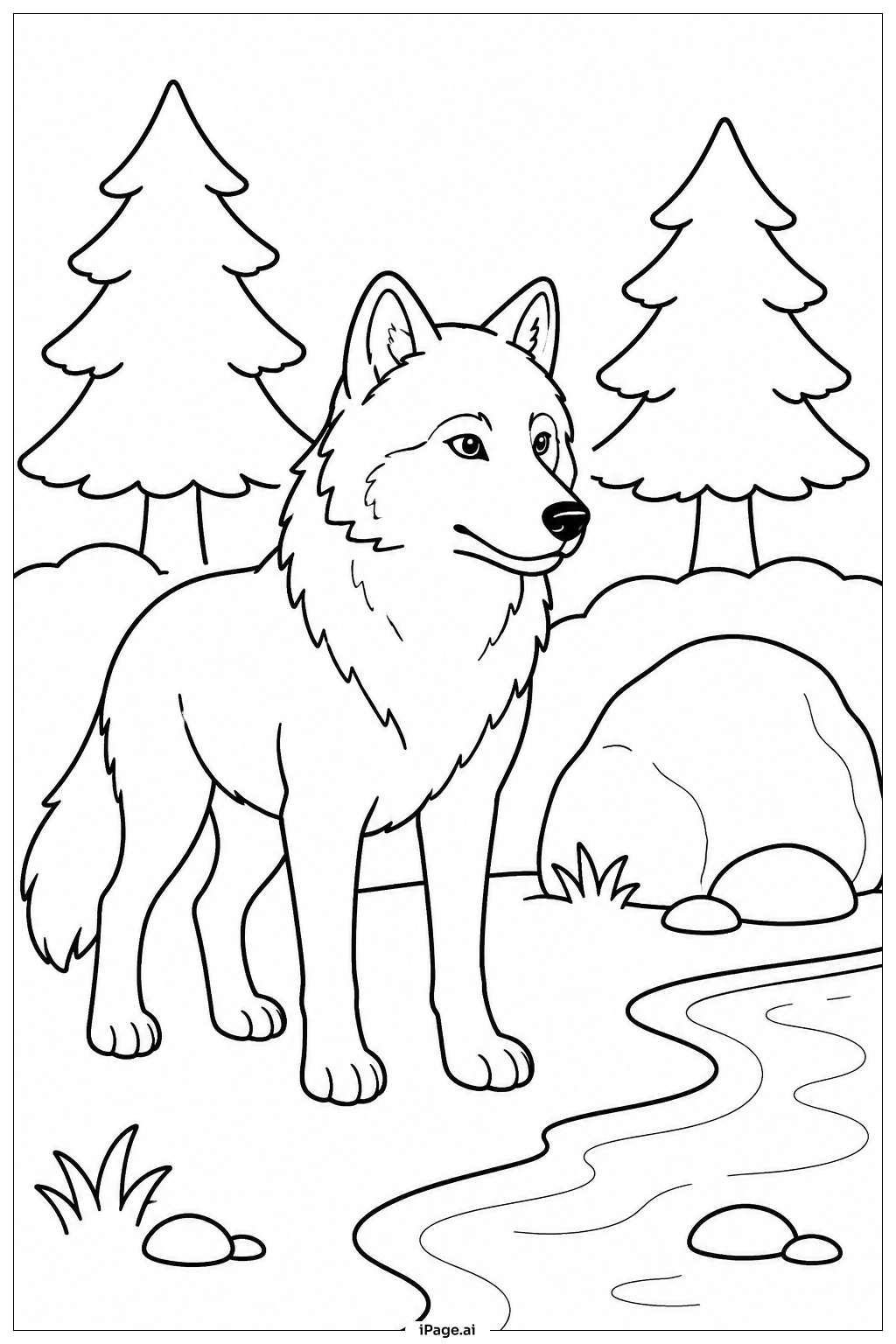
Coloring tips: How to color Wolf In Forest Clearing coloring page well?
Start with the wolf's fur using shades of gray, brown, and white. Use lighter tones on the chest and belly, and darker shades along the back and sides. Add streaks of tan or cream to show fur depth and texture. For the eyes, try amber or golden yellow to give them a lifelike glow. Color the nose dark gray or black. Use rich greens for the leaves and grass in the clearing. The tree trunks look great in warm browns and tans. Add shadows under the trees with darker greens and browns. A soft blue or pale yellow in the background sky adds a calm forest feel. Take your time with the fur — short, gentle strokes in the direction of hair growth will make it look natural and fluffy.
Coloring challenges: Which parts are difficult to color and need attention for Wolf In Forest Clearing coloring page?
• Wolf Fur Texture: The wolf's coat is made up of many overlapping layers of fur. Each section has its own direction and length. Coloring it realistically takes patience. You need to use multiple shades — light gray, dark gray, cream, and brown — and blend them carefully. Short, directional strokes help create the look of real fur rather than a flat surface.
• Facial Details: The wolf's face includes fine features like the eyes, nose, and muzzle. These small areas require a steady hand and precise coloring. The eyes especially need careful shading to look bright and alive. Using a sharp pencil or fine tip marker is helpful here. Getting the right contrast around the snout and ears also takes attention.
• Forest Background Complexity: The background is filled with trees, branches, leaves, and ground cover. Each element needs its own color and shading. Overlapping leaves and tangled branches can be tricky to separate visually. Deciding which areas stay lighter and which go darker requires planning to keep the forest looking natural and layered.
• Light and Shadow Balance: The clearing suggests natural sunlight filtering through the trees. Capturing this light effect means leaving some areas brighter while darkening others. Shadows under the trees and beneath the wolf's body add realism. Without this contrast, the image may look flat and less believable.
• Ground Details: Fallen leaves, grass, and earth beneath the wolf's paws involve several textures and colors. Mixing greens, browns, yellows, and tans in a small area can get crowded. Keeping each element distinct while blending them into a unified ground scene is a fun but careful challenge.
Benefits of coloring books: Advantages of drawing Wolf In Forest Clearing coloring page
Coloring this wolf in a forest clearing offers many wonderful benefits for children and young artists. First, working on the wolf's detailed fur helps improve fine motor skills and hand control. Carefully filling in small areas trains the fingers and builds coordination that is useful in everyday tasks. Second, choosing colors for the fur, trees, and background encourages creative thinking. Kids get to make their own color choices and express their personal style. There is no single right answer, which makes the process exciting and freeing. Third, focusing on a detailed image like this builds concentration and patience. Finishing a complex scene gives a strong sense of accomplishment and boosts confidence. Fourth, learning about wolves and their forest habitat through this image sparks curiosity about nature and wildlife. It can inspire conversations about animals and the environment. Finally, coloring is a calm and relaxing activity. It helps reduce stress and gives children a positive outlet for their energy. Whether done alone or with friends, this coloring page is a joyful and enriching experience for all ages.