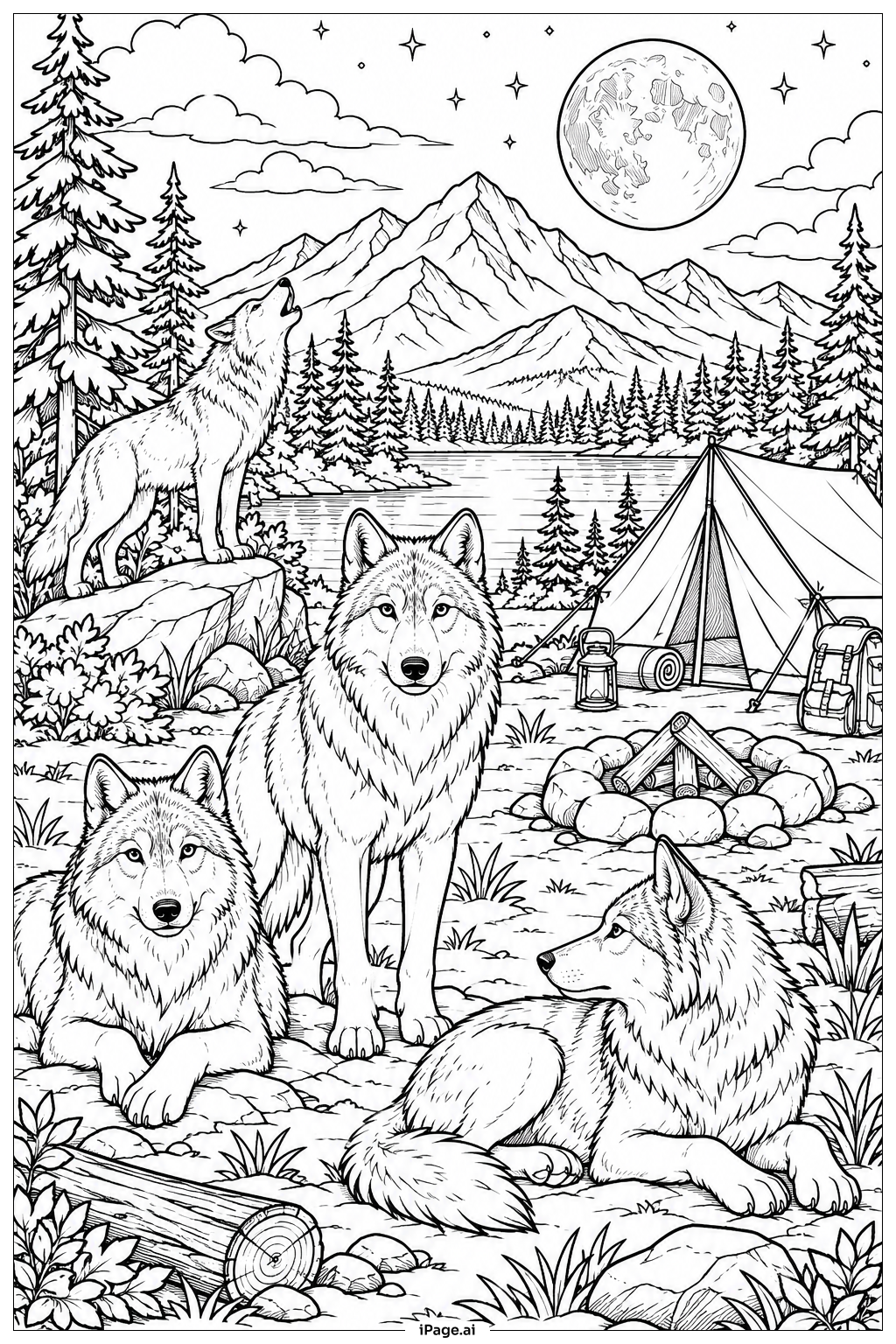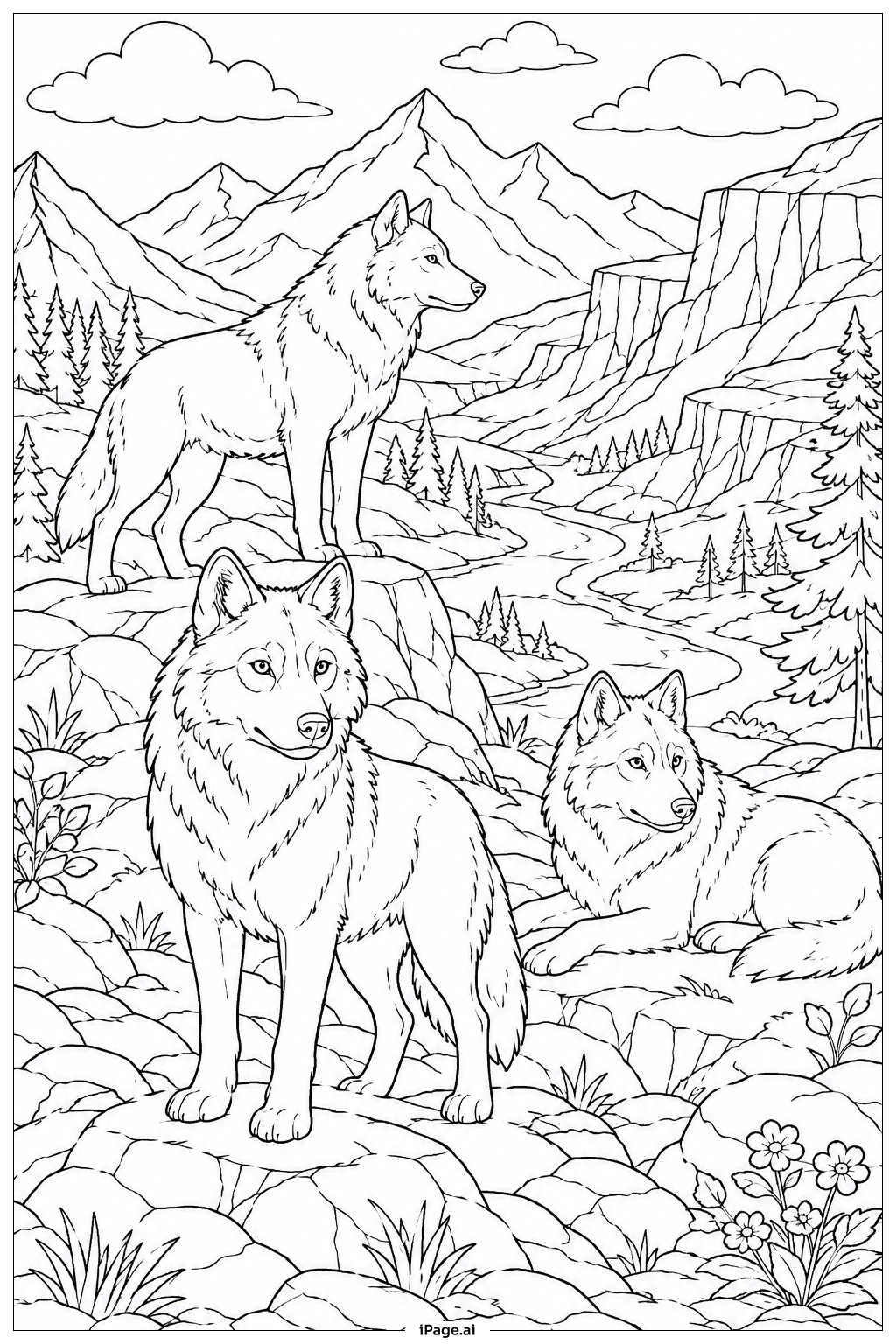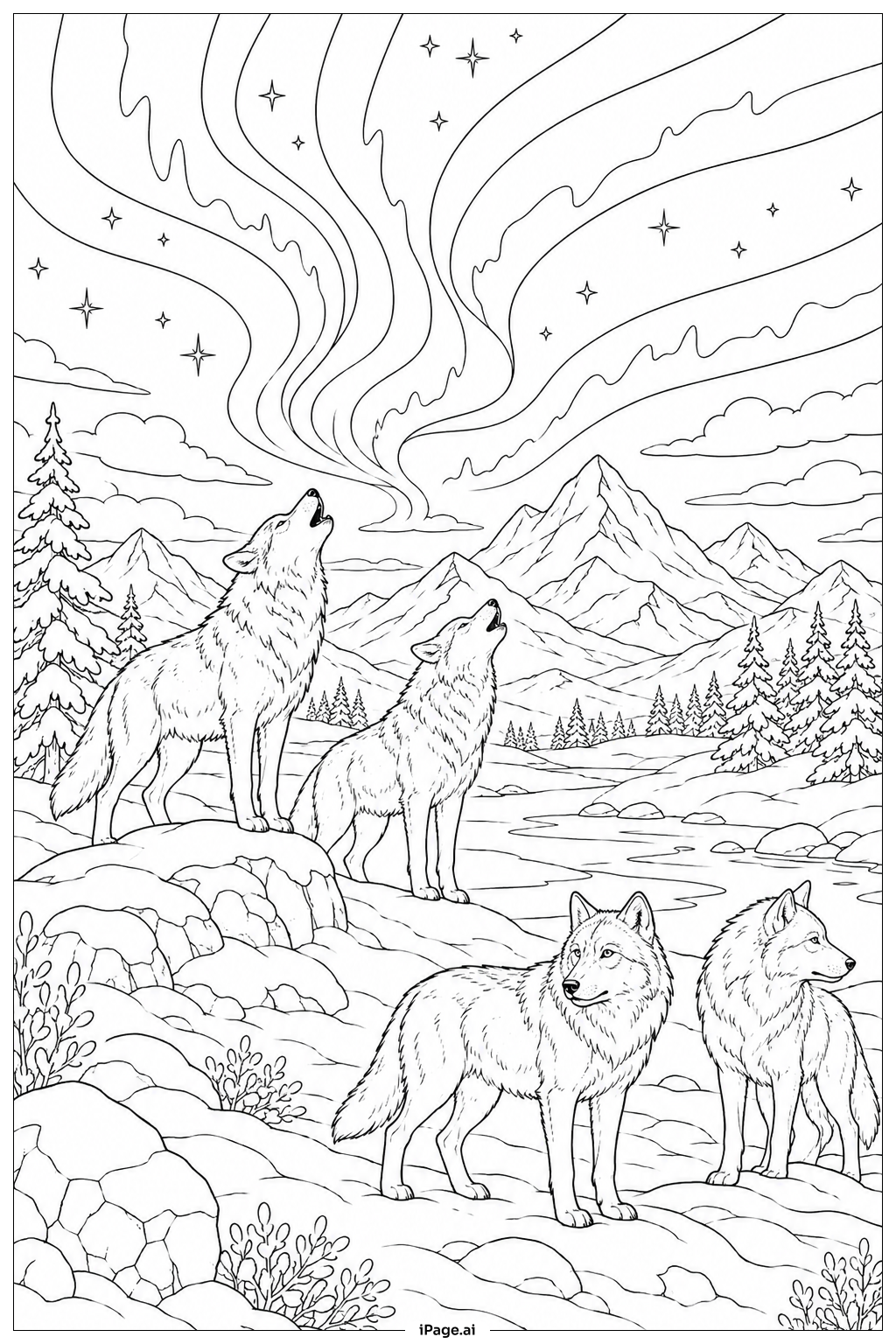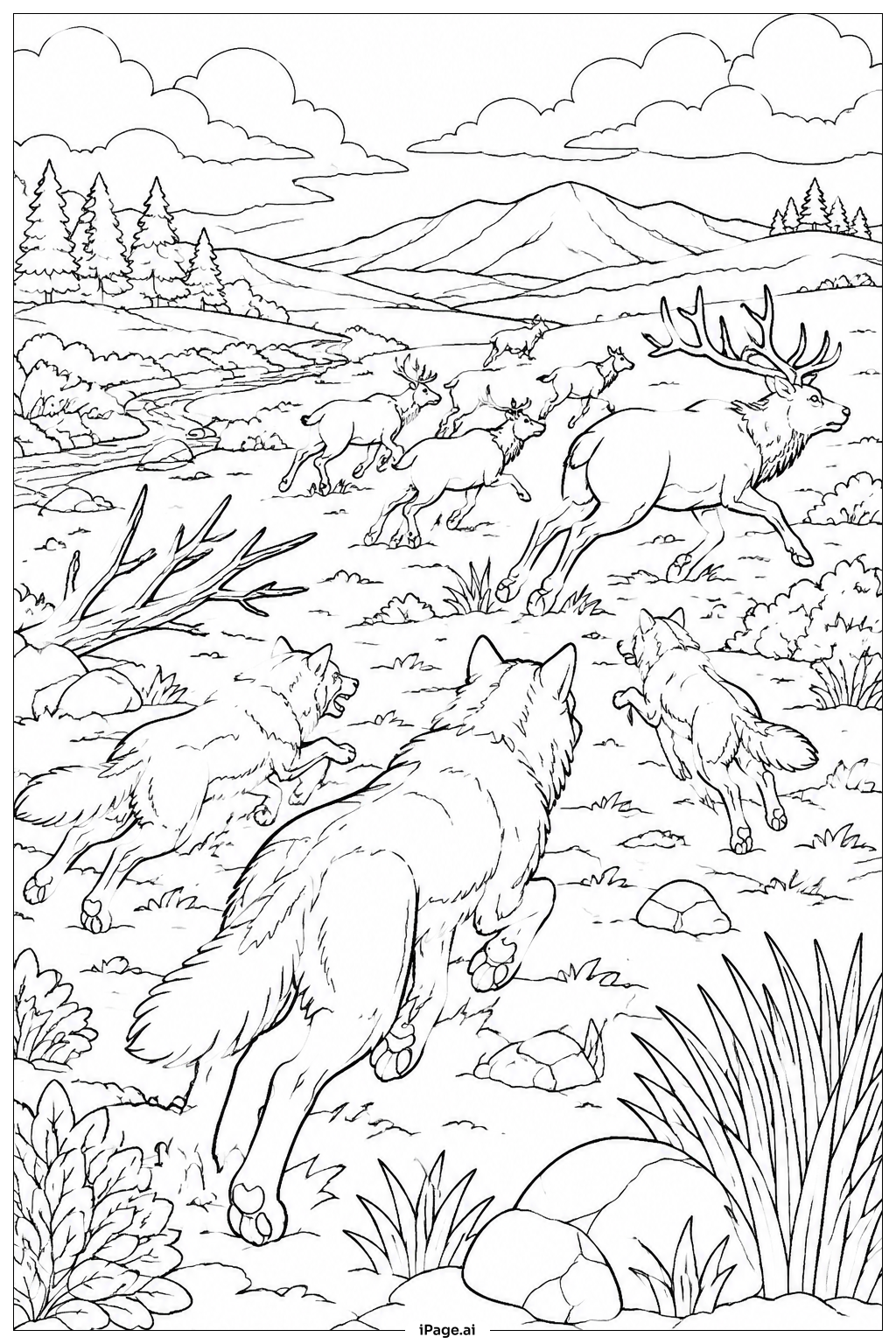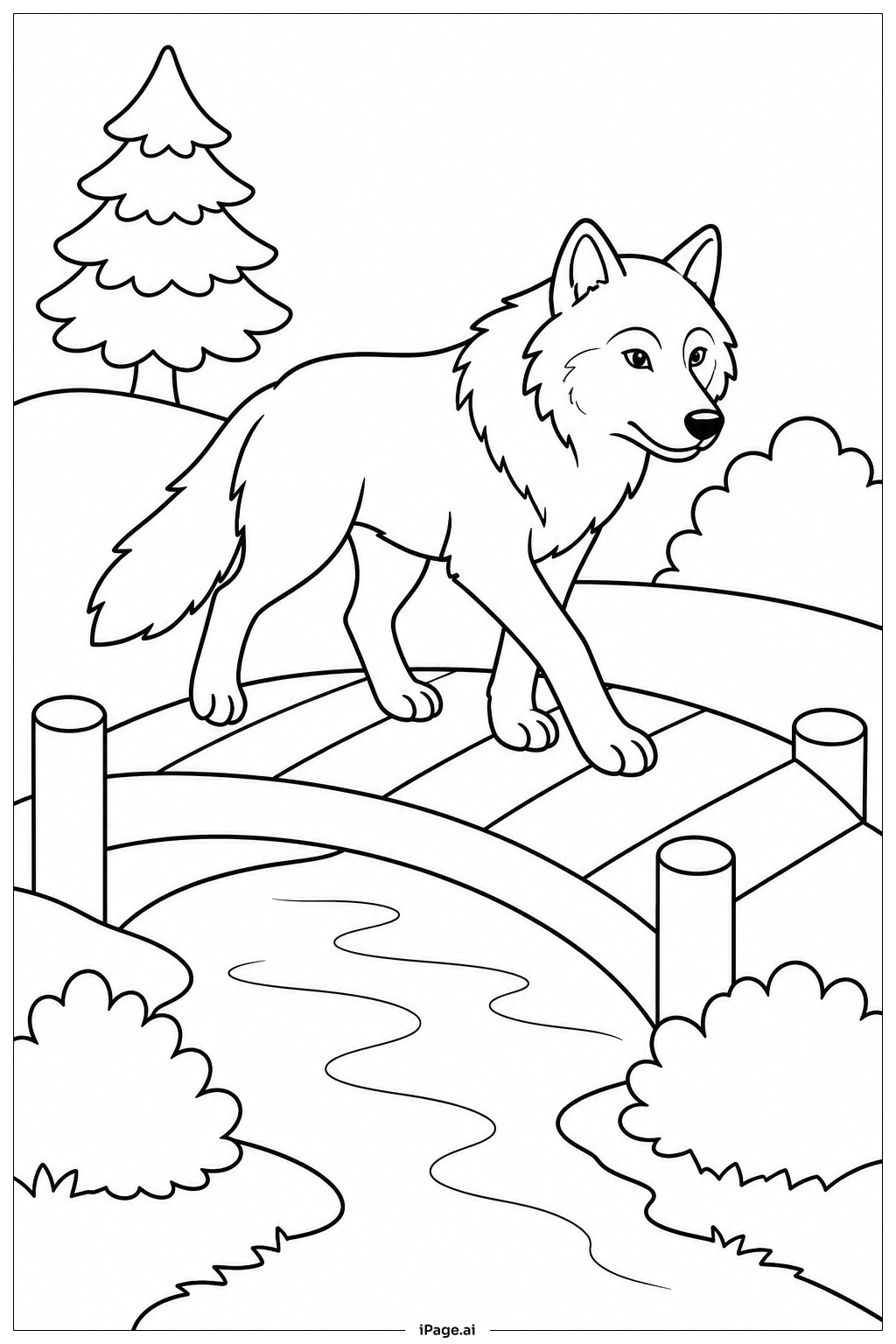
Coloring tips: How to color Wolf Crossing Bridge coloring page well?
Start with the wolf's body using shades of gray, brown, or tan. Use a darker tone for the back and top of the head, then blend into lighter tones on the belly and chest. Add small strokes in different directions to suggest fur texture. For the eyes, try amber or golden yellow to give the wolf a wild, vivid look. Color the wooden bridge with warm browns and add darker streaks to show the wood grain. Use a soft green for the grassy areas and mix in yellow-green highlights. For the trees in the background, go with deep forest greens. If there is water under the bridge, light blue or pale teal works well. Keep the sky open and soft — pale blue or white gives a calm, natural feel. Take your time with the fur, and don't worry about staying perfectly inside the lines. Layering colors gently will make the wolf look full and realistic.
Coloring challenges: Which parts are difficult to color and need attention for Wolf Crossing Bridge coloring page?
Coloring this image comes with several challenges that will test your patience and skill. Here are the key areas to watch out for:
• Wolf Fur Texture: The wolf's coat has many overlapping fur lines going in different directions. Coloring each section neatly while following the natural flow of the fur takes time. Rushing through this area can make the fur look flat. Try short, directional strokes and use at least two or three shades of the same color to build depth.
• Facial Details: The wolf's face has small, closely spaced features — eyes, nose, muzzle, and whisker dots — packed into a tight space. Staying within the fine lines around the eyes and nose without smudging nearby areas is tricky. Using a sharp, thin tool works best here.
• Wood Grain on the Bridge: The bridge planks have detailed grain lines and rough edges. Keeping the warm brown tones consistent while still showing individual boards requires careful shading. Light and shadow on the planks can be easy to overlook but make a big difference in the final result.
• Background Depth: The trees and grasses behind the wolf need to look further away than the wolf itself. Creating that sense of distance by using lighter, cooler tones in the background while keeping the wolf's colors warm and saturated is a real coloring skill to practice.
• Small Connecting Areas: Where the wolf's legs meet the bridge surface, and where the railings overlap the background, the spaces are very narrow. These tight spots can be hard to fill cleanly without accidentally coloring outside the lines.
Benefits of coloring books: Advantages of drawing Wolf Crossing Bridge coloring page
Coloring this Wolf Crossing Bridge page offers a wonderful range of benefits for kids and teens alike. Working through the wolf's detailed fur helps develop fine motor control and hand steadiness — skills that carry over into writing, drawing, and everyday tasks. Choosing the right colors for the wolf, the bridge, and the forest setting encourages creative thinking and builds confidence in making independent decisions. The scene also sparks curiosity about nature and wildlife. Kids may find themselves wondering where the wolf is going, what lies beyond the bridge, or what sounds fill that forest — and that kind of imaginative thinking is great for storytelling and language development. For older kids, the technical challenge of shading fur and creating depth in the background offers a satisfying mental workout. Completing a detailed page like this also builds focus and patience, as it rewards slow, careful work over rushing. Most importantly, it's a calming and enjoyable activity. Sitting down with this page and a set of colored pencils or markers is a healthy way to unwind, express creativity, and feel proud of a finished piece of art.