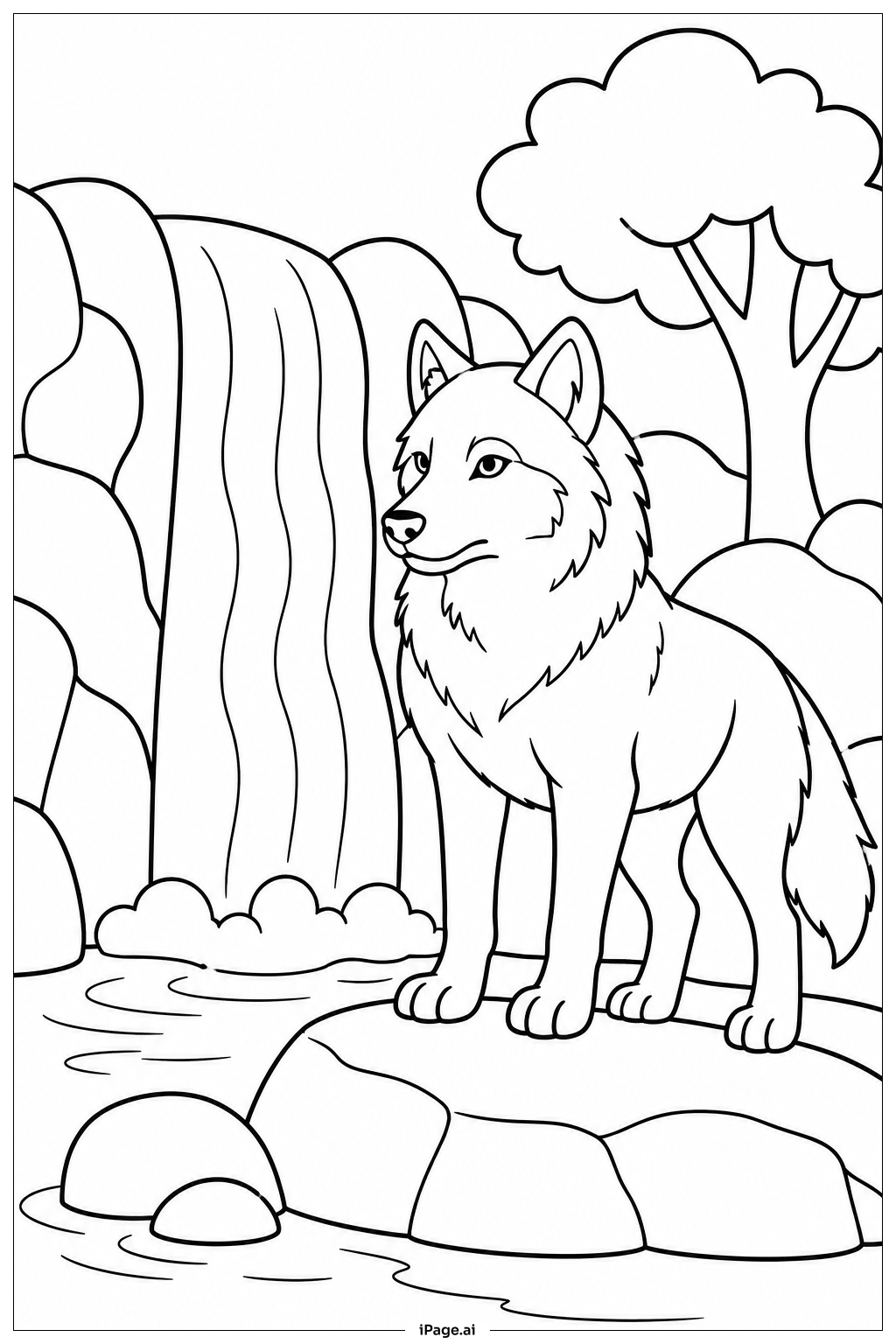
Coloring tips: How to color Wolf By Waterfall coloring page well?
Start with the wolf's fur. Use shades of gray, white, and brown to create a natural, layered look. Add darker tones along the back and lighter colors on the chest and belly. For the eyes, try amber or golden yellow to make them feel alive and expressive. Color the waterfall with light blue and white to show movement and foam. Use deeper blues for the calmer water at the base. For the rocks, try gray with hints of brown and green for mossy patches. Fill the trees and bushes with different shades of green to add depth to the forest. Use earthy browns for tree trunks and roots. Try mixing light and shadow throughout the scene to make everything feel real and three-dimensional. Take your time with the fur details — short, directional strokes will make it look natural and fluffy.
Coloring challenges: Which parts are difficult to color and need attention for Wolf By Waterfall coloring page?
• Wolf Fur Texture: The wolf's coat has many layers of fur with fine, overlapping lines. Coloring each section with smooth, directional strokes is tricky. You need to blend multiple shades of gray, brown, and white carefully so the fur looks soft and realistic instead of flat or patchy. Rushing from one area to another can make it look uneven.
• Waterfall and Water Flow: Capturing the look of moving water is one of the hardest parts of this image. The waterfall has streaks, splashes, and foam that all need different levels of pressure and color. Using white highlights and varying shades of blue requires a steady hand and good control over your coloring tools to suggest motion without muddying the colors.
• Rocky Surface Detail: The rocks in the scene have rough, uneven surfaces with cracks, ridges, and mossy patches. Giving each rock its own unique texture while keeping the overall scene balanced takes patience. Layering gray with brown, tan, and green tones without making the rocks look too similar to each other is a real challenge.
• Forest Background Depth: The trees and bushes behind the wolf need to feel like they are farther away than the foreground. Creating depth by using lighter, less saturated greens in the background and darker, richer greens up front is a technique that takes practice to pull off naturally.
• Balancing Light and Shadow: The whole scene needs a consistent light source to look believable. Deciding where shadows fall on the wolf, rocks, and water and applying those shadows consistently across the whole image requires careful planning before you begin coloring.
Benefits of coloring books: Advantages of drawing Wolf By Waterfall coloring page
Coloring this wolf and waterfall scene offers a wonderful mix of fun and skill-building. Working on the wolf's detailed fur helps you practice patience and steady hand control. Choosing the right colors for the fur, eyes, and surroundings also encourages creative thinking and color awareness. Blending shades of blue for the waterfall teaches you how to show movement through color, a skill that builds artistic confidence over time. For younger children, this image makes it easy to learn about nature and wild animals in an engaging, hands-on way. For older kids and teens, the complexity of the scene offers a satisfying challenge that sharpens focus and attention to detail. Spending quiet time coloring is also a great way to relax and reduce stress after a busy day. It helps calm the mind and encourages a sense of mindfulness, since you are fully focused on one peaceful task at a time. Finishing a detailed image like this also brings a strong sense of pride and accomplishment. Whether you are coloring for fun, learning, or relaxation, this scene is a rewarding and inspiring choice for colorists of all ages and skill levels.