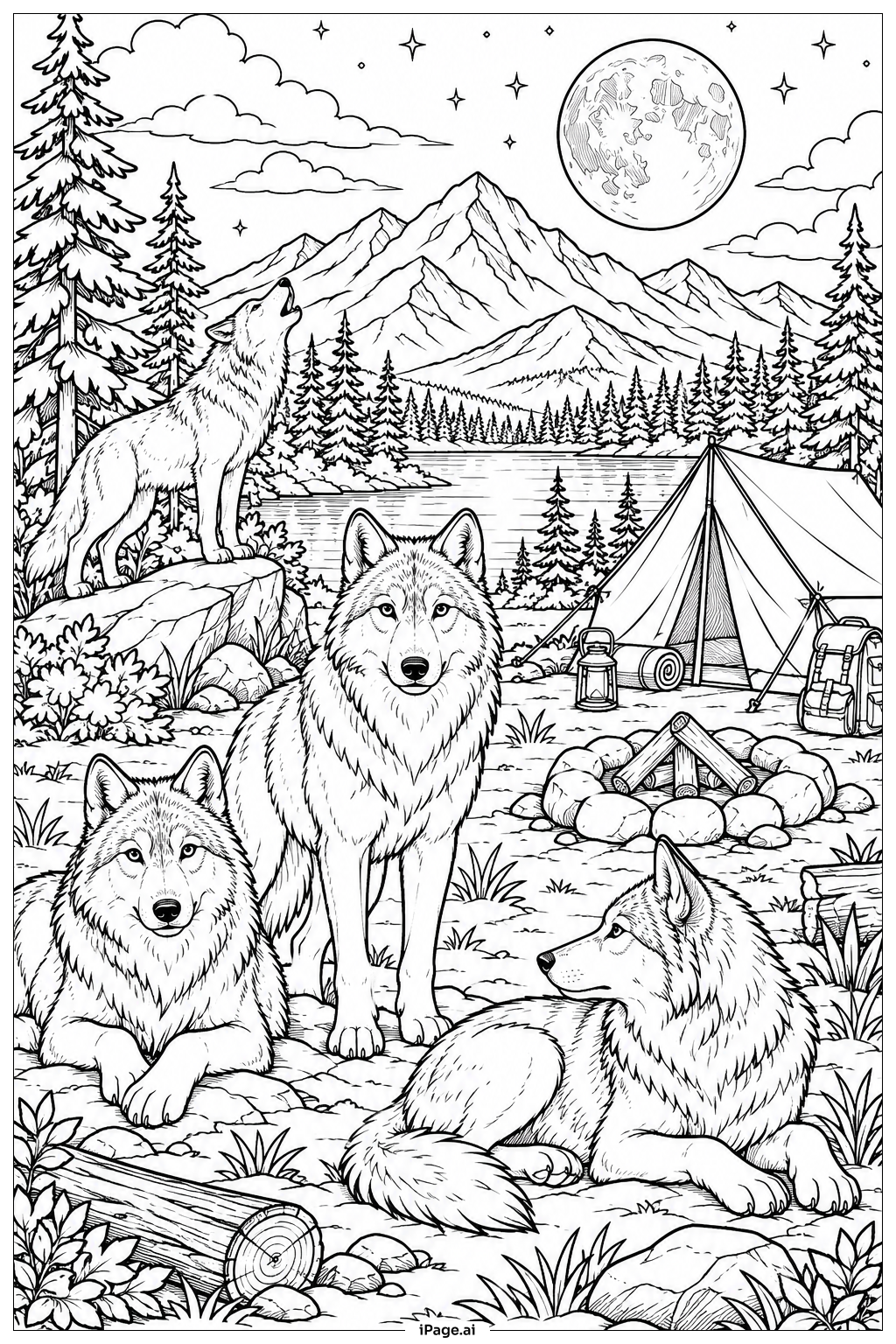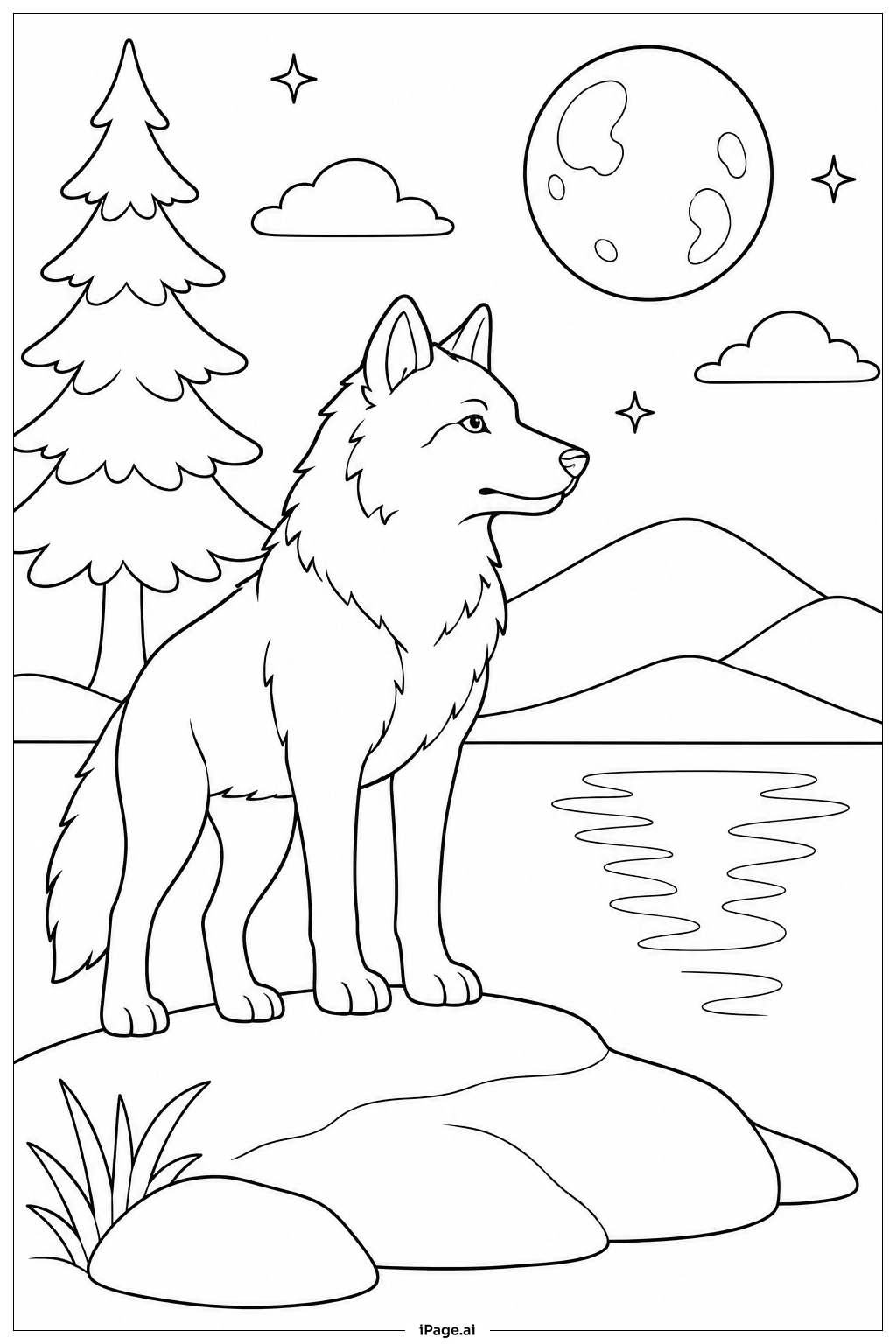
Coloring tips: How to color Wolf By Moonlit Lake coloring page well?
Start with the sky. Use deep navy blue or dark purple for the night sky. Add soft gray and pale yellow around the moon to create a glowing effect. Color the moon itself in warm cream or pale gold. For the wolf, try layers of gray, brown, and white to show the depth of its thick fur. Use darker shades along the back and lighter tones on the belly and face. The pine trees work well in deep green or dark teal. For the lake, blend light blue and silver to reflect the moonlight. Add gentle streaks of white to suggest ripples on the water. Keep the overall palette cool and moody to match the nighttime forest setting. Children can keep it simple with flat colors, while older kids can try blending for a more realistic feel.
Coloring challenges: Which parts are difficult to color and need attention for Wolf By Moonlit Lake coloring page?
• Wolf Fur Texture: The wolf's coat is made up of many overlapping lines and layers. Capturing the natural look of fur requires careful shading. You need to follow the direction of the fur strokes and layer light and dark tones gradually. Rushing this area can make the wolf look flat or unnatural.
• Moonlit Glow Effect: Creating the soft halo of light around the moon is tricky. The transition from bright moonlight to dark sky needs to be smooth. If the colors are too sharp or unblended, the glowing effect will be lost. Using colored pencils in circular, gentle motions helps achieve a realistic radiance.
• Water Reflections: The lake surface reflects both the moon and the surrounding trees. Keeping the reflection colors consistent with the sky and trees takes careful planning. The ripple lines are small and closely spaced, making it easy to color outside the lines or lose the sense of movement in the water.
• Tree Silhouettes and Background Depth: The pine trees in the background need to feel distant and dark without becoming a muddy, flat mass. Using slightly varied shades of deep green and black helps suggest layers of forest. Blending the tree edges into the sky softly creates a more realistic sense of depth and atmosphere.
• Small Facial Details: The wolf's eyes, nose, and muzzle are small but expressive. These areas require a fine-tipped tool for precision. Coloring the eyes with care, adding a tiny highlight dot, and shading the nose realistically can make the wolf feel alive and emotional.
Benefits of coloring books: Advantages of drawing Wolf By Moonlit Lake coloring page
Coloring this Wolf By Moonlit Lake scene offers a wonderful mix of creative and developmental benefits for kids and teens. Working through the detailed fur patterns builds patience and fine motor skills, as children must slow down and make careful, deliberate strokes. This kind of focused activity also strengthens hand-eye coordination. Choosing colors for a nighttime scene encourages creative thinking and color theory awareness. Kids learn how light and shadow work together, which supports early artistic understanding. The peaceful nature theme can also have a calming effect, helping to reduce stress and anxiety after a busy school day. Spending time on a complex, satisfying image builds a sense of accomplishment and boosts self-confidence. For older kids and teens, the shading challenges in the fur, water, and moonlight offer a chance to develop more advanced coloring techniques. The wildlife subject also sparks curiosity about nature and animals, making it a great conversation starter about wolves and their habitats. Overall, this image is both fun and enriching for a wide range of ages.