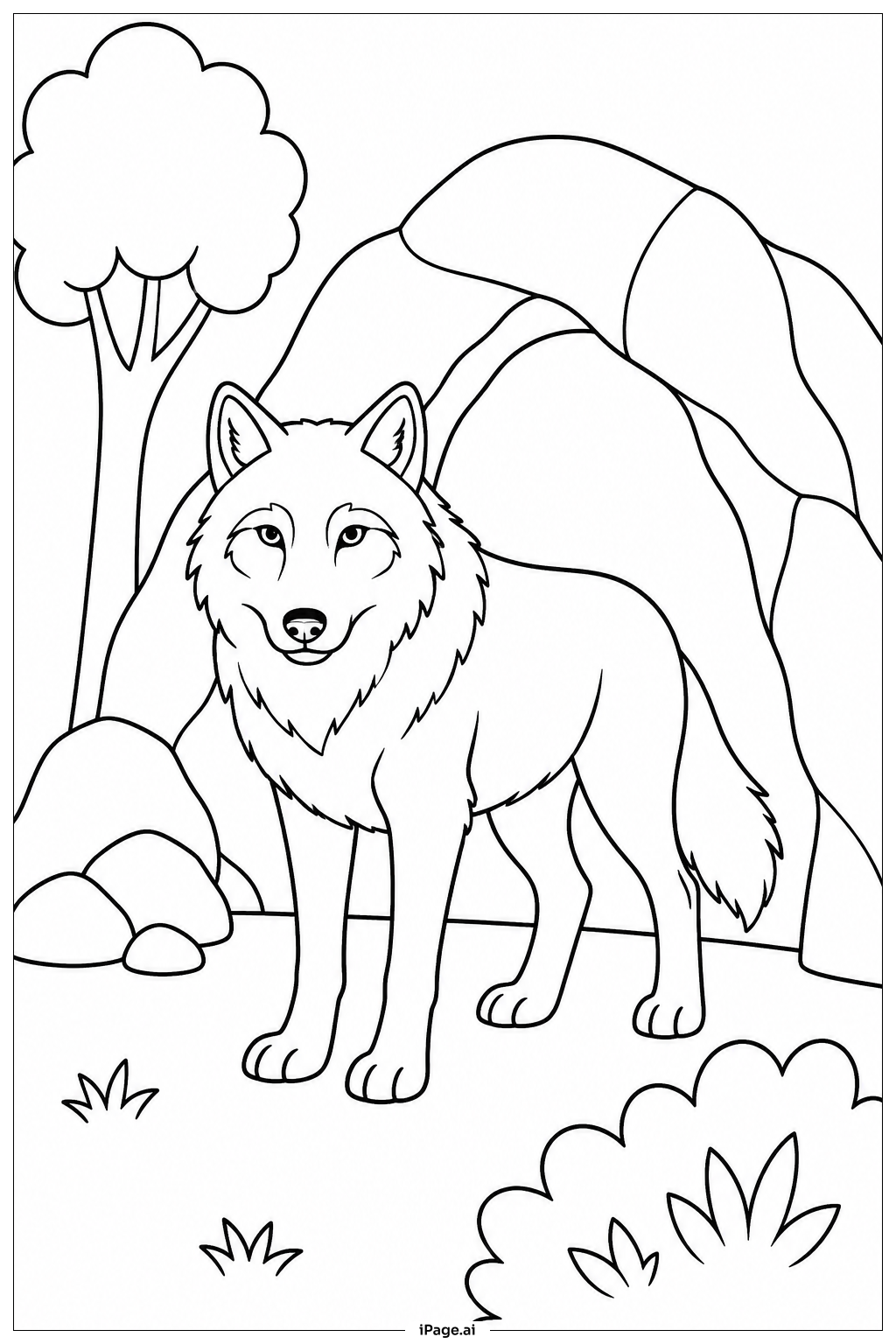
Coloring tips: How to color Wolf At Cave Entrance coloring page well?
Start with the wolf's fur using shades of gray, brown, or tan. Use a lighter color on the chest and belly, and darker tones on the back and shoulders. Add streaks of white or cream to show where light hits the fur. For the eyes, try amber, golden yellow, or pale green to give them a lifelike glow. Color the cave walls with earthy tones like dark gray, charcoal, or brown. Use a slightly lighter shade in the cracks to show depth. The ground can be a mix of tan, beige, and brown. If you want to make the scene feel more alive, add a soft glow at the cave entrance using yellow or warm orange tones, as if sunlight is coming in from outside. Take your time with the fur — short strokes in the direction the fur grows will make it look very realistic.
Coloring challenges: Which parts are difficult to color and need attention for Wolf At Cave Entrance coloring page?
• Wolf Fur Texture: The wolf's coat is made up of many overlapping layers of fur strands. Coloring each layer carefully with short, directional strokes takes time and patience. Blending two or three shades together without making the fur look flat or muddy is one of the biggest challenges in this image. Younger colorists may find it easier to use a single base tone and add a few darker lines on top.
• Cave Rock Details: The cave walls are covered in cracks, ridges, and rough surfaces. Each section of rock has its own shape and shadow. Keeping the rock colors natural while showing the difference between raised and recessed areas requires careful shading. It can be tricky to make the stone look solid and three-dimensional without using too many colors.
• Eye Expression: The wolf's eyes are a small but very important part of the image. Getting the color and shading right in such a small area is difficult. A highlight dot or leaving a tiny spot uncolored can make the eyes look alive and reflective. Missing this detail can make the wolf look less expressive.
• Light and Shadow Contrast: The cave entrance creates a natural contrast between the dark interior and the lighter outside world. Showing this contrast by gradually shifting from dark tones inside the cave to lighter tones near the opening adds realism but requires planning before you begin coloring.
• Ground and Paw Detail: The rocky ground beneath the wolf's paws has uneven texture. Coloring the paws so they stand out from the ground without looking disconnected takes careful attention to color choice and line control.
Benefits of coloring books: Advantages of drawing Wolf At Cave Entrance coloring page
Coloring this wolf image offers a wonderful mix of fun and skill-building for Boys and Girls of all ages, as well as Adults who enjoy detailed artwork. Working on the wolf's detailed fur helps develop fine motor skills and steady hand control. Choosing the right shades of gray, brown, and tan encourages creative thinking and color awareness. Children learn to observe how light and shadow work together to create depth. The cave setting adds an extra layer of complexity that challenges older colorists to think about composition and contrast. For younger children, simply filling in the large shapes builds confidence and focus. For older Kids and Adults, the fine details in the rock texture and wolf fur provide a satisfying, meditative coloring experience. Completing this image gives a strong sense of accomplishment. It also sparks curiosity about wolves and their natural habitats, making it a gentle learning moment alongside a creative one. Overall, this is a rewarding Free Printable Coloring Page for the whole family.