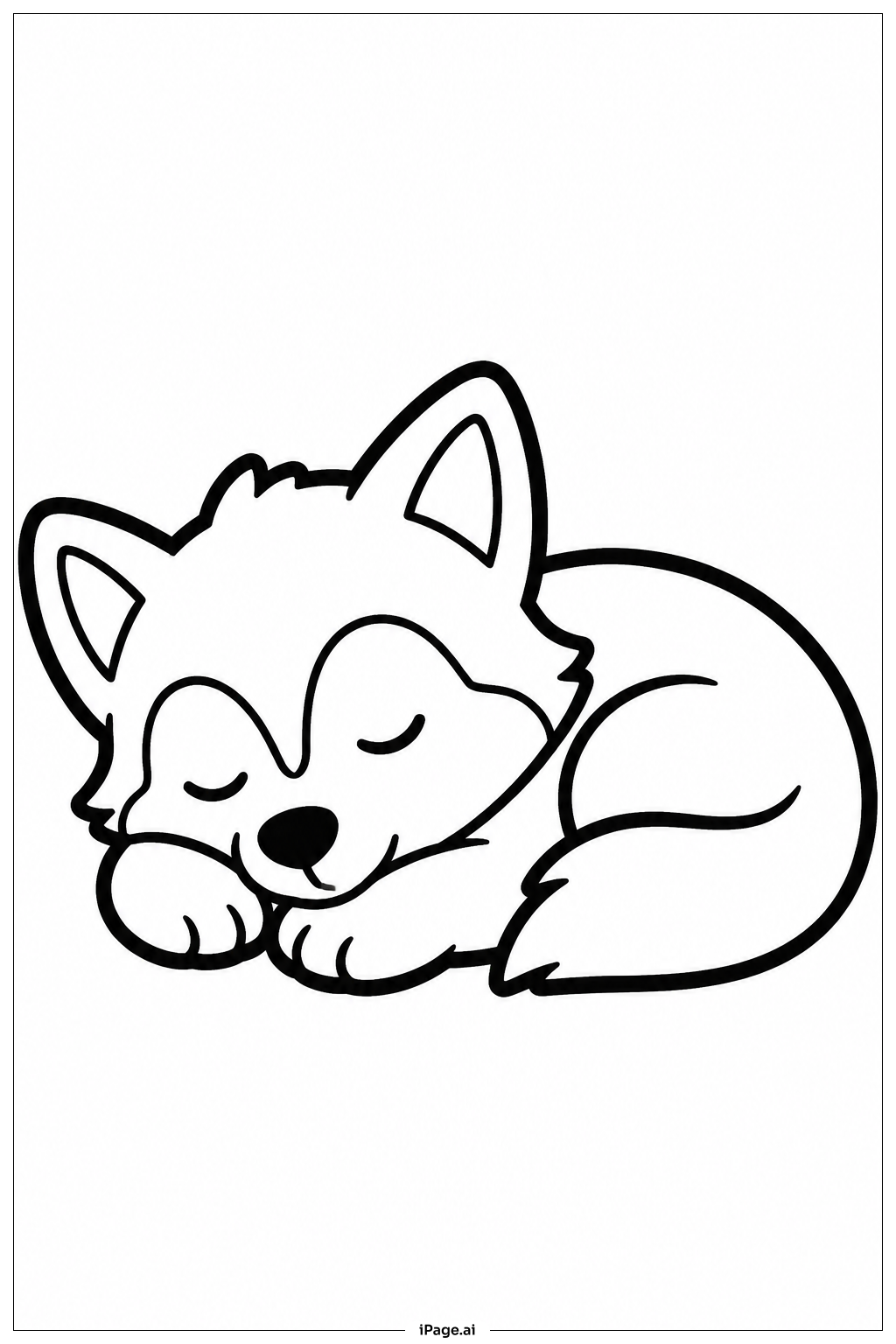
Coloring tips: How to color Sleeping Wolf Pup coloring page well?
Start with the wolf pup's fur. Use soft grays, creamy whites, and warm beiges to give the coat a natural, realistic look. You can add light brown tones along the back and darker gray shading near the paws and ears for depth. The belly and inner ear areas look great in a pale white or light pink. Use a very light gray or leave the chest area almost white to show softness. For the nose and paw pads, try a gentle pink or dusty rose. If you want a cozy mood, color the background in warm earth tones like tan or soft green to suggest a grassy forest floor. Keep your strokes light and smooth to match the pup's fluffy fur texture. Build up color slowly in layers for a more realistic, gentle look. This is a great image for practicing blending.
Coloring challenges: Which parts are difficult to color and need attention for Sleeping Wolf Pup coloring page?
• Fur Texture and Layering: The wolf pup's fur is made up of many overlapping lines that flow in different directions. Coloring each section while following the direction of the fur strokes takes patience. If you color against the grain, the fur may look flat or messy. Try short, light strokes that follow the natural flow of each fur line to keep the texture looking soft and realistic.
• Shading and Depth: Creating a three-dimensional look on a curled-up body can be tricky. The areas where the body curves under, such as beneath the chin, around the paws, and under the tail, should be darker to show shadow. Getting this contrast right without making the image look too heavy requires careful gradual shading.
• Small Facial Features: The pup's face includes tiny details like closed eyelids, a small nose, and delicate whisker areas. These features are compact and close together. Using thick markers or crayons in this area can easily result in coloring outside the lines or losing fine detail. Thin colored pencils or fine-tipped tools work best here.
• Blending Multiple Fur Colors: A wolf's coat is rarely just one flat color. It usually blends from darker tones on top to lighter tones on the belly and face. Smoothly transitioning between these colors without creating harsh lines is a key challenge, especially for younger colorists who are still learning blending techniques.
• Keeping the Overall Mood Soft: Because the image shows a sleeping pup, the entire color palette should stay gentle and calm. Avoiding overly bright or harsh colors while still making the image look lively and warm requires thoughtful color choices throughout.
Benefits of coloring books: Advantages of drawing Sleeping Wolf Pup coloring page
Coloring this sleeping wolf pup offers a wide range of benefits for kids and beginners alike. The soft, rounded shapes of the curled-up pup make it an approachable image that does not feel overwhelming. This helps build confidence in young colorists who are just starting out.
Working on the detailed fur lines encourages focus and concentration. Children learn to slow down, pay attention, and work carefully within smaller sections. This kind of mindful activity is great for developing patience and fine motor skills.
Choosing colors for the wolf's natural coat introduces kids to earthy, realistic tones. It gently teaches color observation and decision-making. Kids start to think about how colors work together and how light and shadow affect the look of an object.
The peaceful subject matter, a sleeping animal, also has a calming effect. Coloring this image can help reduce stress and provide a quiet, soothing creative outlet after a busy day.
For older children and teens, the fur texture and shading challenges offer a chance to practice more advanced techniques like blending and layering. These skills carry over into other art projects and help develop a stronger understanding of form and light.
Overall, this image is a wonderful mix of relaxing creativity and skill-building. It connects children with the natural world while nurturing their artistic growth in a fun and gentle way.