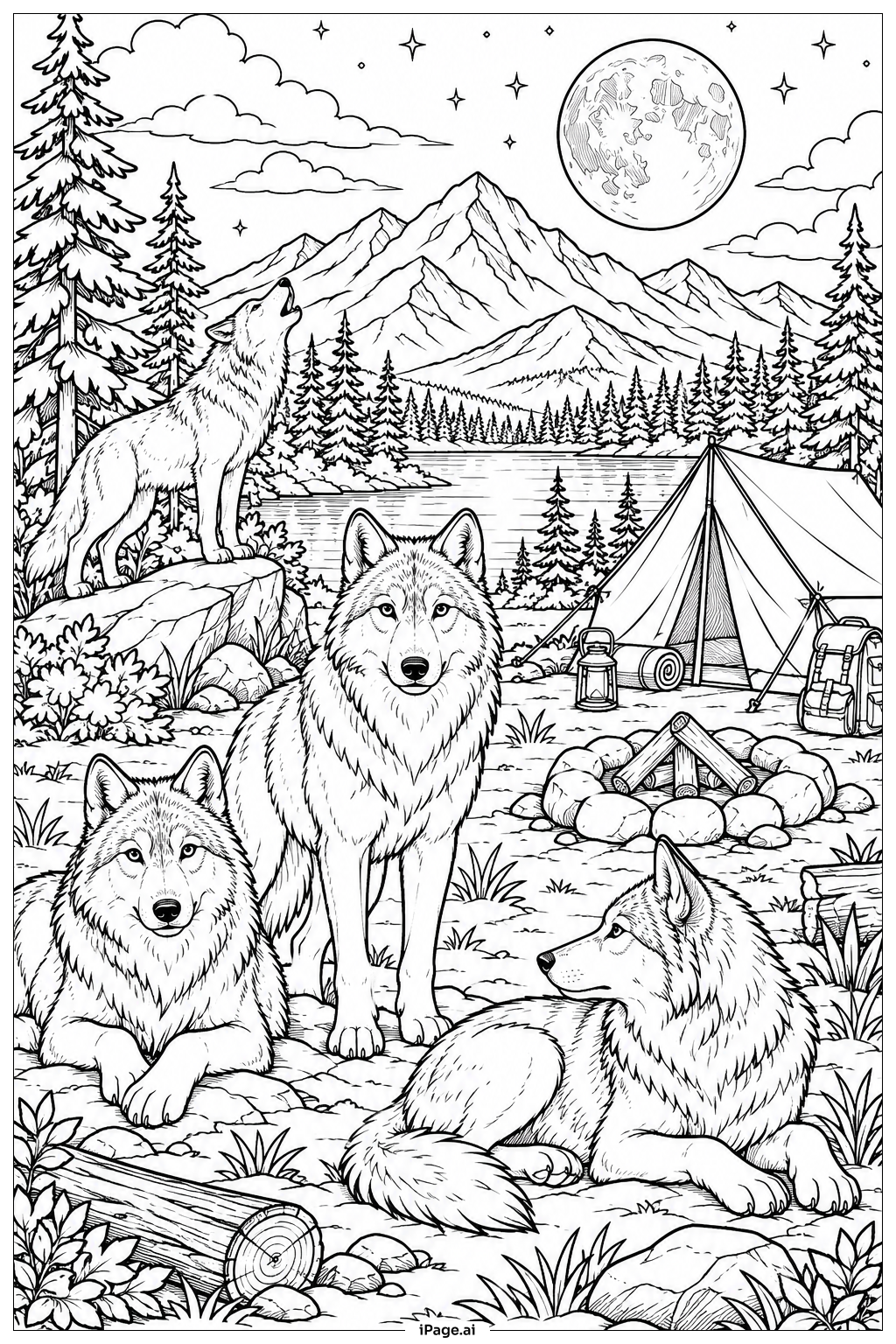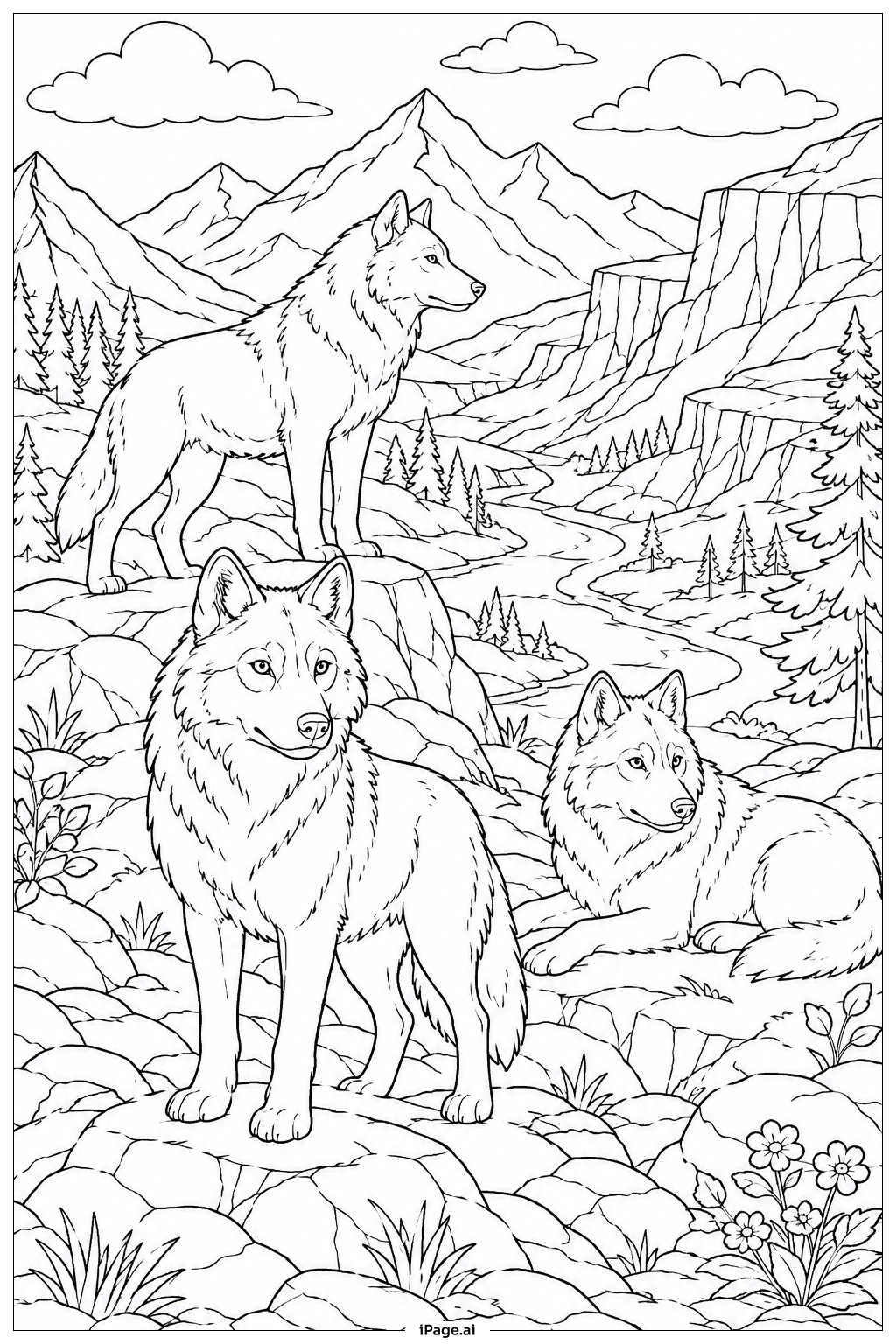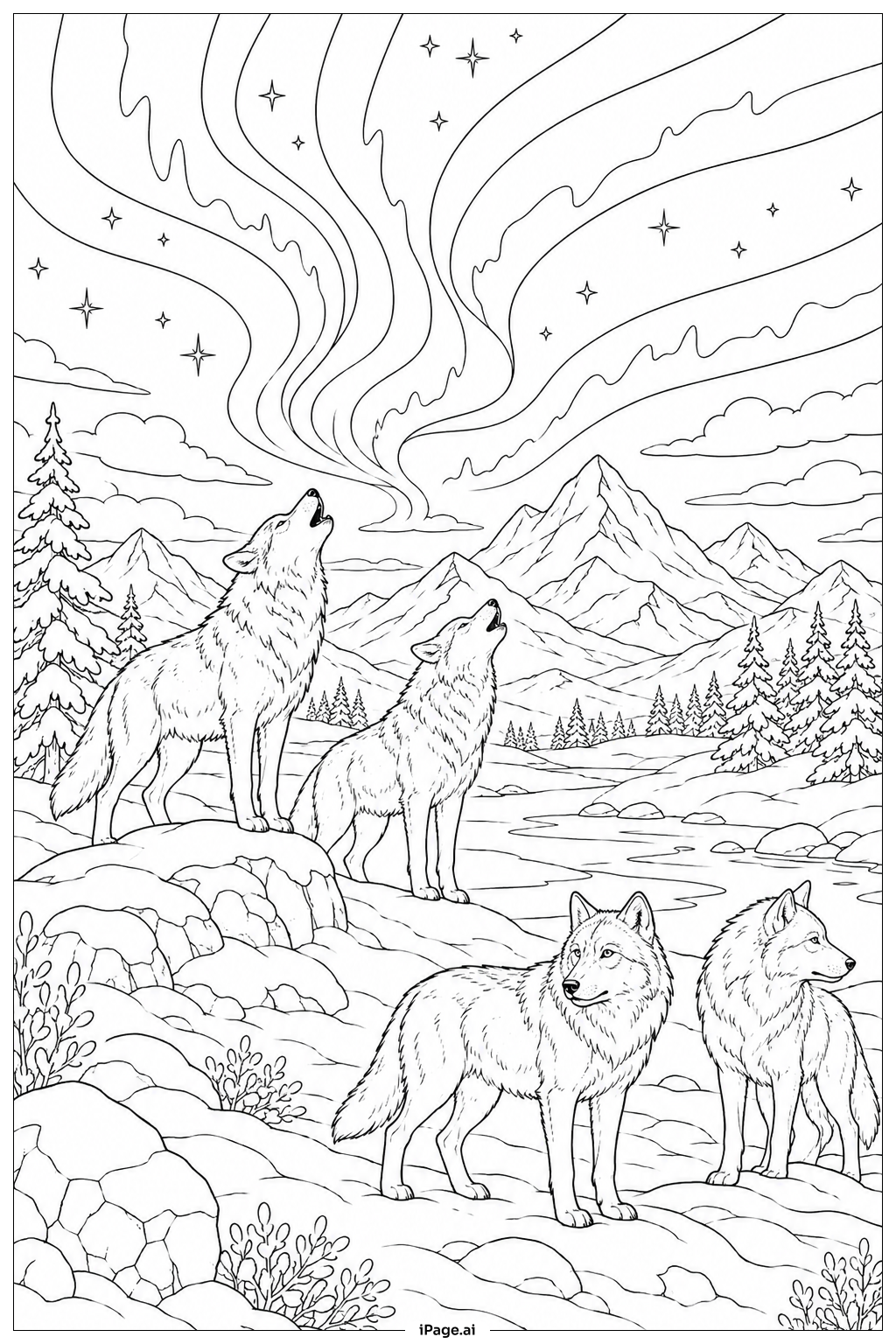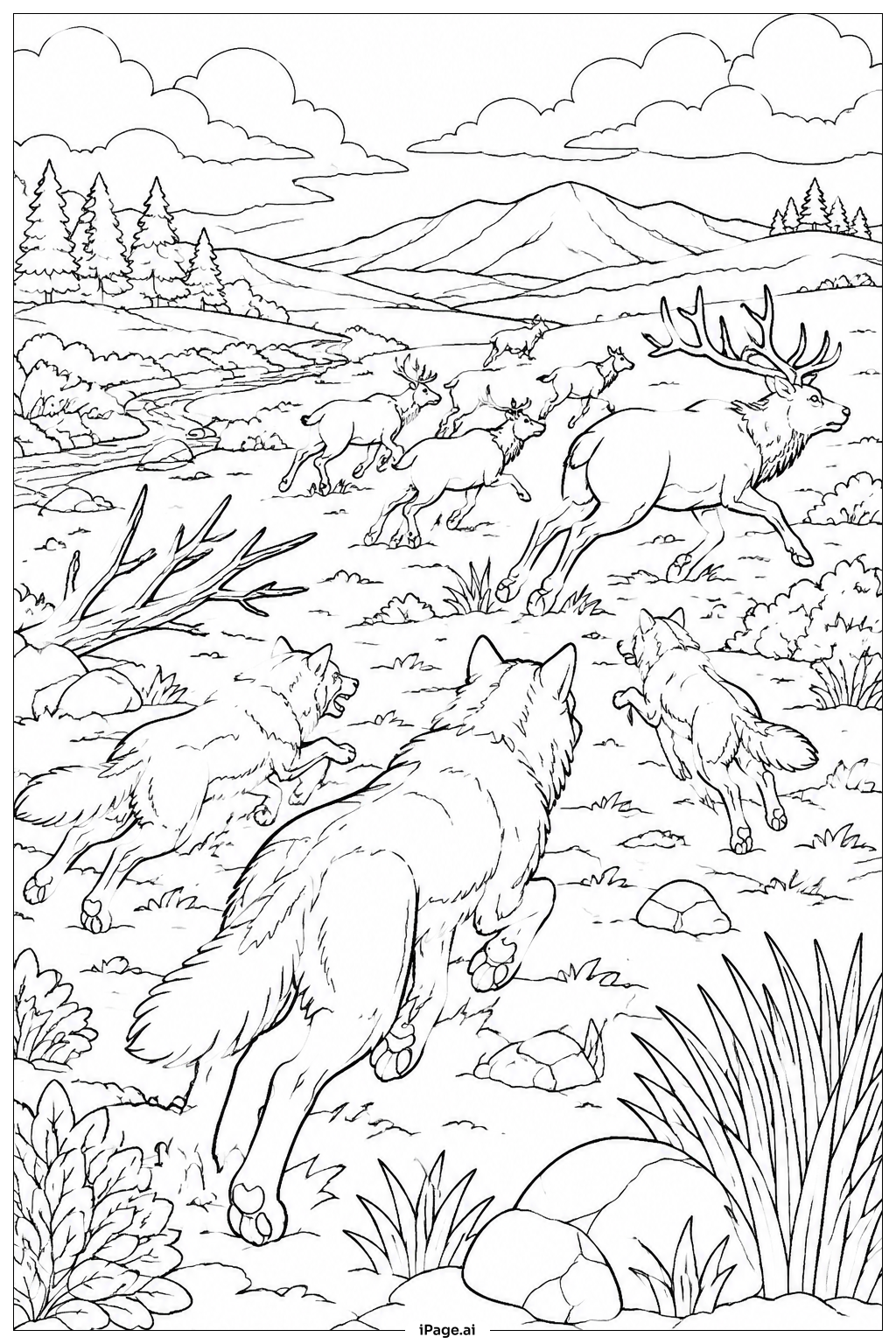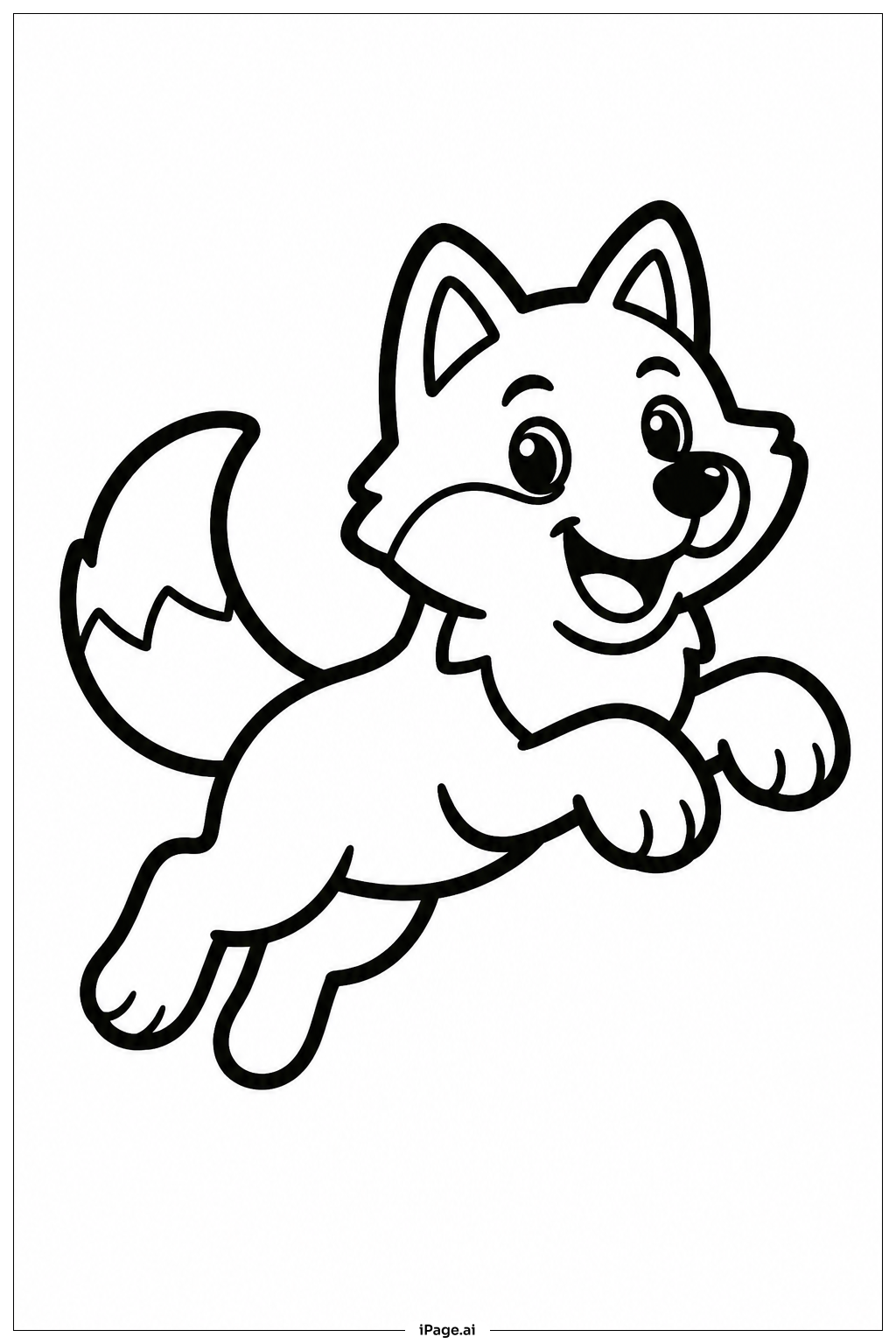
Coloring tips: How to color Playful Wolf Jump coloring page well?
Start with the wolf's body using shades of gray or warm brown. Use a darker tone along the back and a lighter, softer shade on the belly and chest to create depth. Add a touch of white or cream to the muzzle, inner ears, and paw tips for contrast. The tail looks great with a mix of gray and white, blending gently toward the tip. Use a bright pink or light red for the tongue and inner mouth. For the eyes, try amber, yellow, or golden brown to give the wolf a lively look. Color the grass tufts in fresh green tones, and use light blue or soft yellow in the background to suggest an open sky or sunny field. Keep the overall palette bright and warm to match the playful, happy mood of the scene. Kids can also get creative and try fantasy colors like blue or purple fur for a fun, imaginative twist.
Coloring challenges: Which parts are difficult to color and need attention for Playful Wolf Jump coloring page?
• Fur Texture Lines: The wolf's body is covered with many short, overlapping lines that suggest thick fur. Staying within these fine lines while switching between light and dark shades takes patience and a sharp colored pencil or fine-tipped marker. Rushing this area may result in muddy, uneven color.
• Body Shading and Dimension: Because the wolf is in mid-air with a dynamic pose, different parts of the body face different directions. The back should be darkest, the sides mid-tone, and the belly lightest. Blending these gradations smoothly without hard edges is one of the trickier skills needed here.
• Facial Details: The face has several small areas close together — the eyes, nose, open mouth, tongue, and teeth. Each needs a different color, and the spaces between them are tight. Using the wrong tool size in this area can cause colors to bleed into each other, losing the expression.
• Tail Curve and Flow: The large, sweeping tail has layered fur lines running in multiple directions. Coloring along the direction of each line, rather than across them, helps the tail look natural and fluffy. This requires attention and a steady hand.
• Background Balance: The simple background elements like grass and open space are easy to overlook, but choosing colors that contrast well with the wolf is important. If the background is too bright or too dark, it can overpower the main character and flatten the sense of depth and movement.
Benefits of coloring books: Advantages of drawing Playful Wolf Jump coloring page
Coloring this Playful Wolf Jump page offers a wide range of benefits for kids of all ages. The dynamic, leaping pose makes it immediately exciting and engaging, helping children stay focused and motivated throughout the activity.
Working on the wolf's fur encourages fine motor skill development. Carefully filling small, curved lines builds hand strength and pencil control, which directly supports handwriting and other detailed tasks.
Choosing colors for the wolf, background, and ground helps children practice color theory in a fun, low-pressure way. They learn how light and shadow work, how contrast makes a subject pop, and how warm and cool colors create different moods.
The playful nature of the image also sparks creativity and imagination. Children may invent a story about where the wolf is jumping or what it is chasing, blending visual art with storytelling.
Coloring also has a calming effect. Even with an energetic subject like a jumping wolf, the act of focusing on one area at a time helps children slow down, manage energy, and practice mindfulness without even realizing it.
Finally, completing the page gives a genuine sense of accomplishment. Displaying finished artwork builds confidence and encourages kids to take on new creative challenges.