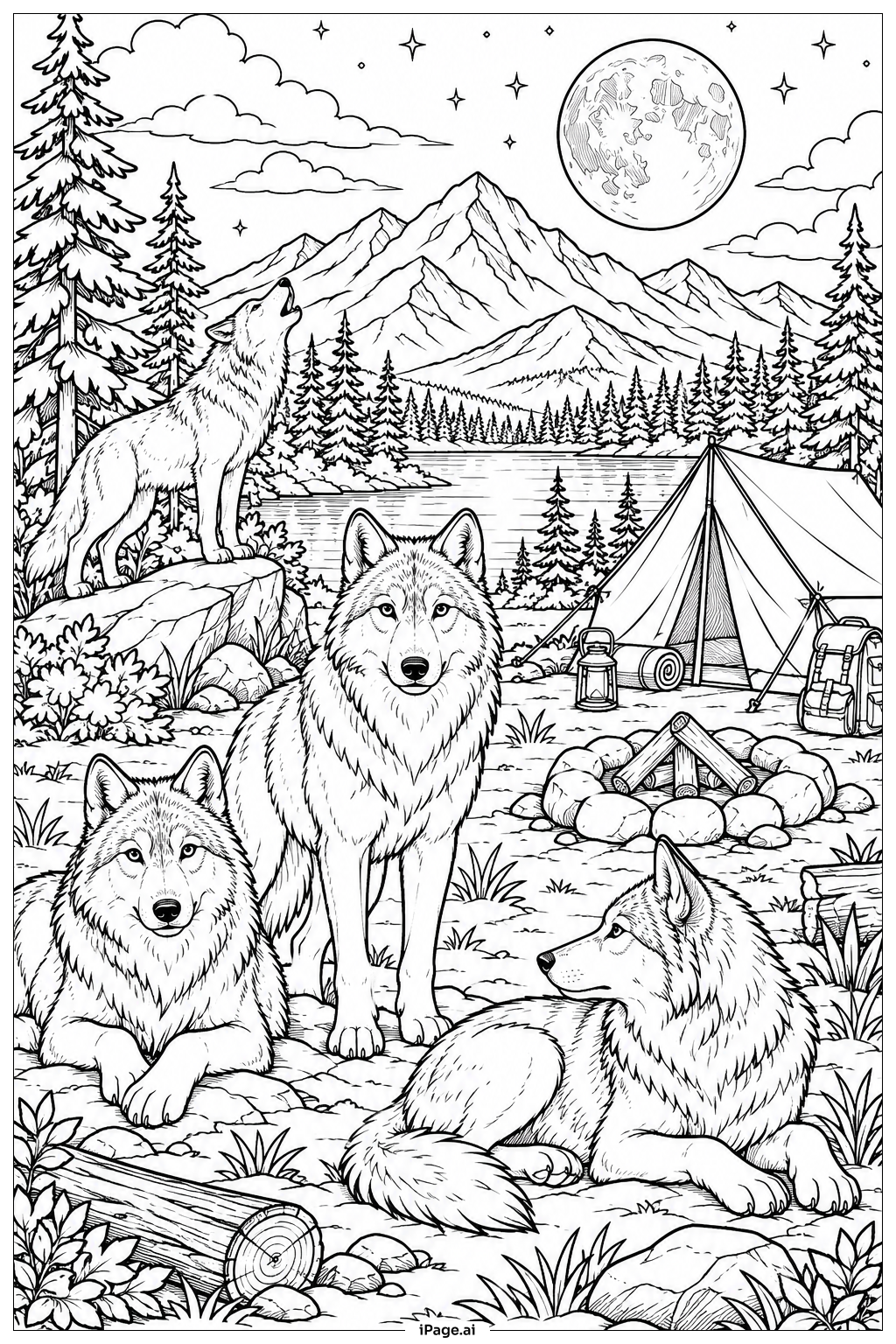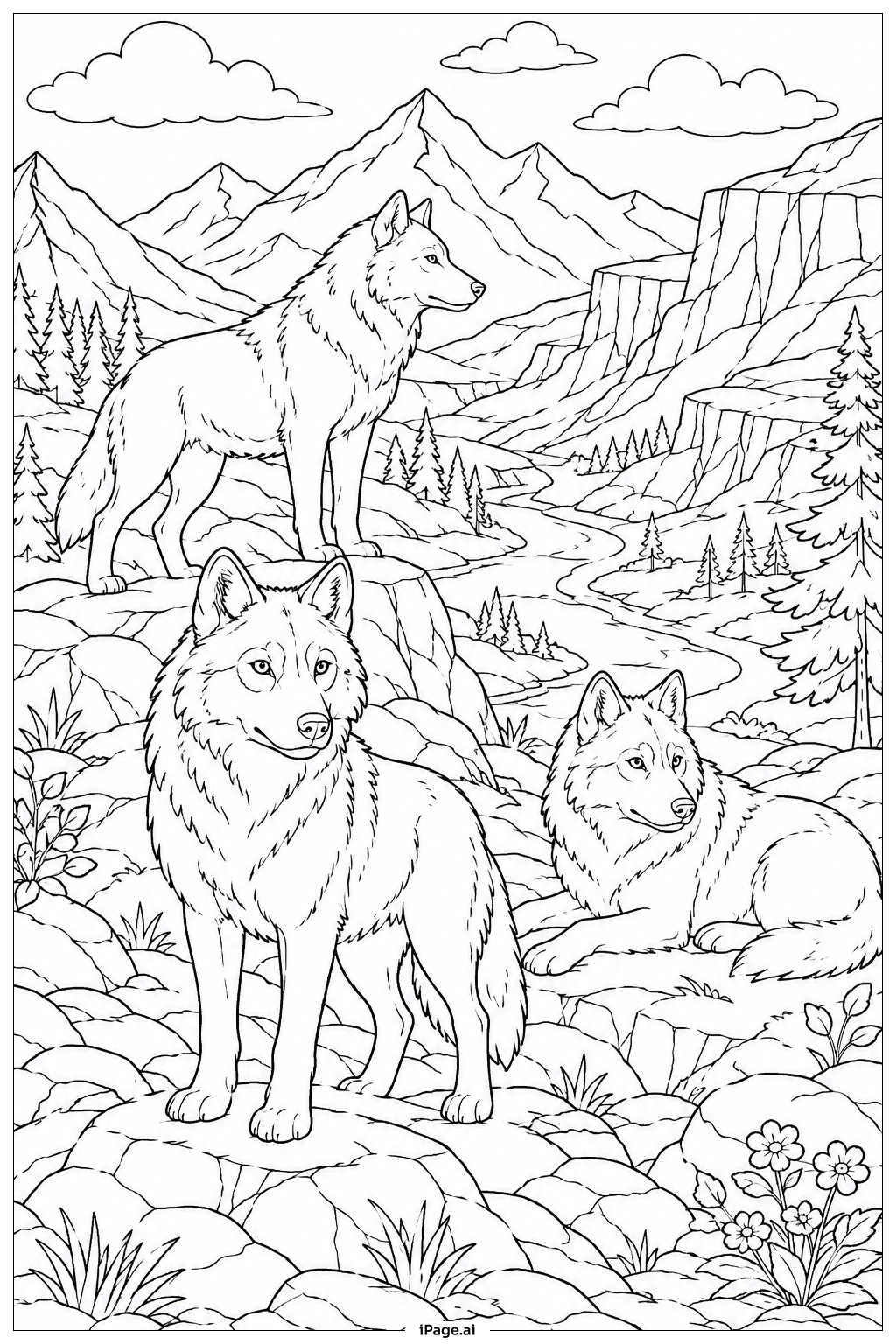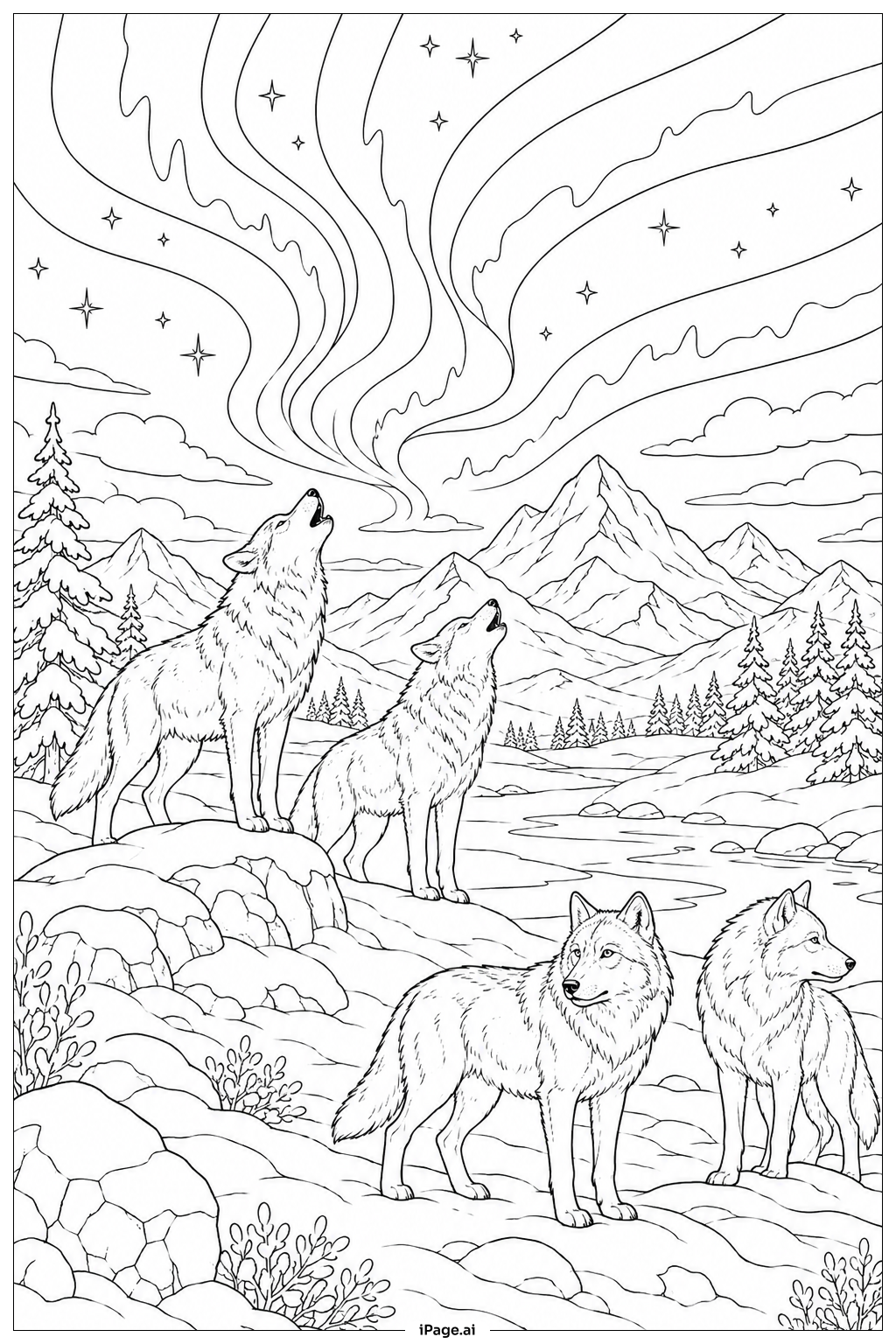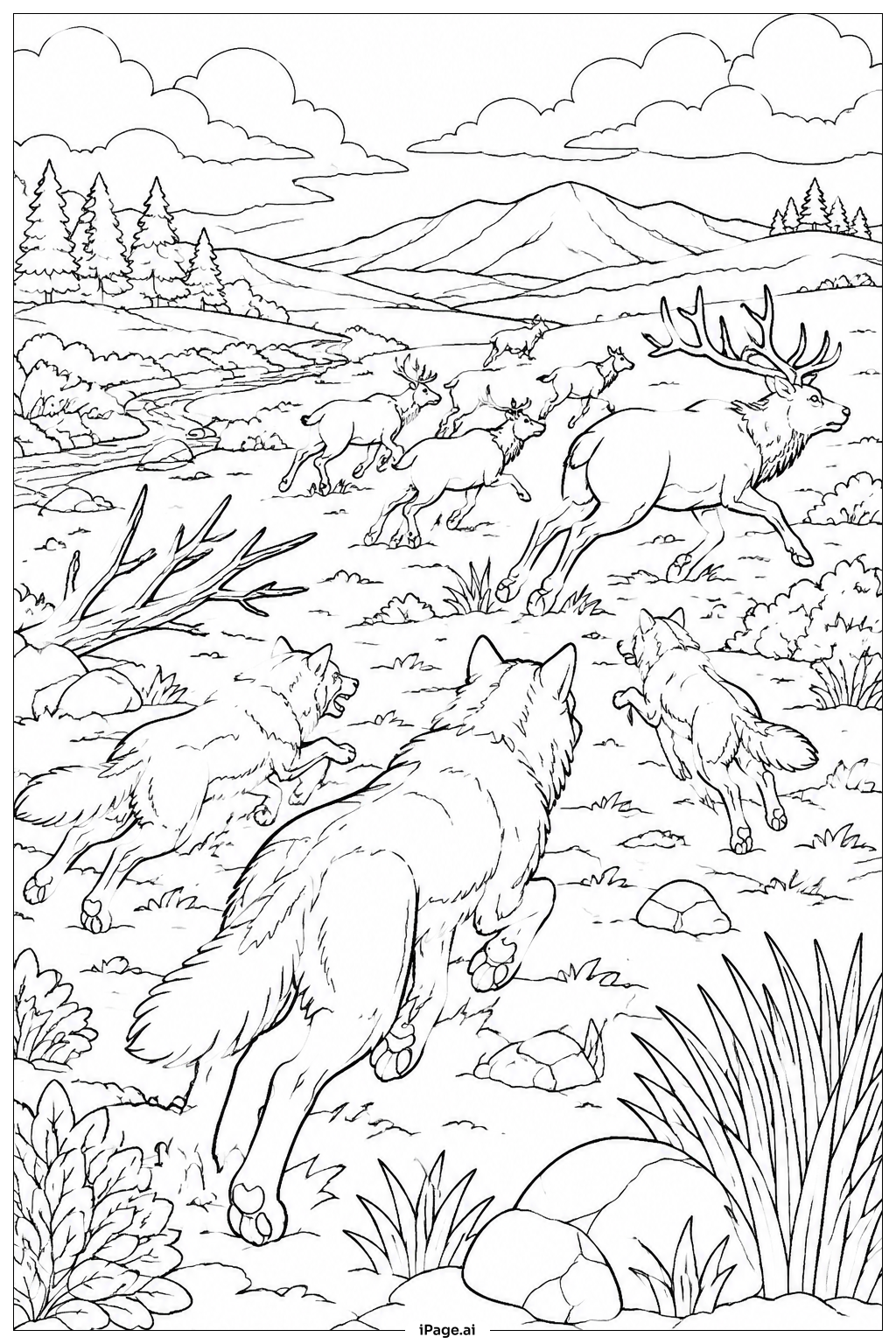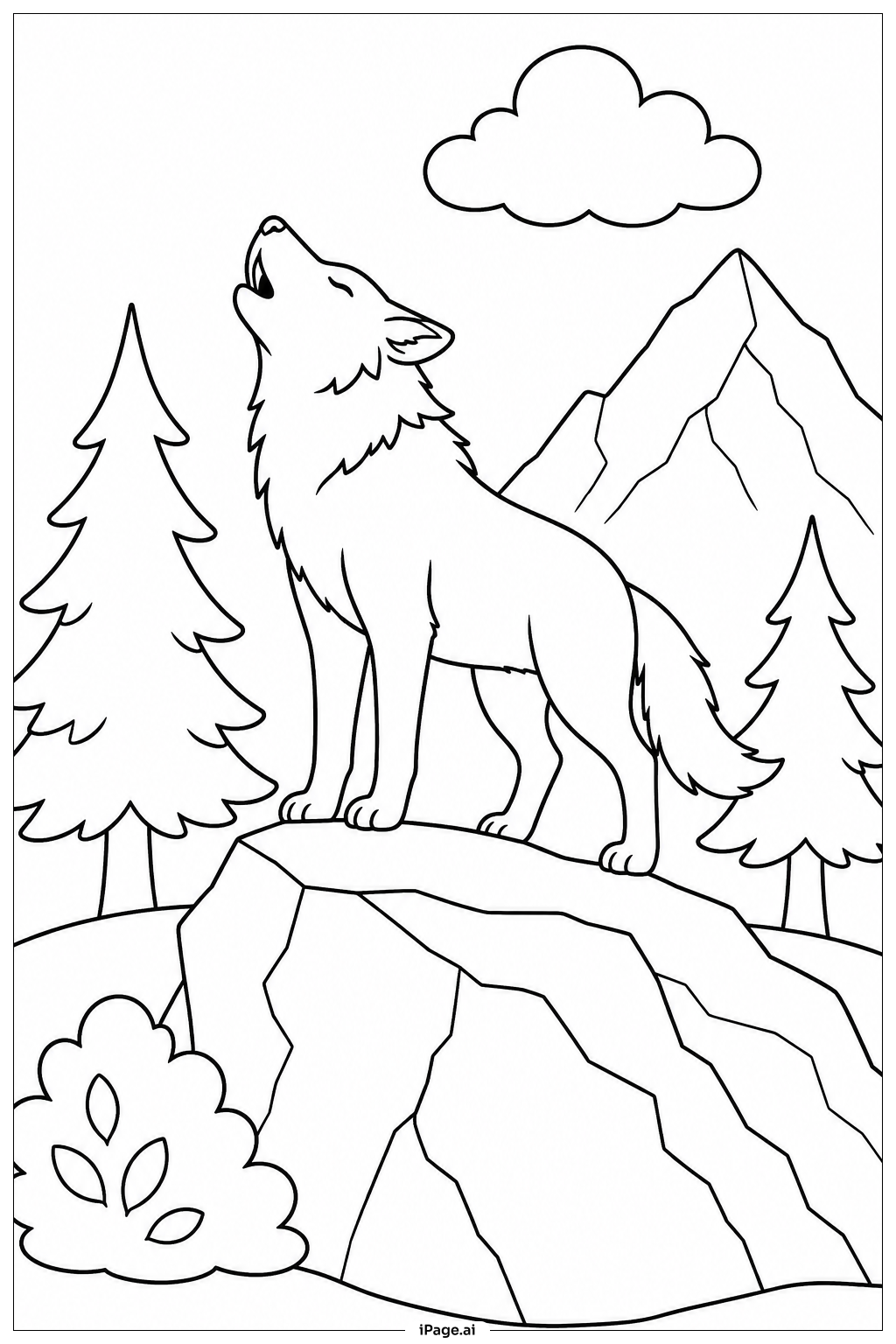
Coloring tips: How to color Lone Wolf On Rock coloring page well?
Start with the wolf's body using shades of gray, brown, or tan. Mix light and dark tones to show the thickness and depth of its fur. Use white or cream on the chest and underbelly for a natural look. Add darker shades along the back and sides to create shadows and dimension. For the eyes, try amber, yellow, or golden tones to give them a lively glow. Color the rock in earthy tones like gray, brown, or beige. Use darker shades in the cracks and crevices to make the rock look three-dimensional. For the background, soft blues, greens, or purples can suggest a sky, forest, or moonlit night. A dark blue or deep purple sky can make the wolf look even more dramatic and powerful. Feel free to use your imagination and make the scene your own.
Coloring challenges: Which parts are difficult to color and need attention for Lone Wolf On Rock coloring page?
• Wolf Fur Texture: The wolf's fur has many fine lines and overlapping layers. Coloring each section smoothly while showing depth and direction takes patience. Use short, feathery strokes and blend multiple shades of gray or brown to keep the fur looking natural and realistic rather than flat.
• Body Shading and Dimension: The wolf's muscular form requires careful shading to look three-dimensional. Light should appear on the upper back and head, while darker tones settle under the chest, legs, and tail. Without proper light and shadow, the wolf may look flat on the page.
• Rock Surface Detail: The rock has many rough edges, cracks, and uneven surfaces. Each crack needs a slightly darker tone to stand out, and the flat areas need gradual shading to show the rock's weight and solidity. Keeping these details consistent across the whole rock can be tricky.
• Small Facial Features: The wolf's face includes small but important details like the eyes, nose, mouth, and inner ears. These areas are compact and close together. Using a fine-tipped tool and steady hands is essential to avoid coloring outside the lines or losing the expression of the face.
• Background and Foreground Balance: The background should support the wolf without overpowering it. Choosing colors that are soft enough to stay in the back while still adding mood and atmosphere requires thoughtful color selection. Too bright a background can distract from the wolf, while too dark can make the whole image feel heavy.
Benefits of coloring books: Advantages of drawing Lone Wolf On Rock coloring page
Coloring this lone wolf image offers a wide range of benefits for both kids and Adults. For younger colorists, it builds focus and patience as they work through the wolf's detailed fur and the textured rock surface. Staying within the lines and choosing colors helps develop fine motor skills and hand-eye coordination.
For older kids and Adults, this image encourages creative thinking. Deciding how to blend colors, create shadows, and set the mood of the background is a meaningful artistic exercise. It also introduces basic concepts of light, shadow, and depth in a fun and approachable way.
The theme of the lone wolf, a symbol of independence and inner strength, can also be inspiring. Spending quiet time coloring this scene can feel calming and meditative, helping to reduce stress and promote relaxation after a busy day.
Completing the image gives a sense of accomplishment and boosts confidence. Whether you are a beginner or an experienced colorist, this image is a rewarding and enjoyable challenge that celebrates the beauty of nature and wildlife.