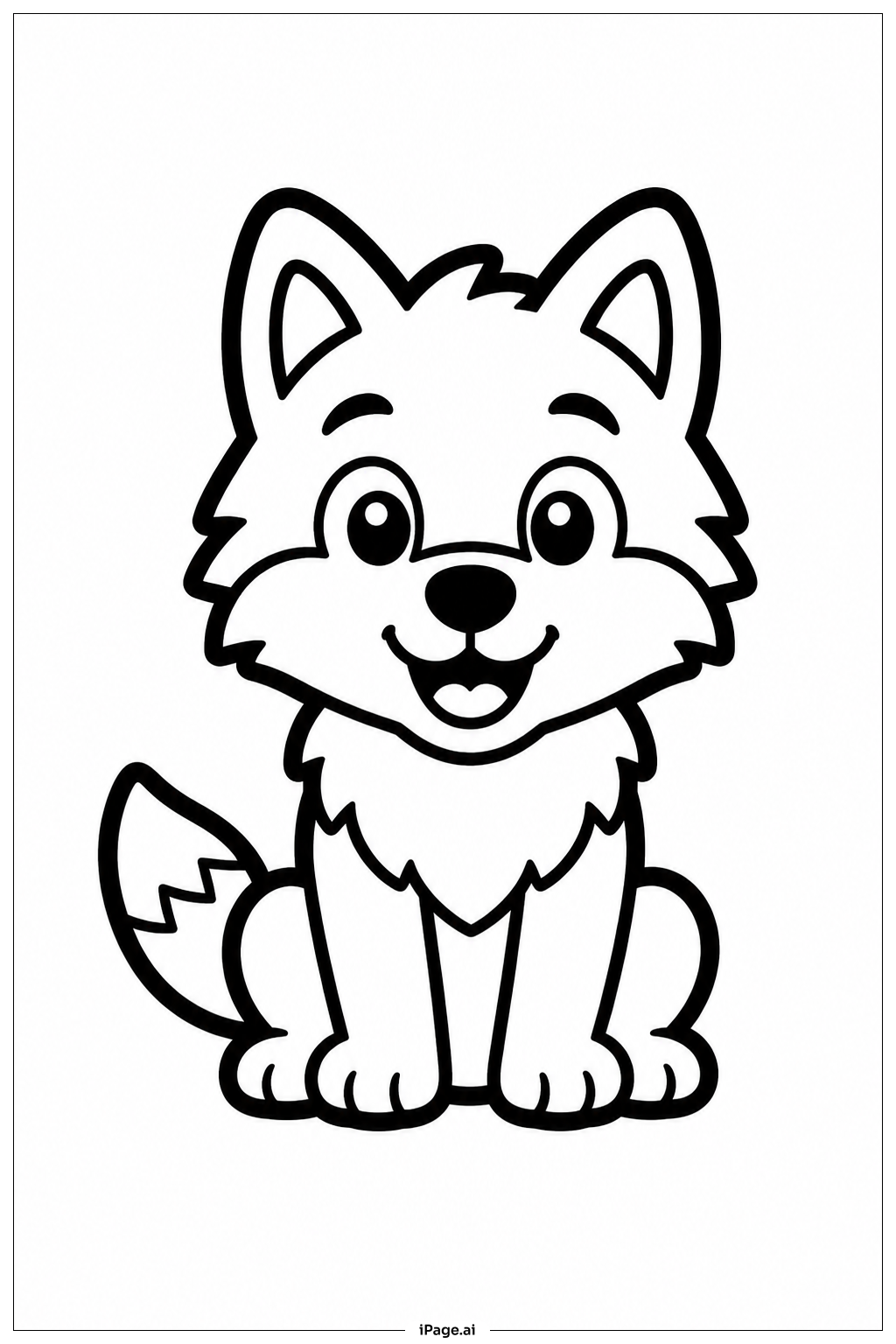
Coloring tips: How to color Happy Wolf Cub coloring page well?
Start with the wolf cub's fur. Wolves are often gray, but you can make this cub your own! Try a warm light gray or soft tan for the main body. Use a slightly darker shade on the back, ears, and top of the tail to add depth. Leave the belly, muzzle, and inner ears lighter — white or pale cream works nicely. The eyes can be bright amber, golden yellow, or even sky blue for a magical feel. Add a shiny white dot to each eye to make them sparkle. Color the nose dark gray or black, and use a soft pink for the tongue if it is showing. For the background, try a cheerful outdoor scene — greens for grass, blues for sky, or warm yellows for a sunny meadow. Use colored pencils or crayons to blend fur colors smoothly. Have fun and make this happy little wolf cub truly yours!
Coloring challenges: Which parts are difficult to color and need attention for Happy Wolf Cub coloring page?
• Fur Texture and Layering: The wolf cub's body is covered in short, sketched fur lines that run in different directions. Coloring inside these small sections while following the fur direction takes patience. Using short, light strokes with colored pencils can help create a natural, fluffy look. Blending two close shades together — such as light gray and white — adds softness and realism to the coat.
• Facial Features and Expressions: The cub's face holds most of the emotion in this image. The eyes, nose, and mouth are small but very important. Staying neat inside the eye outlines and adding highlights without smearing takes a steady hand. Even a small coloring mistake near the eyes can change the whole expression, so work slowly and carefully in this area.
• Shading and Depth on a Round Body: The cub has a soft, chubby shape. To make it look three-dimensional, you need to apply lighter colors on the front and belly and gradually darken toward the sides and back. This kind of gradient shading can be tricky for younger colorists but is very rewarding when done well.
• Ear Details: The inner ears are small and triangular with their own lighter coloring. Keeping the inner ear color separate and neat from the outer ear fur requires precise control. A fine-tip marker or a sharpened pencil works best here.
• Paws and Tail Tips: The paws are small and rounded, with tiny toe lines. The tail is fluffy with layered fur marks. Both areas need careful attention to avoid filling in the outline lines by accident, which can flatten the look of these features.
Benefits of coloring books: Advantages of drawing Happy Wolf Cub coloring page
Coloring this Happy Wolf Cub page brings many wonderful benefits for children and young artists. First, it builds fine motor skills. Staying inside the lines and making smooth strokes trains the small muscles in the hands and fingers, which helps with writing and other daily tasks. Second, it encourages creativity. Choosing colors, mixing shades, and imagining a world for the wolf cub lets kids express themselves freely and build confidence in their artistic choices. Third, it supports focus and patience. The fur texture and small facial details require careful attention, helping children practice sitting still and concentrating on a task from start to finish. Fourth, coloring is a calming activity. It can reduce stress and anxiety, giving kids a peaceful break from screens and busy schedules. The cheerful subject — a happy, playful wolf cub — also lifts the mood and sparks imagination. Kids may even begin making up stories about where the wolf cub lives and who its friends are. Finally, completing the page gives a strong sense of accomplishment, building self-esteem and a love for creative work. This page is a wonderful activity for Boys and Girls of all skill levels.