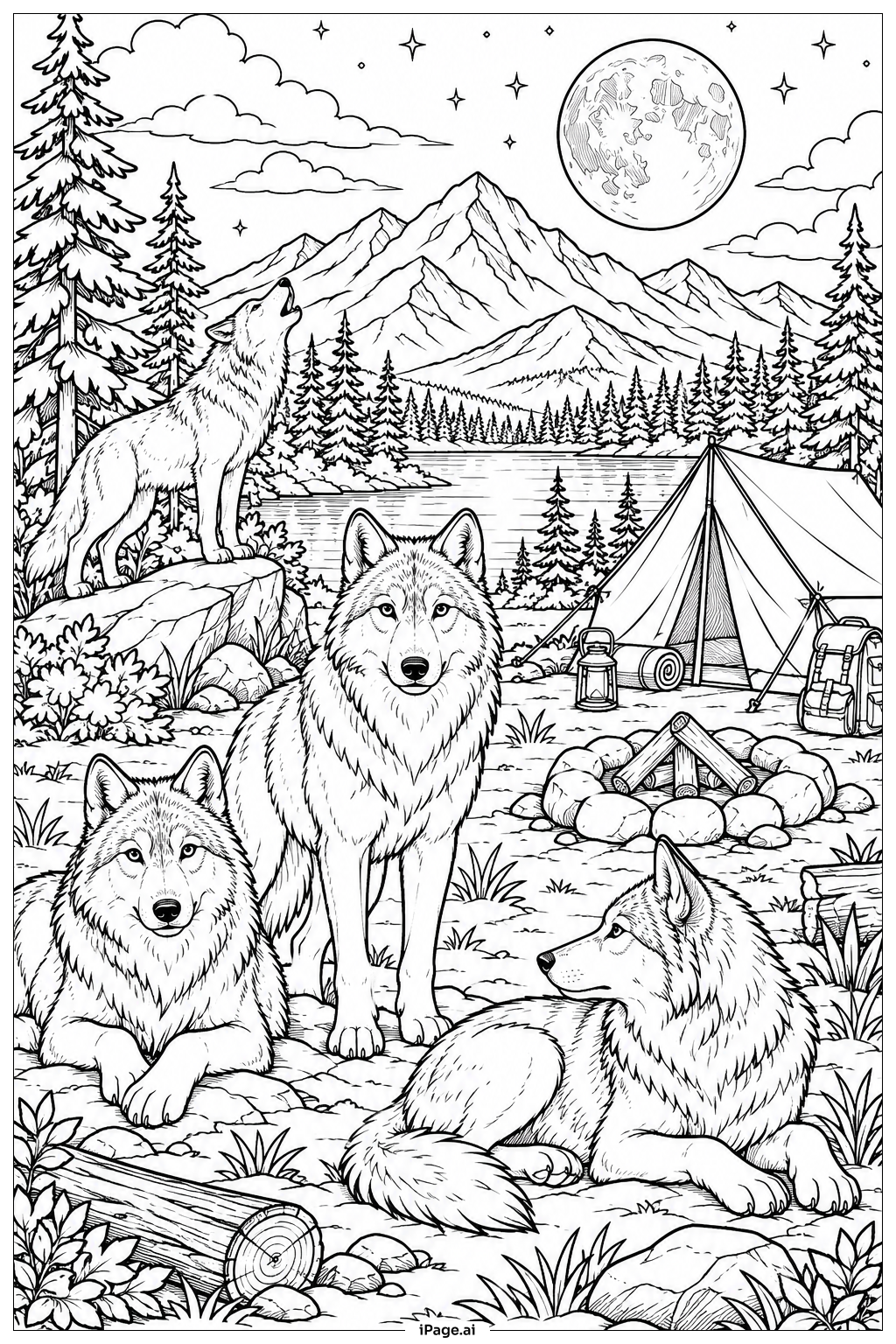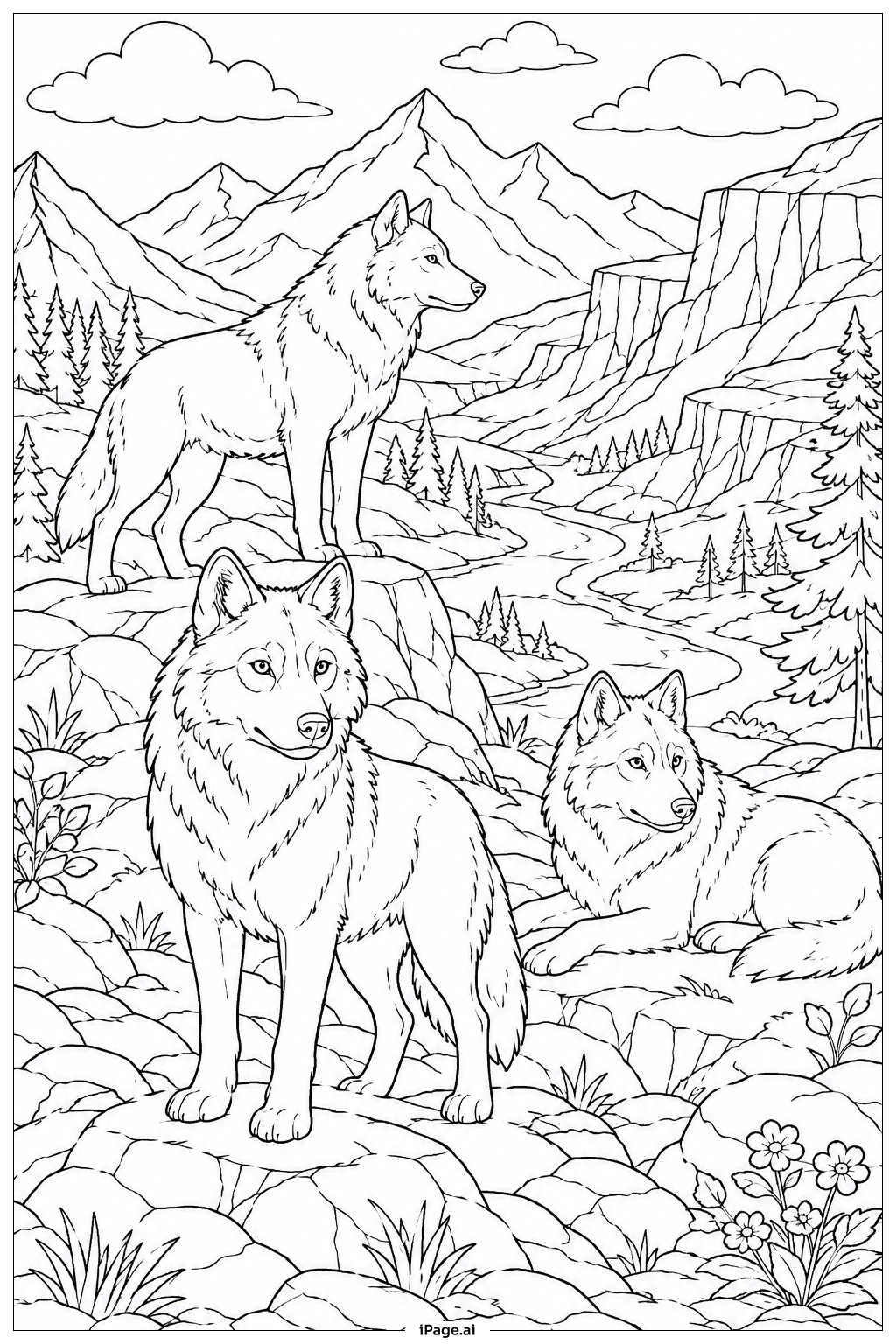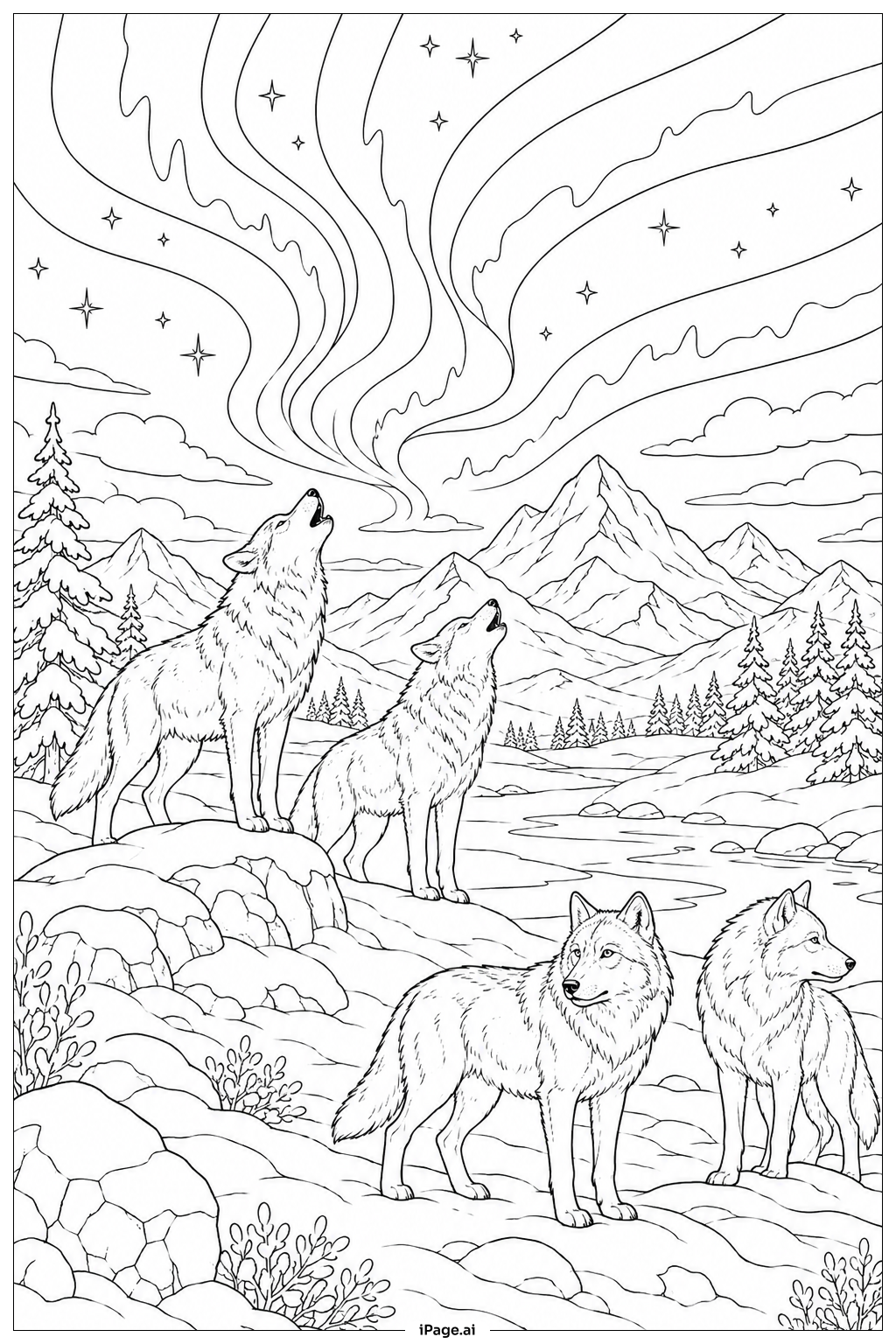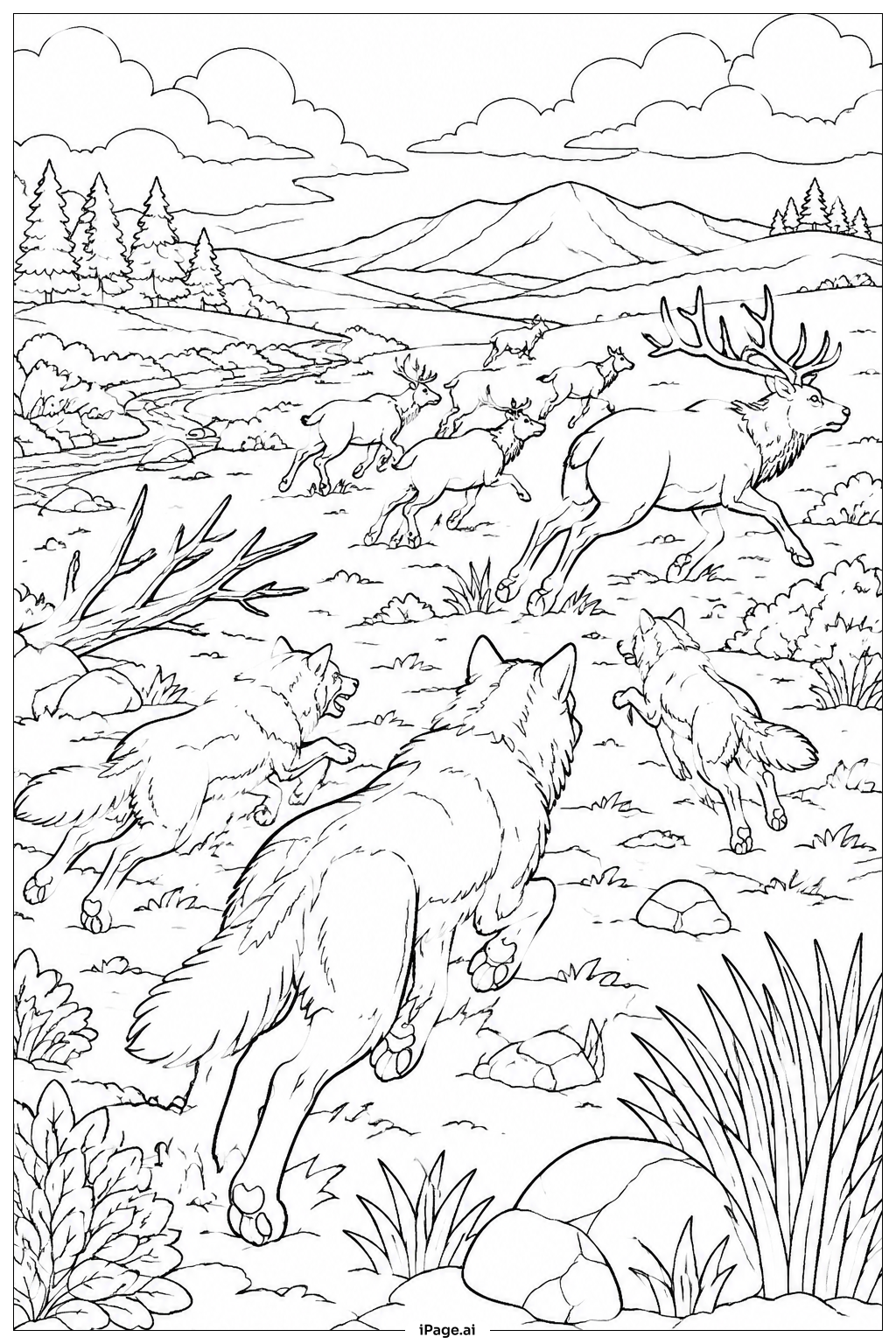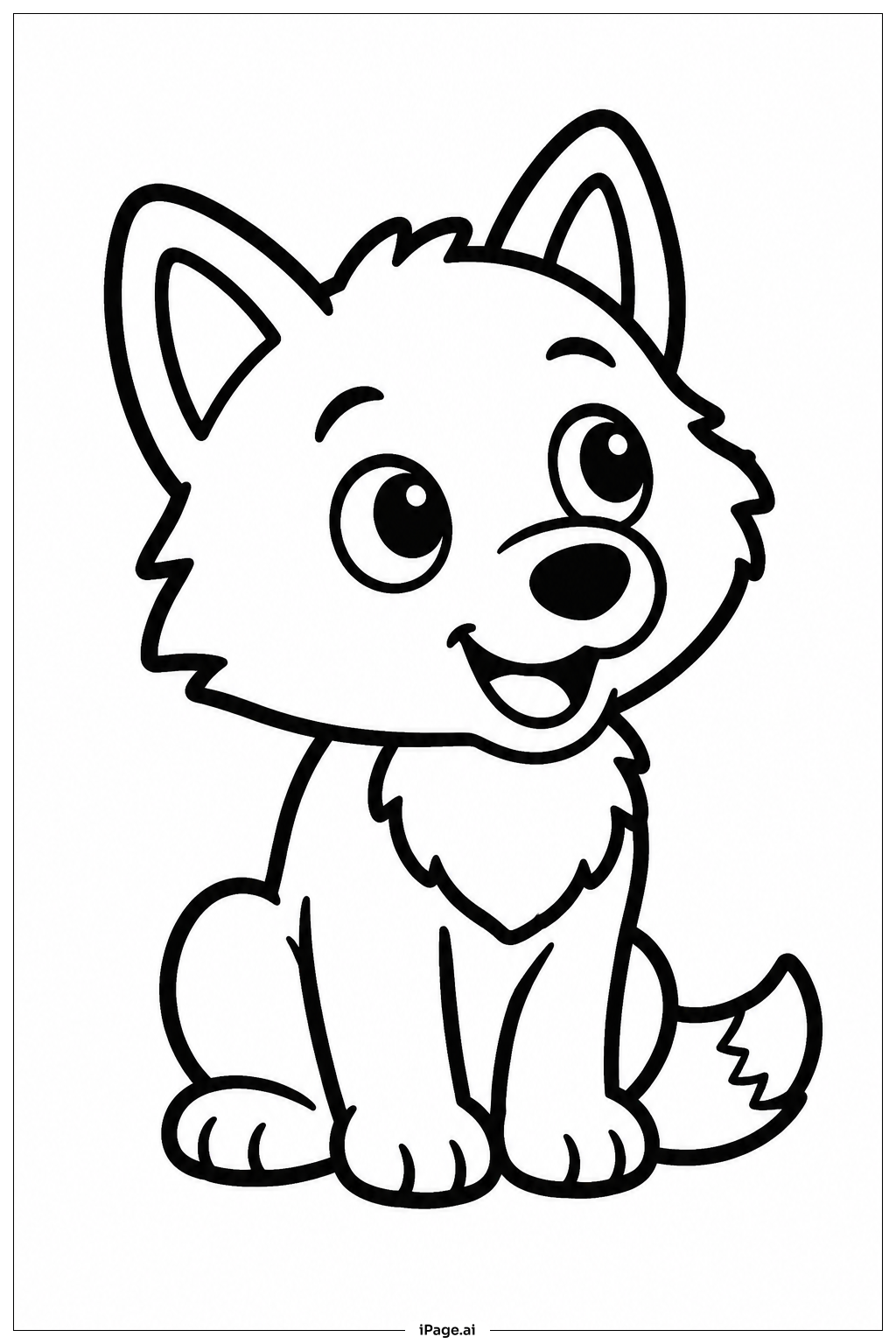
Coloring tips: How to color Curious Wolf Pup coloring page well?
Start with the wolf pup's body fur. Use soft grays and warm tans for the main coat. Add light cream or white to the chest, belly, and inner ears. Use a slightly darker gray or brown for the back and top of the head to show depth. The eyes can be colored golden yellow or amber — a classic wolf eye color that really makes the face pop. Use a soft pink for the inner ear and the nose tip. For the paws, keep the tones light and gentle. The background forest elements look great in soft greens and earthy browns. Try blending two shades of the same color on the fur to make it look fluffy and real. Light pencil strokes work best for the fur texture. Kids can also get creative and try a fantasy look with purple or blue fur for a fun twist.
Coloring challenges: Which parts are difficult to color and need attention for Curious Wolf Pup coloring page?
• Fur Texture and Layering: The wolf pup's coat has many overlapping lines that represent layers of fluffy fur. Coloring these lines without making the fur look flat is tricky. You need to follow the direction of each stroke and use light pressure so the layers show through. Blending two or three close shades of gray, tan, or brown will help create a natural, three-dimensional look.\n\n• Facial Details and Expression: The pup's face has small, close-together features — the eyes, nose, and mouth all sit in a compact area. Staying within the lines while coloring these details takes patience and a sharp pencil or fine-tip marker. The eyes especially need careful attention since they carry the pup's curious expression. A tiny white highlight dot in each eye makes them look alive.\n\n• Ear Shading: The ears have an outer fur region and a soft inner area. These two zones need different colors and tones to look natural. The outer ear matches the main fur color, while the inner ear calls for a lighter pink or peachy tone. Getting the transition between these two areas smooth is a common challenge.\n\n• Background Balance: The forest background has leaves and ground elements that should complement the pup without stealing attention. Choosing colors that are softer and less vivid than the pup's colors keeps the focus on the wolf. This kind of color planning takes a bit of thought before you start.\n\n• Small Paw Details: The pup's paws have small toes and tiny claws. These are easy to overlook but add realism when colored carefully. Use a fine tool and take your time to stay within each small section.
Benefits of coloring books: Advantages of drawing Curious Wolf Pup coloring page
Coloring the Curious Wolf Pup page brings a wide range of benefits for kids and families. First, it builds fine motor skills. Staying within the detailed fur lines and tiny facial features trains hand control and finger strength, which helps with writing and everyday tasks. Second, it sparks creativity. Choosing colors for the pup — whether realistic grays or imaginative blues — encourages kids to make their own artistic decisions and feel proud of the result. Third, it supports focus and patience. A detailed image like this one requires sustained attention, gently training the brain to slow down and concentrate. Fourth, it introduces children to nature and wildlife. Learning about wolf pups while coloring creates a fun, low-pressure way to build curiosity about animals and ecosystems. Fifth, it is calming and stress-relieving. The rhythmic motion of coloring is soothing for both kids and adults, making it a great quiet-time or wind-down activity. Finally, completing the page gives a genuine sense of accomplishment. Displaying a finished wolf pup drawing builds confidence and encourages kids to keep creating. This page works beautifully as a solo activity or a shared experience between parents and children.