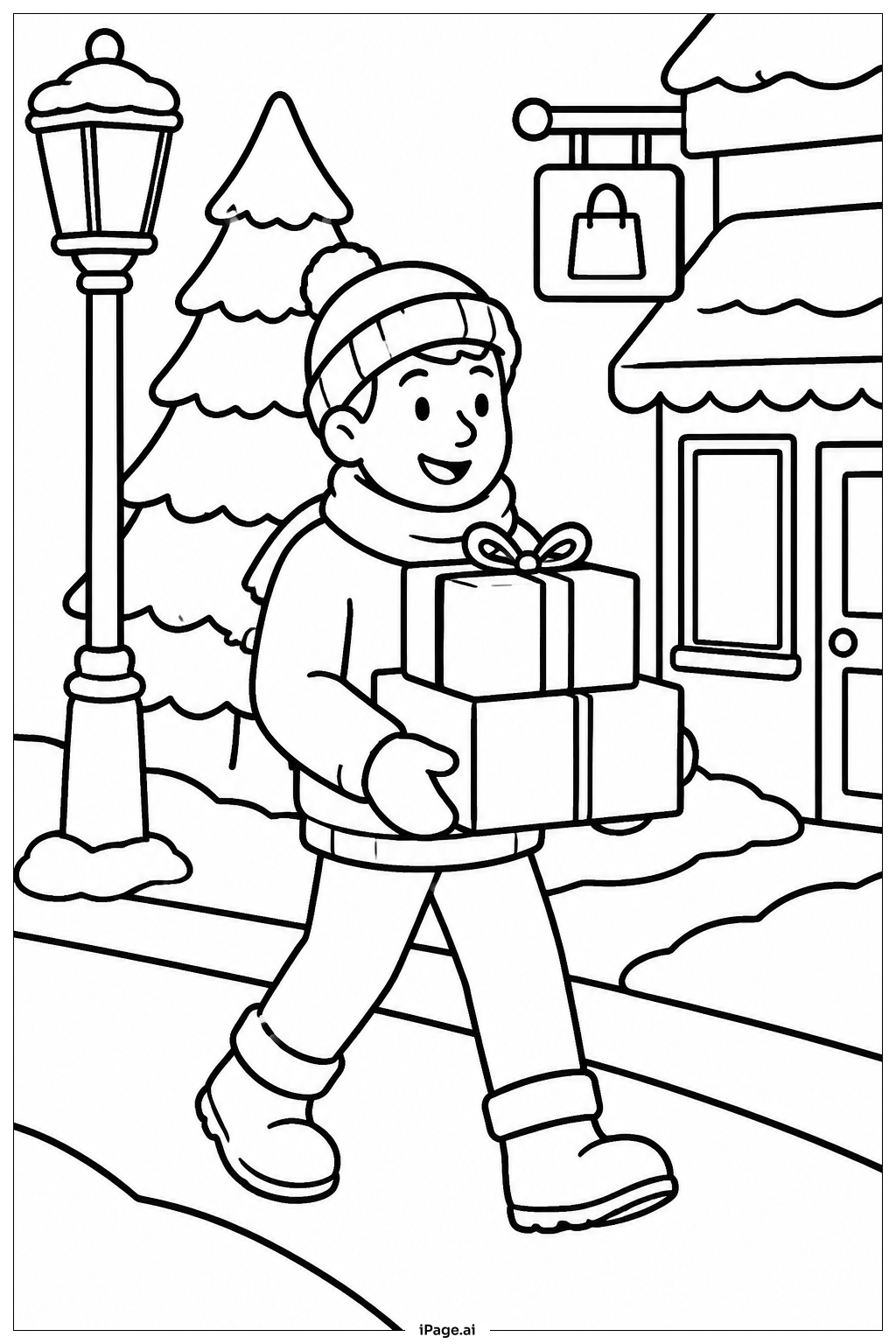
Coloring tips: How to color Winter Village Street coloring page well?
For this Winter Village Street scene, try using soft blues and whites to capture the crisp snow and chilly sky. Warm colors such as reds, greens, and golden yellows will bring life to the houses and decorations. You can color the windows with bright yellows or oranges to depict warm lights inside. Use grey or brown tones for tree trunks and lampposts. Don’t forget to add shading to give depth to the snow on rooftops and ground. Add sparkle to the falling snowflakes with light touches of silver or light blue. Experiment with blending colors to show frosty icy patches on the pond and snow texture on the roofs. Have fun creating a contrast between the cold outside and the cozy warmth inside the village homes.
Coloring challenges: Which parts are difficult to color and need attention for Winter Village Street coloring page?
• Small Details: The houses have intricate architectural details like windowpanes, wreaths, and chimney smoke that require careful coloring to stay within the lines and highlight their charm.
• Texture Variation: Representing different winter textures such as smooth snowy surfaces, rough tree bark, and icy pond requires varied shading techniques to look natural and realistic.
• Lighting Effects: Showing light glowing through windows and lampposts can be challenging, as it needs smooth color transitions and careful use of brightness versus shadows.
• Layering Snow: Coloring snow on rooftops, trees, and the ground demands attention to layering and blending whites with blues or greys to avoid flatness while preserving the sense of cold.
• Figures and Movement: People wearing winter clothes and skating add dynamic elements that can be tricky to color while maintaining proportion and appropriate winter colors for clothing and accessories.
Benefits of coloring books: Advantages of drawing Winter Village Street coloring page
Coloring this Winter Village Street image helps improve fine motor skills through detailed work on the small architectural features and figures. It encourages creativity in choosing color combinations to depict different winter elements like snow, ice, and warm lights. The scene promotes observation skills by requiring attention to light and shadow to create a three-dimensional look. It also offers relaxation and a sense of calm, as the peaceful winter setting inspires focus and mindfulness. For children and adults alike, coloring this image can enhance hand-eye coordination and provide a joyful way to engage with a seasonal, festive theme.