Coloring tips: How to color Winter Arctic Research Team coloring page well?
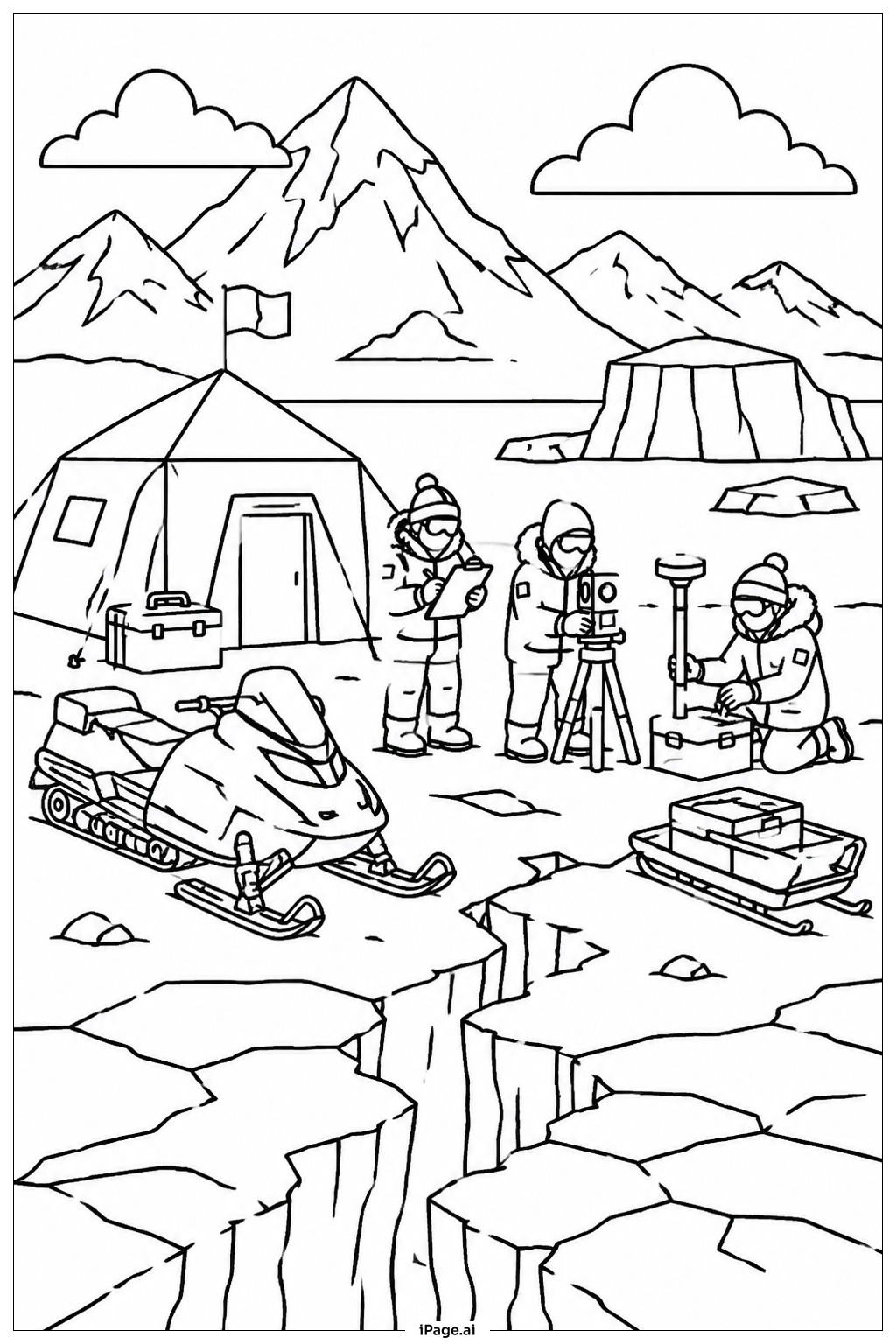
Use cool colors like different shades of blue and white to bring out the icy Arctic setting. Bright colors like orange or red are great choices for the team’s jackets and hats to show their warm clothing and help them stand out against the snow. Add touches of gray and brown for the scientific equipment and boots. For the background, include pale blues and soft purples to create a cold winter sky and distant mountains. You can also add texture by mixing light and dark tones on the snow to show shadows and depth. Keep the colors balanced to make the scene look lively yet realistic.
Coloring challenges: Which parts are difficult to color and need attention for Winter Arctic Research Team coloring page?
• Small Details: The image contains intricate details such as zippers, gloves, and scientific tools that require careful coloring to avoid going outside the lines.
• Layered Clothing: Coloring the different layers of clothing realistically needs attention to shading to show the thickness and folds.
• Contrast Between Subjects and Background: It can be challenging to make the researchers stand out against the snowy white background without overwhelming the scene with too many bright colors.
• Ice and Snow Texture: Creating a natural look for the ice and snow requires blending subtle color variations rather than solid colors.
• Group Composition: Since there are several people close together, keeping each one distinct by using different colors for their gear helps avoid confusion but may be tricky to balance.
Benefits of coloring books: Advantages of drawing Winter Arctic Research Team coloring page
Coloring this Winter Arctic Research Team image helps children learn about teamwork, science, and nature in cold climates. It encourages fine motor skills through detailed coloring of clothing and equipment. This activity also sparks curiosity about arctic research and environmental exploration. Using colors to differentiate each researcher boosts creativity and attention to detail. Finally, working with cool color palettes and subtle shading develops an understanding of depth and texture.