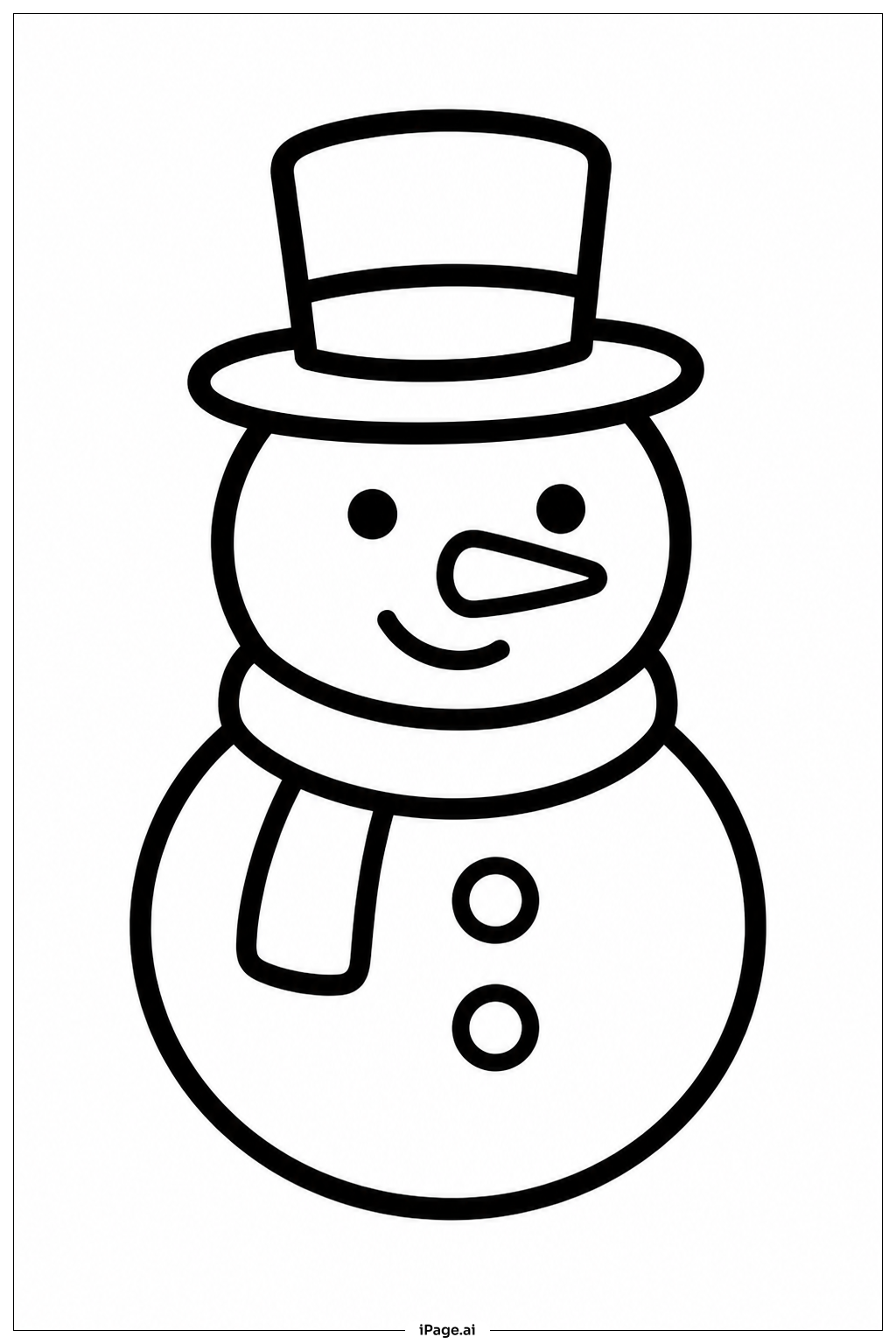
Coloring tips: How to color Winter Snowman coloring page well?
Start with the snowman's body. Use very light blue or a soft gray to add gentle shading to the snowballs, giving them a round, three-dimensional look. Leave the brightest spots white to show reflected light on the snow.
For the top hat, try a classic black or a deep navy blue. The scarf looks great in bold, cheerful colors like red, orange, or striped patterns in two contrasting colors.
Color the stick arms in warm brown tones. Use black or dark gray for the button eyes and belly buttons.
For the background sky, a pale blue or soft lavender works beautifully. The falling snowflakes can stay white or be colored in icy light blue. Ground snow can be shaded in very light blue to match the snowman's body.
Add some color to the background trees using dark green for pine branches or bare brown branches for a leafless winter tree. These small background details help the snowman pop off the page.
Coloring challenges: Which parts are difficult to color and need attention for Winter Snowman coloring page?
• Shading the Snowballs: The snowman's body is made of large, curved, round shapes. Adding shading to these balls to make them look three-dimensional can be tricky. You need to decide where the light source is and apply lighter colors at the top and darker tones at the edges. Using smooth, circular strokes helps blend the shading naturally without creating harsh lines.
• Small Facial Details: The snowman's face has tiny dot-shaped eyes, a small nose, and a curved smile. These tiny features are hard to fill in neatly, especially for younger children. Using a fine-tipped coloring tool works best here. Try to stay inside each small dot without smudging into the surrounding white space.
• Scarf Patterns and Folds: The scarf wraps and folds around the snowman's neck, creating layers and curves. If you want to add stripes or patterns to the scarf, you have to follow the curves carefully so the lines look natural and not stiff. Using two or three colors alternately adds a fun, realistic striped effect.
• Background Snow and Snowflakes: The snowy ground and falling snowflakes blend into the snowman's white body very easily. Deciding how to color the background without losing the snowman's outline takes some planning. Using a light cool color like pale blue or soft purple for the sky and ground creates a clear contrast.
• Balancing the Overall Color Palette: Choosing colors that work well together across the whole image is a real challenge. Too many bright colors can look chaotic, while too few can look dull. Picking a simple palette of two or three main colors plus one or two accent colors helps keep the finished piece looking balanced and beautiful.
Benefits of coloring books: Advantages of drawing Winter Snowman coloring page
Coloring this Winter Snowman page brings a wide range of benefits for children and adults alike.
For kids, it is a wonderful way to practice fine motor skills. Carefully coloring inside the snowman's curved outlines, small buttons, and tiny facial details helps strengthen hand-eye coordination and pencil control.
Choosing colors for the hat, scarf, and background encourages creative thinking. There is no single right answer, so children feel free to experiment and express their own ideas. This builds confidence and imagination.
The winter theme also sparks conversation. Parents and children can talk about snow, seasons, and holidays while coloring together, turning it into a fun learning moment.
For older children and adults, the shading challenges in the snowballs and background offer a satisfying way to practice blending and color layering techniques. Focusing on these small details has a calming, meditative effect that helps reduce stress.
Overall, spending time on this coloring page is a joyful, screen-free activity that brings relaxation, creativity, and a warm holiday feeling to anyone who picks up a crayon or colored pencil.