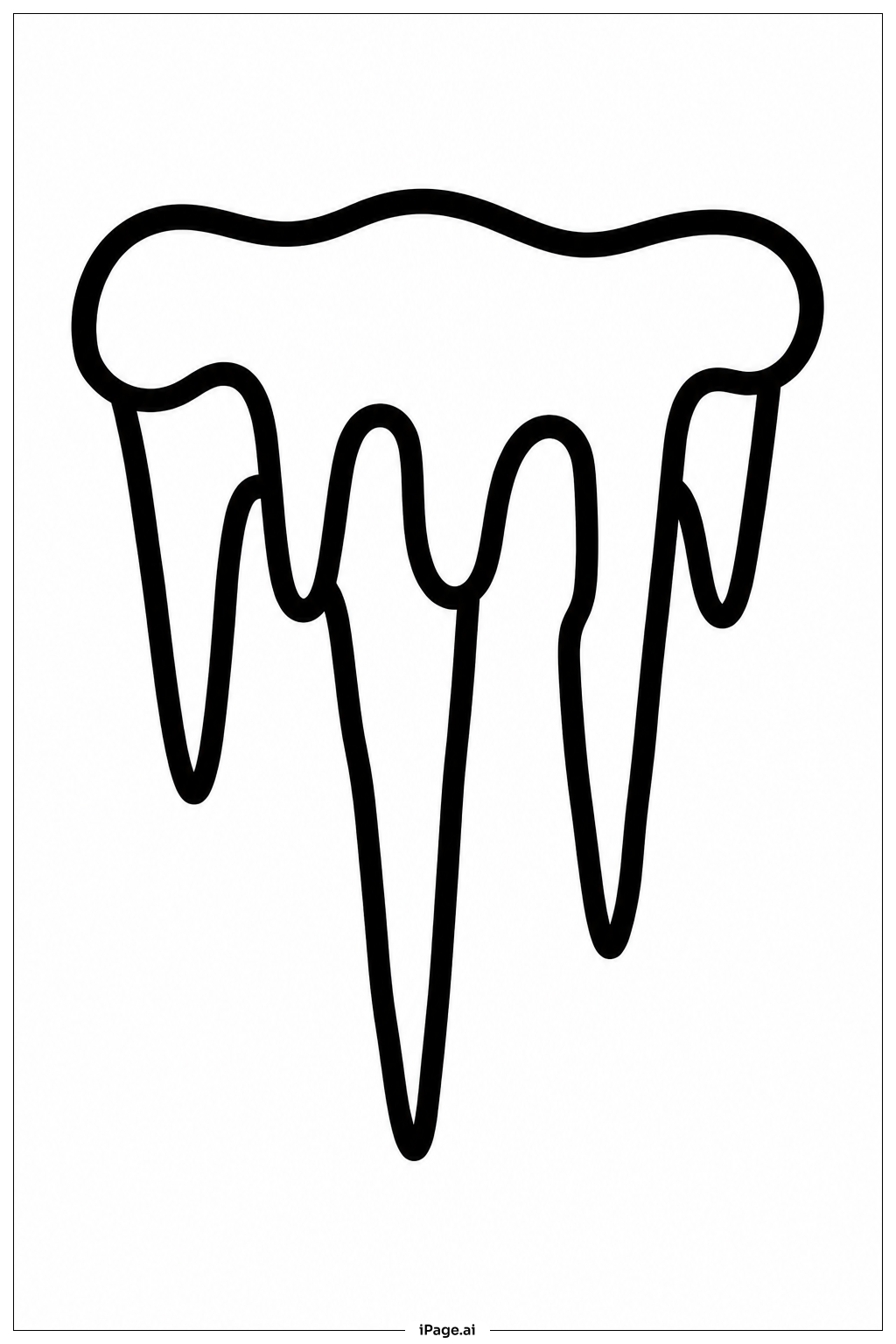
Coloring tips: How to color Winter Icicle coloring page well?
Start with the icicles themselves using cool shades of light blue, pale cyan, and icy white. To give them a glassy, frozen look, leave small sections uncolored or very lightly shaded to suggest reflections and shine. Use slightly darker blues or soft purples along the edges and tips to create depth and a three-dimensional feel. Blend colors gently from light at the center to darker at the sides for a rounded effect. For the background, soft grays, pale lavender, or a light sky blue work well to suggest a cold winter sky. Snowflakes and ice crystals in the background can be kept white or tinted with the lightest blue to make the icicles stand out. If you want extra sparkle, add tiny white dots or short lines on the icicle surfaces to mimic the way light catches ice. Younger colorists can keep it simple with just two or three shades of blue, while older kids or Adults can experiment with more detailed blending and shading for a realistic, frosty finish.
Coloring challenges: Which parts are difficult to color and need attention for Winter Icicle coloring page?
• Capturing Transparency and Glassiness: Icicles are naturally transparent and reflective, which makes them tricky to color. The challenge is to suggest that see-through, glassy quality using only color. You need to leave certain areas very light or almost uncolored while carefully shading the edges and lower portions with deeper tones. Without this contrast, the icicles can look flat and solid rather than icy and clear.
• Smooth Color Blending Along Curved Surfaces: Each icicle has a rounded, cylindrical form that requires smooth gradual blending from light at the center to darker at the sides. Achieving this with crayons, colored pencils, or markers can be difficult, especially for younger colorists. Uneven pressure or abrupt color changes can break the illusion of a curved, three-dimensional surface.
• Managing Many Overlapping Shapes: The cluster of icicles overlaps in several places, meaning you must decide which icicle sits in front and which sits behind. Keeping the front icicles slightly brighter and the back ones slightly darker helps create visual depth. Losing track of this layering can make the whole group look confusing and flat.
• Working with Very Fine Tips: The sharp, narrow tips of the icicles require careful, controlled coloring. It is easy to accidentally color outside the lines in these tiny areas, especially with thicker markers or crayons. Colored pencils with a sharpened point are best for these sections, but even then, patience and a steady hand are needed.
• Balancing the Background Without Overpowering the Icicles: The background snowflakes and ice crystal details need to feel present but subtle. If the background is colored too darkly or too boldly, it will compete with the main icicle shapes and reduce the overall impact of the image.
Benefits of coloring books: Advantages of drawing Winter Icicle coloring page
Coloring this Winter Icicle page offers a wonderful range of benefits for children and Adults alike. Working through the cool, calm color palette of blues, whites, and purples naturally encourages a sense of relaxation and focus, making it a great quiet-time activity on a cold winter day. For younger colorists, tracing carefully around the long, narrow icicle shapes helps build fine motor skills and hand-eye coordination. Learning to stay within the fine tips and smooth curves trains precision and control that supports everyday tasks like writing. Older kids and Adults benefit from the more advanced challenge of blending and shading to create a realistic, glassy effect. This encourages creative thinking and problem-solving as colorists figure out how to use light and shadow to bring a flat image to life. The winter theme also sparks curiosity about the natural world, opening up conversations about how ice forms, why icicles grow, and what happens to water in freezing temperatures. Completing the page gives a strong sense of accomplishment and pride, boosting confidence and motivation. Overall, this image combines artistic skill-building with a calm, focused experience that is enjoyable for a wide range of ages.