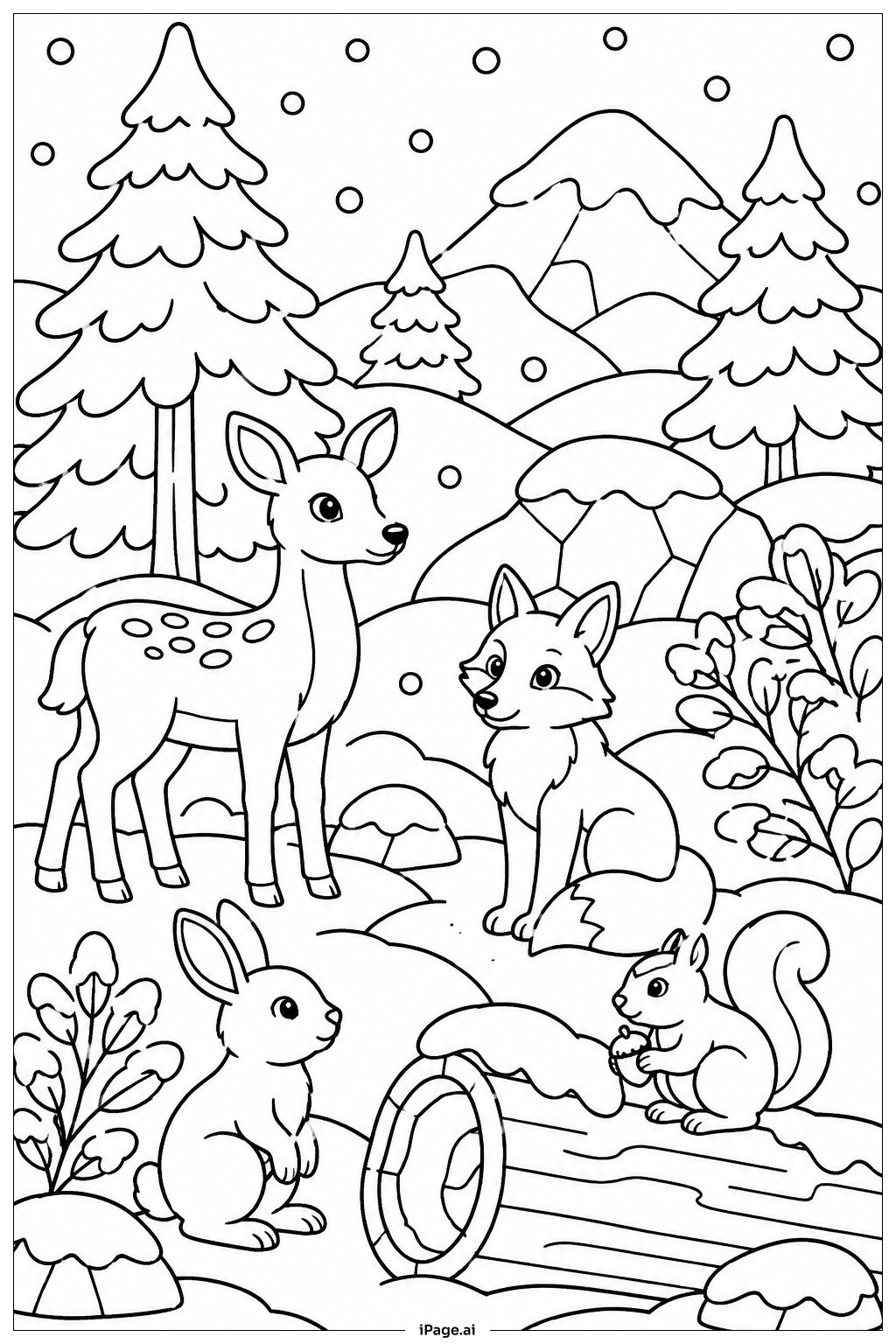
Coloring tips: How to color Winter Forest Wildlife coloring page well?
Try using soft, cool colors like light blues, pale greys, and white to show the cold winter air and snow. For the deer, choose warm browns or reddish tones to make it stand out against the snowy background. Use different shades of green and brown for the trees and bushes, but keep them muted to reflect winter’s quiet mood. You can add touches of red or yellow on the birds to make them colorful and bright. Don’t forget to color the rabbit with gentle whites or light greys, blending it subtly with the snow. Adding shadows with light blues will make the scene look real and calm.
Coloring challenges: Which parts are difficult to color and need attention for Winter Forest Wildlife coloring page?
• Fine Details on Trees: The many thin branches and twigs require careful coloring to avoid crossing lines and preserve the delicate look of the winter forest. • Subtle Snow Textures: Showing different layers and shadows in the snow involves blending whites with blues and greys without losing the pure snow effect. • Animal Fur Patterns: Capturing the soft texture of the deer’s coat and the rabbit’s fur can be challenging in maintaining smoothness and natural colors. • Small Wildlife: The birds and tiny animals need precise coloring so their features stand out clearly, which can be hard especially for younger children. • Balancing Warm and Cool Tones: Mixing warm brown and red tones of animals with the cool colors of the environment requires attention to keep harmony in the picture.
Benefits of coloring books: Advantages of drawing Winter Forest Wildlife coloring page
Coloring this winter forest wildlife scene helps improve focus and patience due to its detailed nature. It encourages observing nature closely, teaching children about different animals and their winter habitats. Using a mix of warm and cool colors develops an understanding of color contrasts and blending techniques. This image also promotes creativity as kids decide how to bring a quiet, snowy forest to life with colors. Overall, it supports fine motor skills and provides a calming, enjoyable way to learn about winter wildlife and nature.