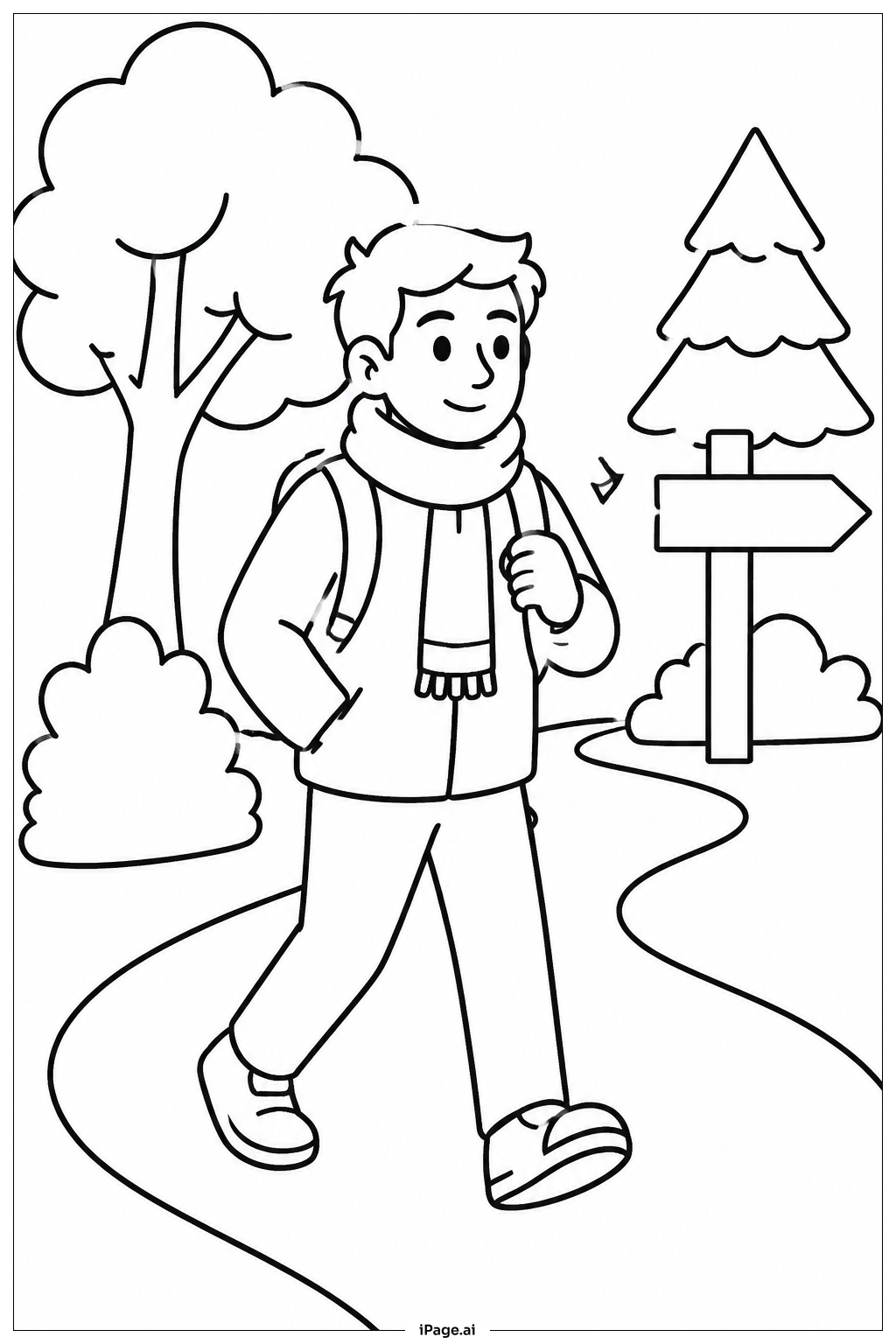
Coloring tips: How to color Winter Forest Walk coloring page well?
Start with the sky using pale blue or soft lavender to set a cold, wintry mood. Leave the snow areas white or add the lightest touch of icy blue for shadows and depth. Use dark greens like pine and forest green for the evergreen trees, and medium or dark gray-browns for the bare tree trunks and branches. The walking figure is a great place to add a pop of color — try a bright red or cobalt blue coat with a contrasting scarf. Use warm golden or tan tones for the path where the snow has been worn down. Add soft purple or blue shadows under the trees and along the snow banks to give the scene a three-dimensional feel. Blend light and dark shades gradually to make the snowy hills in the background look soft and distant.
Coloring challenges: Which parts are difficult to color and need attention for Winter Forest Walk coloring page?
• Snowy Texture and Shading: Snow looks flat if colored solid white. The challenge is adding subtle shadows using very light blues or grays to suggest depth, contour, and the weight of snow on surfaces without losing the bright, fresh look of a winter scene.
• Bare Tree Branches: The leafless trees feature many thin, overlapping branches spreading in multiple directions. Staying within these fine lines requires a sharp pencil or thin marker. Keeping branch colors consistent while varying tone from dark trunks to lighter tips adds another layer of difficulty.
• Evergreen Tree Details: The pine and fir trees have layered, textured boughs heavy with snow. Coloring the dark green needles while preserving the white snow caps on each layer demands careful color placement and control, especially where the two colors meet closely.
• Background Depth and Distance: Creating a sense of depth in the rolling hills and distant treeline requires progressively lighter, cooler tones as elements recede. This technique, called atmospheric perspective, can be tricky for younger colorists who are still learning how to blend and lighten colors gradually.
• The Walking Figure: Though small in the composition, the figure carries visual importance. Coloring a tiny coat, scarf, and boots with neat, clean edges while choosing colors that stand out against the snowy background is a precise and thoughtful challenge, especially for kids with developing fine motor skills.
Benefits of coloring books: Advantages of drawing Winter Forest Walk coloring page
Coloring this Winter Forest Walk page offers a wonderful range of benefits for children and young artists. Working through the quiet, detailed scene helps build focus and patience, as many small elements require careful attention. Choosing colors for the sky, snow, trees, and figure encourages creative decision-making and builds confidence in personal expression. The snowy landscape introduces kids to the concept of color temperature — understanding how cool blues and grays create a feeling of cold and stillness. Practicing light and shadow on snow surfaces develops early shading skills in a gentle, low-pressure way. The fine lines of branches and tree bark strengthen hand control and fine motor coordination, which supports handwriting and other detailed tasks. Coloring a calm, nature-based scene also has a soothing, stress-relieving effect, helping children unwind and find a sense of calm. The solitary figure on the winter path can also spark storytelling and imaginative thinking — kids may wonder where the person is going, what sounds they hear, or what they see around the next bend. Overall, this page blends artistic skill-building with mindfulness and creative exploration in a beautifully seasonal setting.