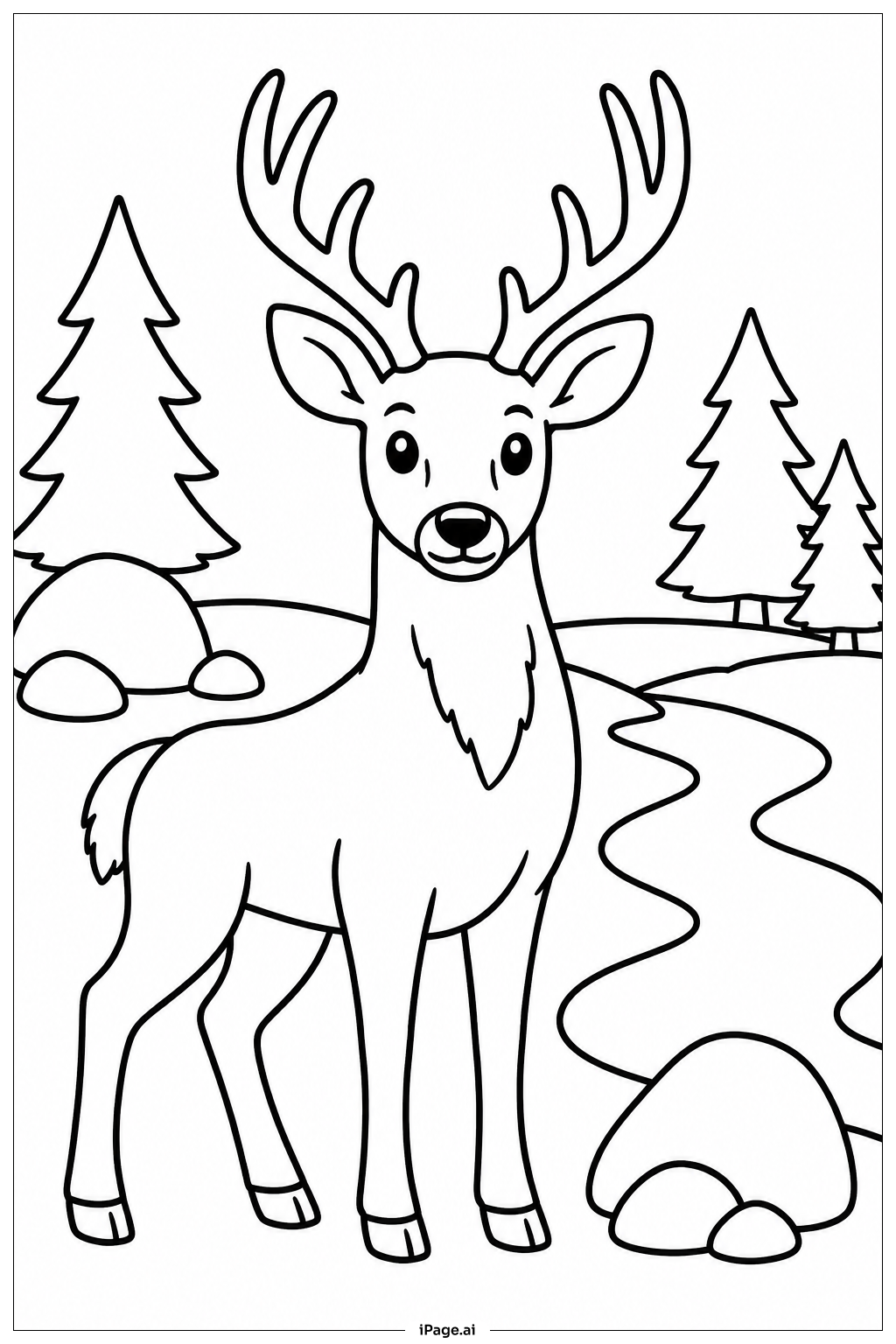
Coloring tips: How to color Winter Deer In Forest coloring page well?
Use soft browns and tans to color the deer’s fur, keeping the antlers a light beige or gray for a natural look. For the snow, try mixing different whites and very light blues to show shadows and sparkling snowflakes. The trees can be deep green with some white highlights to show snow on the branches. You can add light gray or blue tones to the background trees to create depth. For the sky, pale blue or lavender can suggest a cold winter day. Be creative and try blending colors gently to give a soft, frosty feel to the scene.
Coloring challenges: Which parts are difficult to color and need attention for Winter Deer In Forest coloring page?
• Small Details: The deer’s antlers and fur have fine lines that require careful coloring to stay inside the lines and add texture.
• Snow Effects: Showing the subtle differences between pure white snow and shaded snow can be tricky, requiring gentle blending of light colors.
• Background Depth: Coloring the many trees in the background with lighter tones to create a sense of distance needs patience and color control.
• Branches and Pine Needles: The thin tree branches and needles need precise coloring to avoid smudging nearby areas.
• Palette Choice: Picking colors that feel natural but also vibrant enough to make the winter scene lively can be challenging for younger children.
Benefits of coloring books: Advantages of drawing Winter Deer In Forest coloring page
Coloring this scene helps children practice fine motor skills by carefully working on the detailed deer and tree branches. It encourages creativity through choosing colors for natural elements like snow and trees. The image also teaches about nature and winter environments, promoting observation skills. Coloring peaceful scenes like this one can reduce stress and improve focus. It allows kids and adults alike to connect with the calm feelings of winter and enjoy the relaxing process of bringing the forest and deer to life with color.