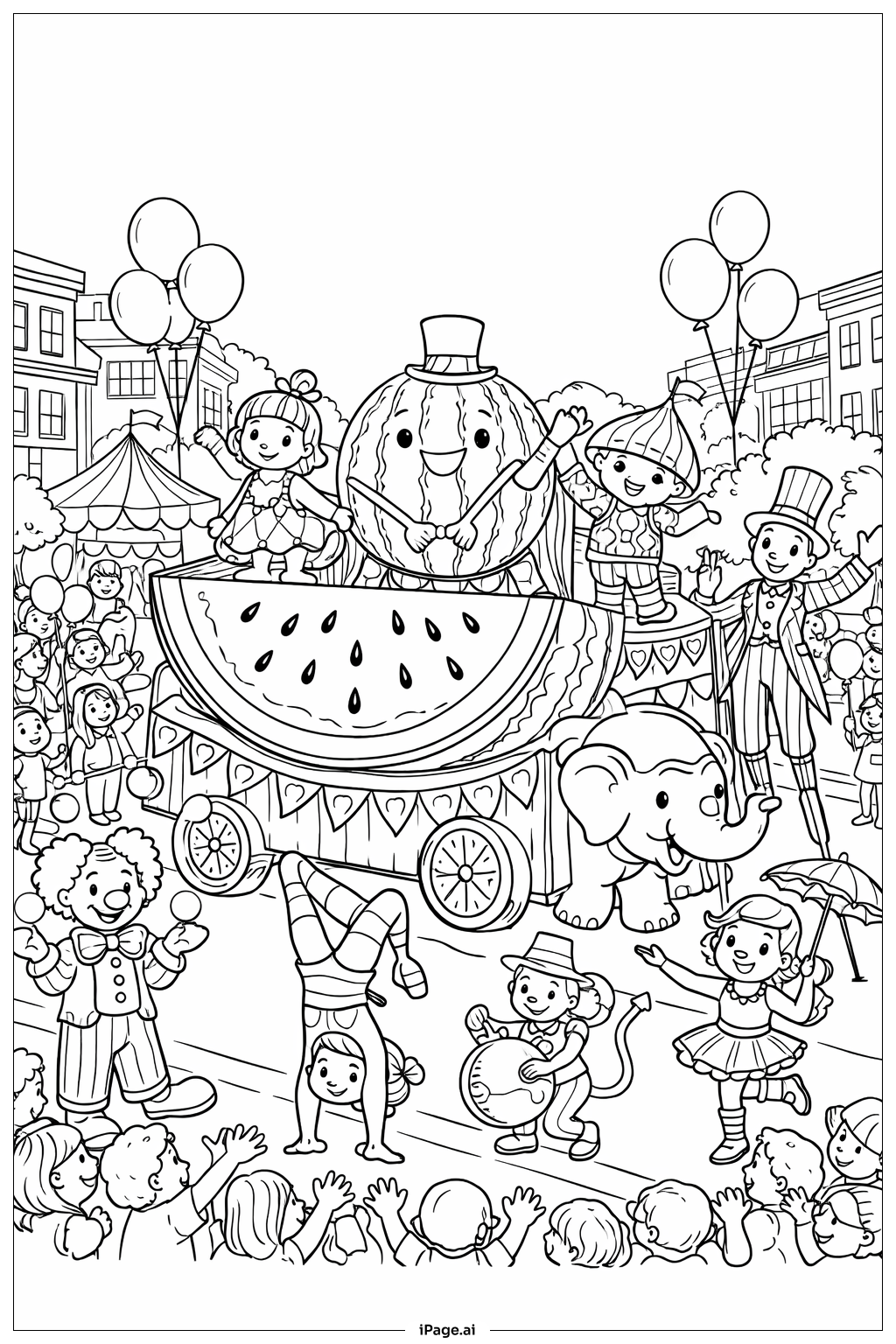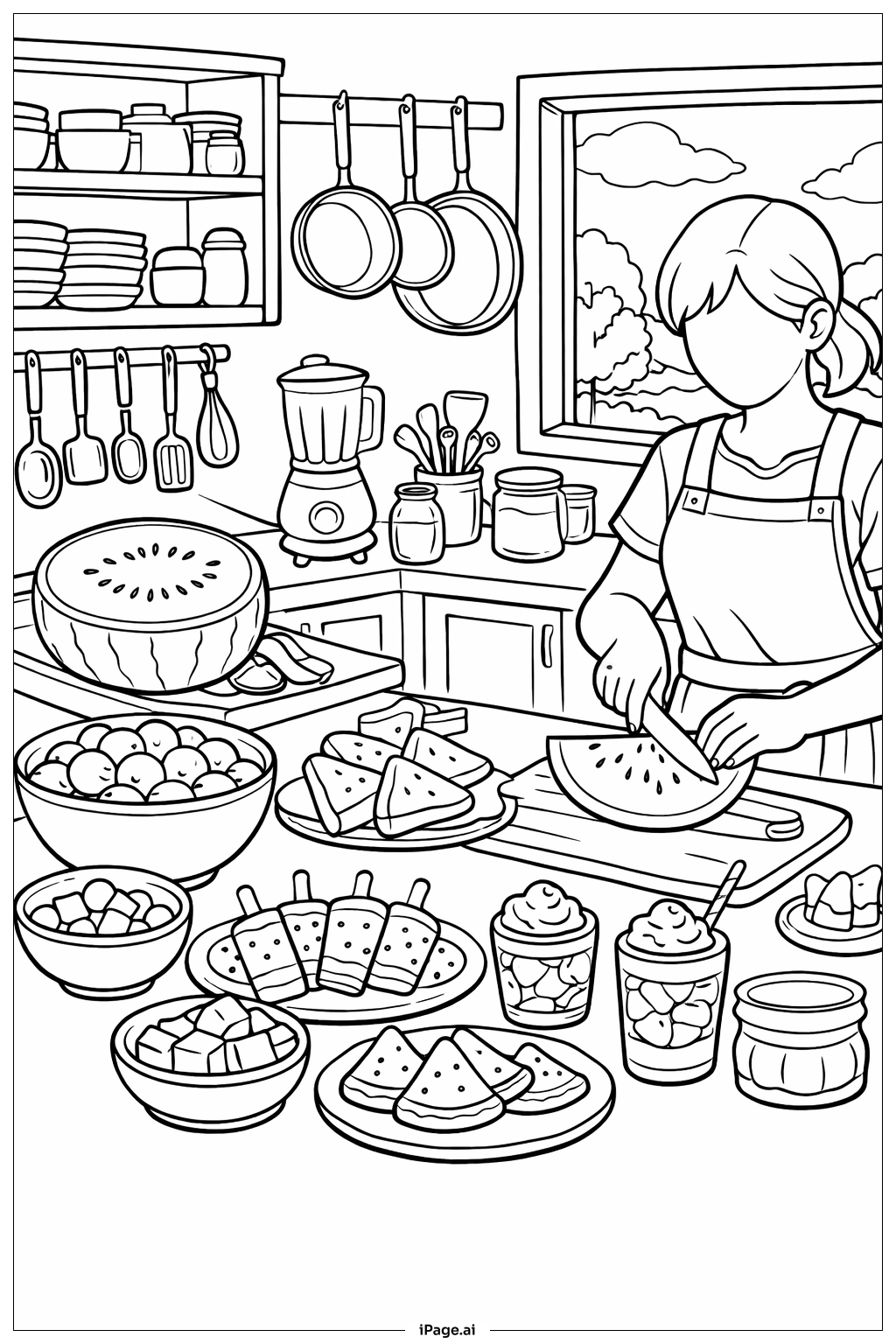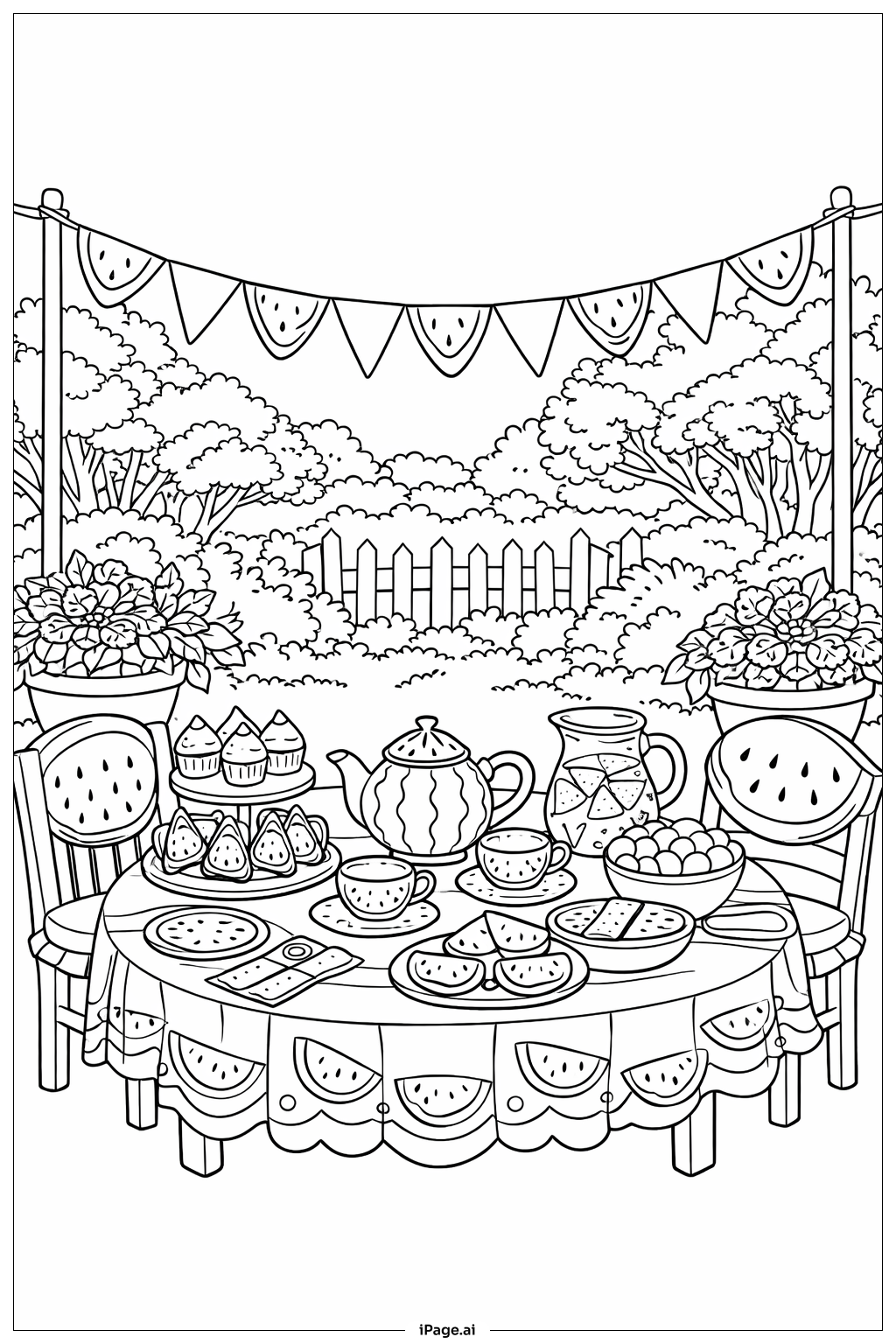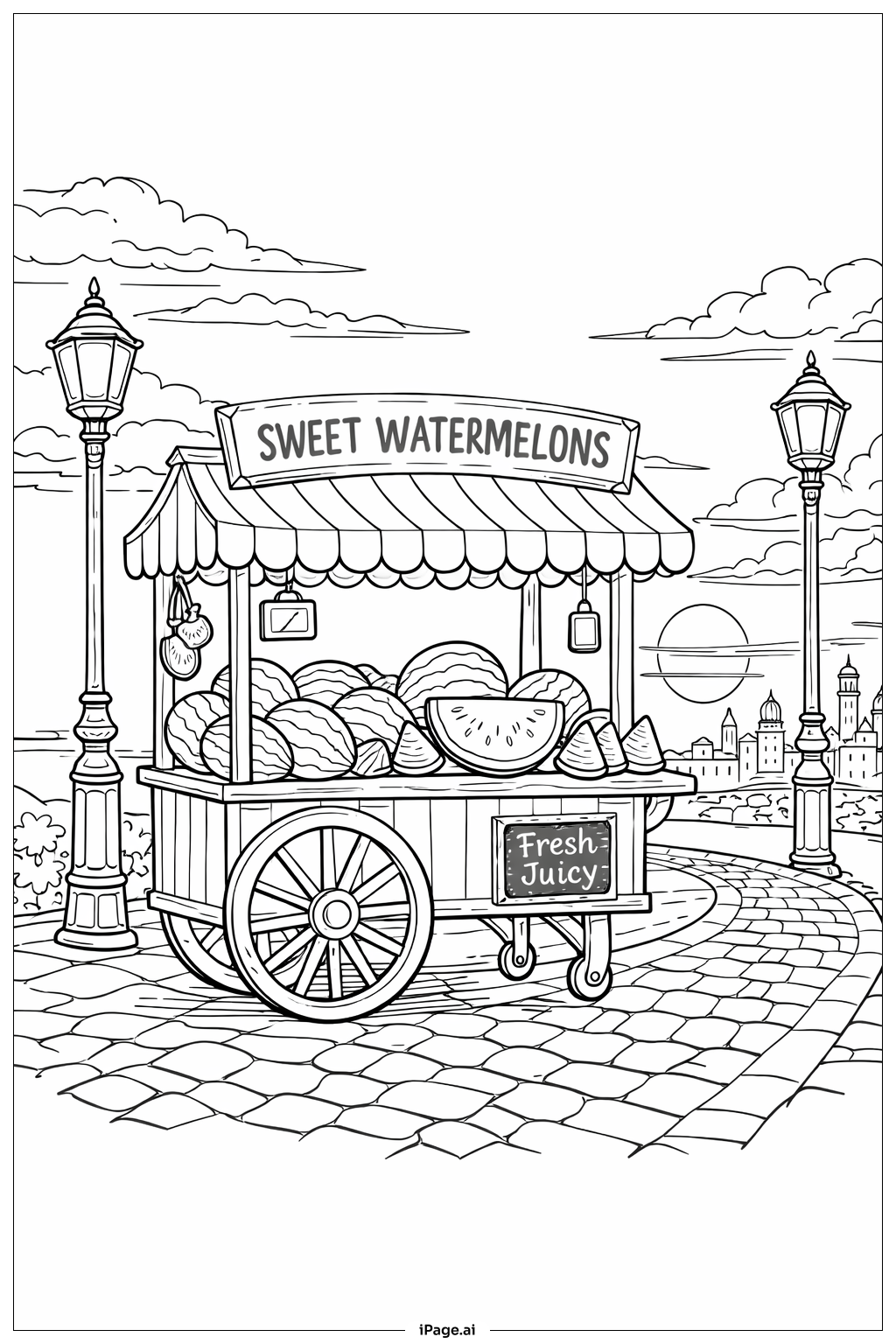
Coloring tips: How to color Watermelon Tree With Slices coloring page well?
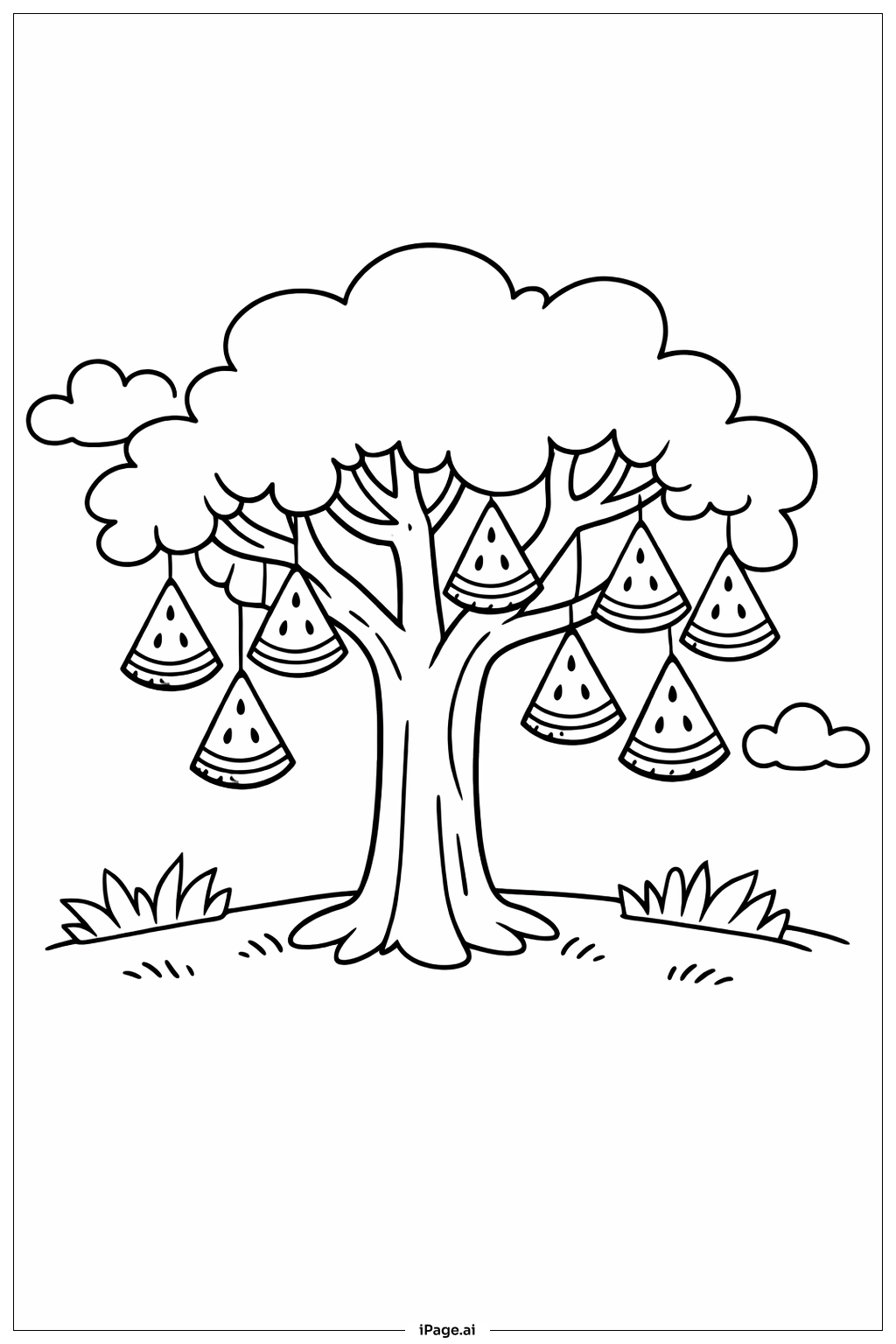
For the whole watermelons hanging from the tree, use alternating light and dark green stripes to create the classic watermelon pattern. The tree trunk can be colored in various shades of brown, with darker tones for shadows and lighter ones for highlights. Color the leaves in different green tones to add depth and dimension. For the watermelon slices, use bright red or pink for the juicy flesh, white or light green for the rind, and dark green for the outer skin. Add black or brown dots for the seeds. Consider using yellow-green for some leaves to show variation. The background could remain white or be filled with light blue for sky or soft green for grass. Experiment with colored pencils or markers to create smooth gradients in the watermelon flesh, making it look fresh and juicy.
Coloring challenges: Which parts are difficult to color and need attention for Watermelon Tree With Slices coloring page?
• Striped Pattern Precision: Creating even, consistent stripes on the whole watermelons requires careful attention and steady hand control. Children may find it challenging to maintain straight lines that follow the curved surface of the watermelon, and keeping the spacing uniform between stripes demands patience and planning before coloring.
• Seed Distribution and Placement: The watermelon slices contain multiple small seeds that need individual attention. Coloring each seed neatly without going outside the tiny shapes can be tedious, especially for younger children. Maintaining consistent color and ensuring seeds stand out against the red flesh requires precision and fine motor control.
• Shading and Depth Creation: Adding realistic dimension to the watermelon slices requires understanding where to place darker and lighter shades of red or pink. The curved surface of the slices needs gradual color transitions to look three-dimensional. Similarly, shading the tree trunk and leaves to create a natural, rounded appearance challenges colorists to think about light sources and shadow placement.
• Leaf Detail Management: The multiple leaves and vines feature various sizes and overlapping elements. Deciding on different green shades for each leaf while maintaining harmony, and carefully coloring within the leaf boundaries without mixing colors where leaves overlap, requires concentration and color-planning skills that develop with practice.
Benefits of coloring books: Advantages of drawing Watermelon Tree With Slices coloring page
Coloring this watermelon tree page offers wonderful developmental benefits for children. It strengthens fine motor skills and hand-eye coordination through detailed work on small seeds and intricate leaf patterns. The image encourages color recognition and experimentation, as children learn to mix and blend different shades of green, red, and pink. It sparks creativity and imagination by presenting a fantastical concept of watermelons growing on trees, which doesn't occur in nature, prompting discussions about real versus imaginary. The various elements provide opportunities to practice patience and focus during longer coloring sessions. Children also develop planning skills as they decide which colors to use where, and gain confidence as they complete this engaging, fruit-themed artwork that combines natural elements with playful fantasy.