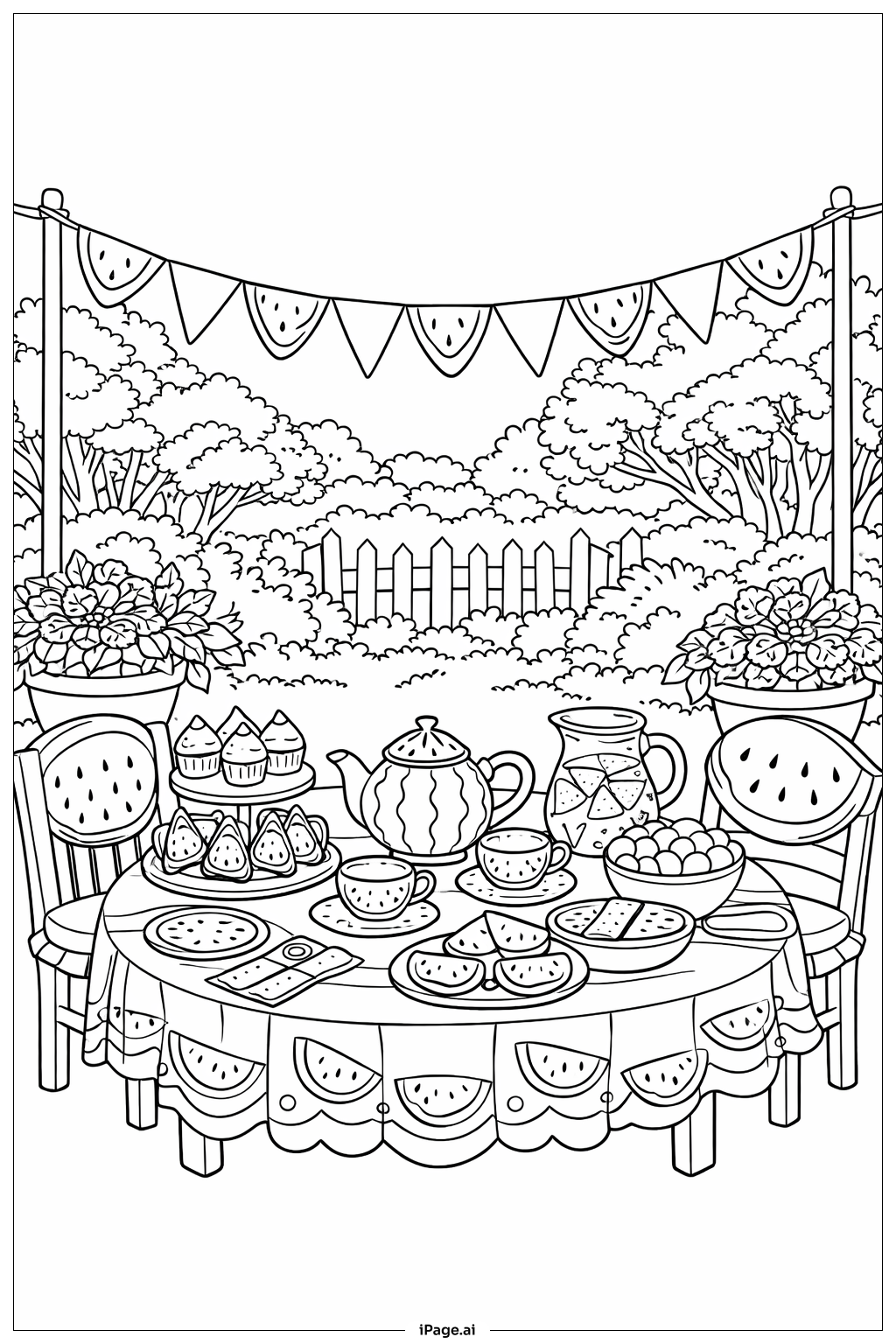
Coloring tips: How to color Watermelon Tea Party Setting coloring page well?
Use bright reds and pinks to color the Watermelon slices, highlighting the juicy texture with light pink spots and dark seeds. The rind can be colored green with stripes for realism. For the tablecloth, soft pastel colors like light blue or yellow will make the Tea Party feel warm and inviting. Use varying shades of green for the plants and leaves surrounding the scene. You can add a gentle touch of brown or beige for the wooden table and chairs. Try to color the teacups and teapots with cheerful colors such as pastel pink, lavender, or light orange to keep the festive mood. Don’t forget to color the flowers in bright yellows, blues, and purples to complete the vivid outdoor setting.
Coloring challenges: Which parts are difficult to color and need attention for Watermelon Tea Party Setting coloring page?
• Fruit Texture Details: Capturing the juicy, seeded texture of the Watermelon slices can be tricky. Coloring the seeds dark black or brown while keeping the pink flesh vibrant requires precision. • Small Object Coloring: The teacups, teapots, and plates have many small parts like handles and rims that need careful coloring to stay neat and within lines. • Patterned Areas: The tablecloth includes subtle patterns that need gentle, steady coloring to avoid overwhelming the scene. Balancing colors here can be challenging. • Overlapping Elements: Leaves, flowers, and objects overlap in the garden setting, making it necessary to carefully separate colors to keep the image tidy and clear. • Light and Shadow Effects: To create a realistic feel, especially on the Watermelon rind and tea utensils, shading with different hues while blending can be difficult but rewarding for the overall depth.
Benefits of coloring books: Advantages of drawing Watermelon Tea Party Setting coloring page
Coloring the Watermelon Tea Party Setting helps develop fine motor skills, especially when working on smaller details like seeds and tea utensils. It improves hand-eye coordination as the colorer focuses on staying inside lines and balancing multiple colors. The scene encourages creativity because it combines natural elements like fruits and flowers with man-made items, inspiring imaginative color choices. Additionally, this image offers an opportunity to learn about different shades of green and red associated with fruits. The playful atmosphere promotes relaxation and mindfulness, making the coloring activity both fun and calming for children and adults alike.