Coloring tips: How to color Watermelon Sun coloring page well?
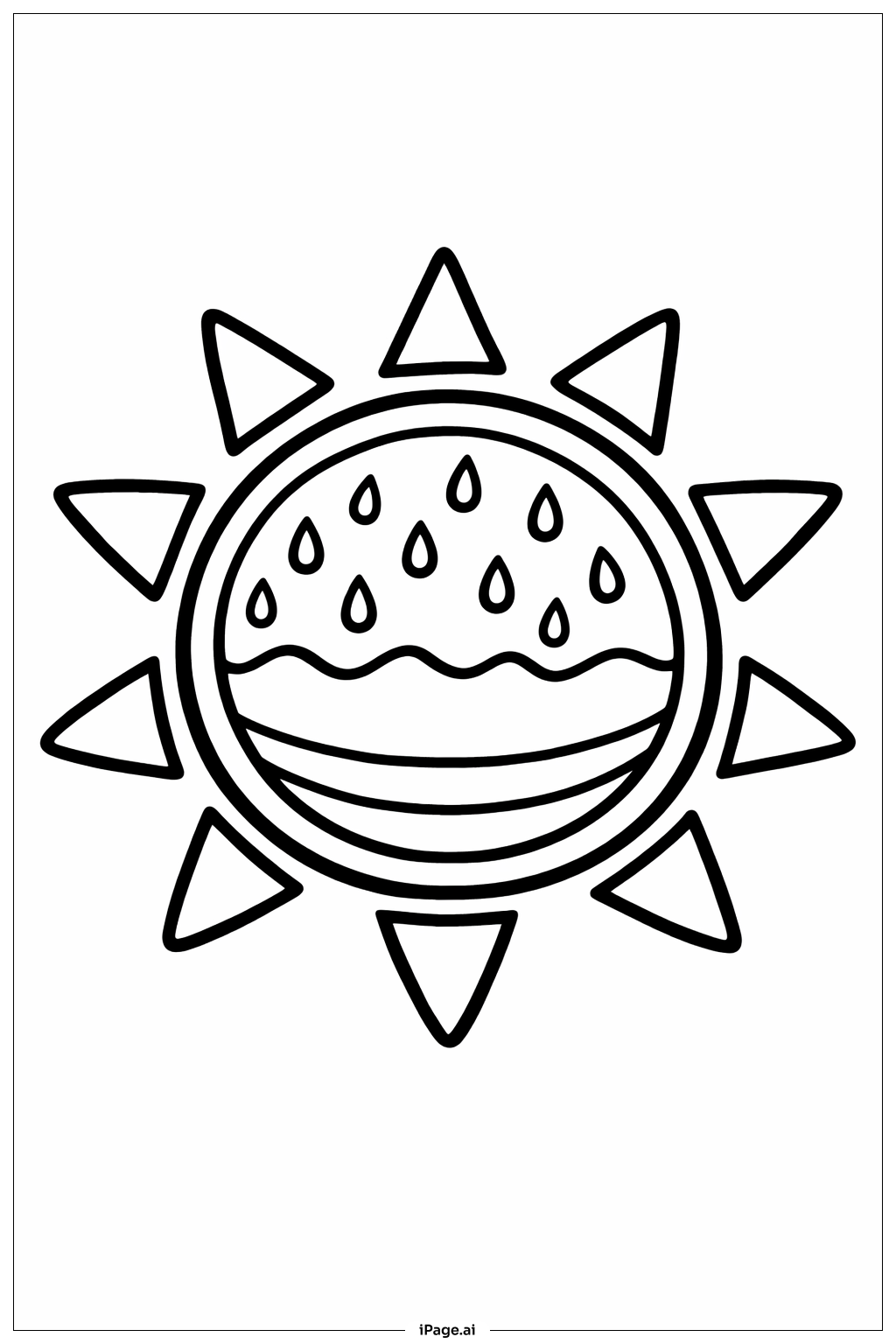
Use bright red or pink for the watermelon flesh to make it look juicy and fresh. Color the seeds black or dark brown for contrast. Use green for the watermelon rind and stripes. For the sun rays, use shades of yellow and orange to show warmth and brightness. You can also add some light green or light yellow shadows inside the watermelon for depth. Try to color inside the lines carefully. Use smooth strokes to make the colors look even and attractive. Feel free to add a blue background to show a sunny sky or summer day.
Coloring challenges: Which parts are difficult to color and need attention for Watermelon Sun coloring page?
1. Coloring the watermelon seeds can be tricky because they are small and close together, requiring careful work to avoid coloring outside the lines.
2. The sun rays around the watermelon are triangular and evenly spaced, so maintaining consistent color and neat edges can be challenging.
3. Keeping the two rings around the watermelon slice neat while coloring them without mixing colors can take patience.
4. Balancing the colors between the watermelon, the seeds, and the sun rays to make the image vibrant without overpowering is important and may be hard for young colorers.
5. Adding shading or multiple tones to the watermelon flesh to create a juicy look demands some color blending skills that might be difficult for younger children.
Benefits of coloring books: Advantages of drawing Watermelon Sun coloring page
Coloring this image helps kids practice control and precision when filling small spaces like the seeds and sun rays. It encourages creativity and use of bright colors to represent summer. Working on the patterns in the watermelon and sun can develop attention to detail. Coloring also improves fine motor skills by requiring steady hand movements. Overall, it is a fun way for children to connect art with nature and seasonal themes.