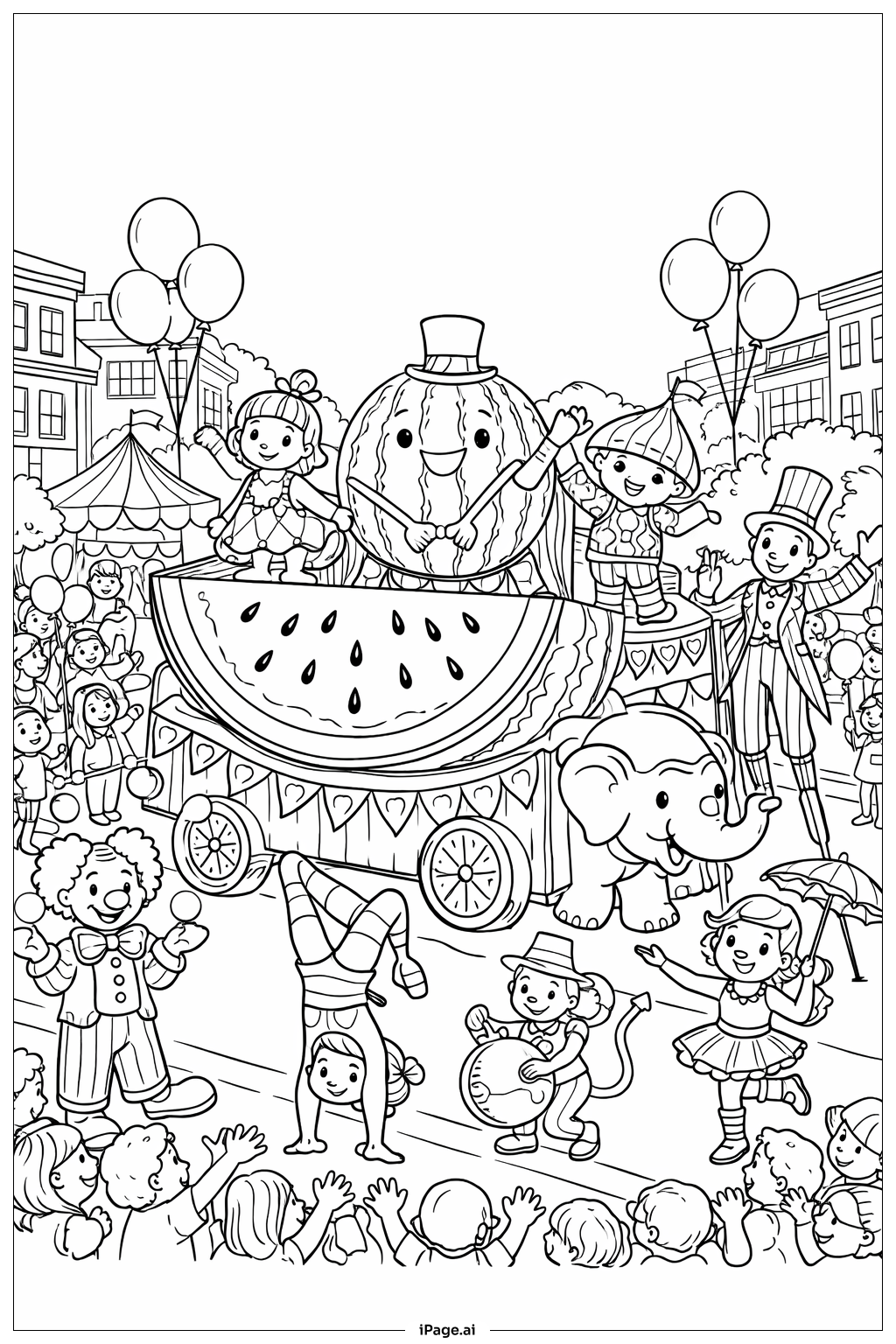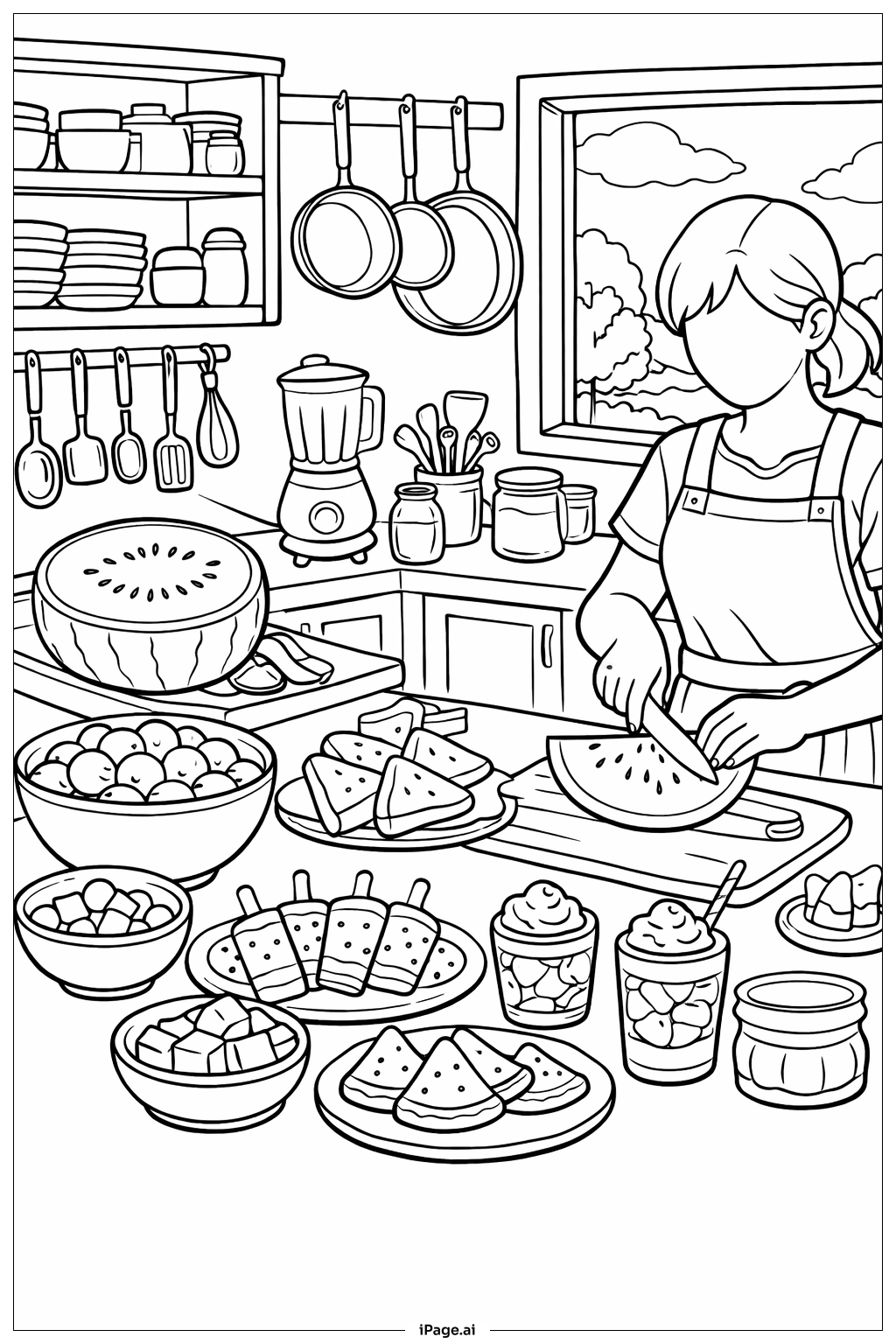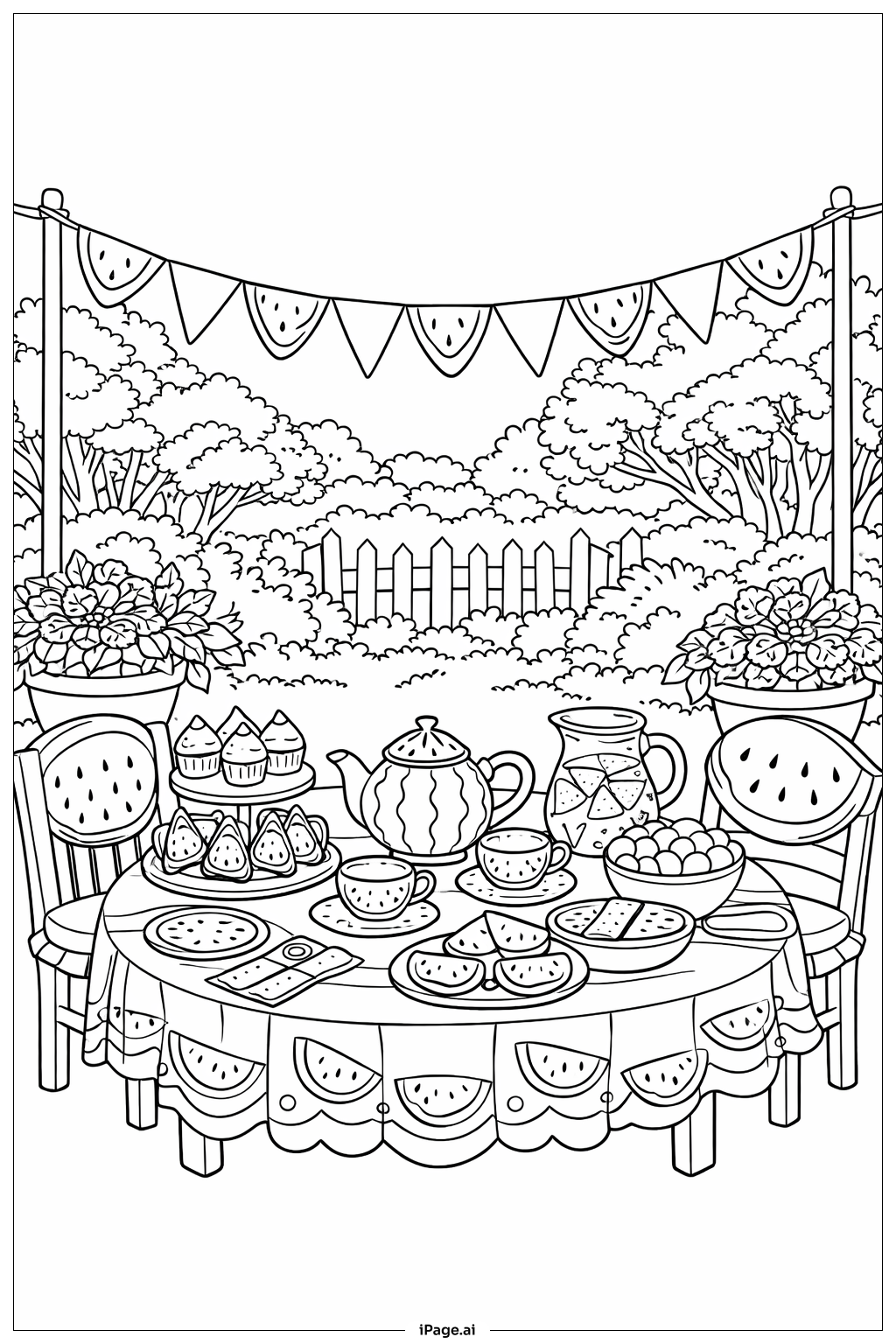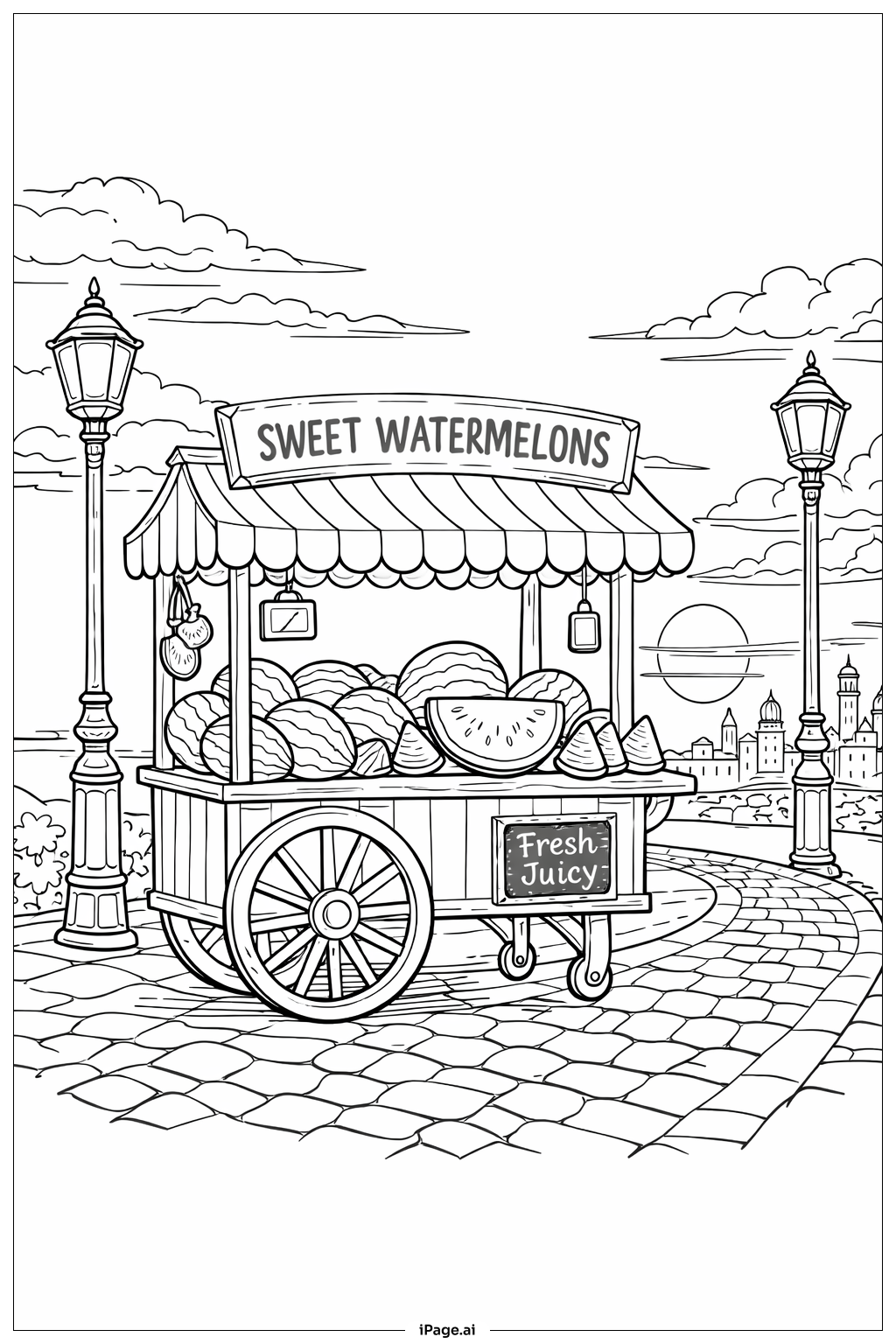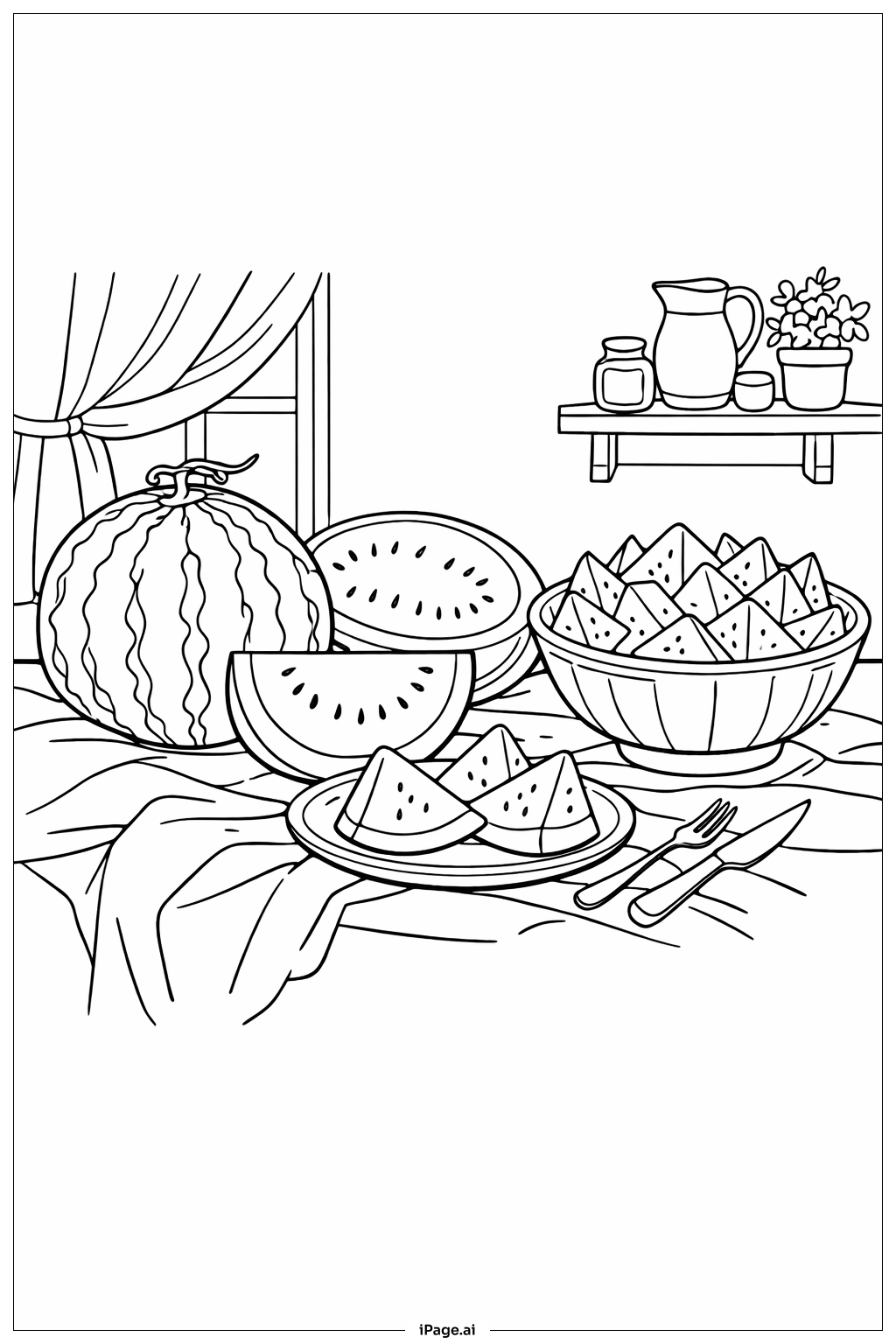
Coloring tips: How to color Watermelon Still Life Composition coloring page well?
Start with the watermelon rinds using light green for the outer layer and darker green for the characteristic stripes. The inner flesh should be colored in vibrant pink or red tones, creating a juicy appearance. Use dark brown or black for the seeds, making sure they stand out against the bright flesh. For the leaves, try different shades of green - perhaps using yellow-green for highlights and deeper forest green for shadows to create dimension. Consider adding subtle shading around the edges of each watermelon piece to make them look three-dimensional. You might also add a light yellow or cream color to the white rind between the green skin and pink flesh. For a creative touch, consider using colored pencils to blend colors smoothly, or markers for bold, vibrant results.
Coloring challenges: Which parts are difficult to color and need attention for Watermelon Still Life Composition coloring page?
• Stripe Pattern Consistency: The watermelon's signature stripes require careful attention to maintain even spacing and consistent curves that follow the round shape of the fruit. Young colorists may find it challenging to keep the stripes parallel and uniform in width, especially as they curve around the spherical form.
• Seed Placement and Detail: The numerous seeds scattered throughout the watermelon slices need individual coloring attention. Keeping them neat without coloring outside their small boundaries can be tricky for younger children, requiring steady hand control and patience to complete all of them accurately.
• Dimensional Shading: Creating realistic depth and volume in the watermelon pieces requires understanding where to place lighter and darker tones. The curved surfaces need gradual color transitions to look three-dimensional rather than flat, which involves blending skills that intermediate colorists are still developing.
• Leaf Vein Details: The decorative leaves contain intricate vein patterns that require precision coloring with thin lines. Staying within these delicate details while switching between different green shades for realistic foliage effects demands fine motor control and concentration.
• Color Transitions: The watermelon rind has three distinct color zones - outer green skin, white middle layer, and pink flesh - that need smooth transitions between them to look natural and appetizing rather than harsh and artificial.
Benefits of coloring books: Advantages of drawing Watermelon Still Life Composition coloring page
Coloring this watermelon still life helps children develop fine motor skills through precise movements needed for seeds and stripes. It teaches color recognition and mixing, as kids learn to create realistic fruit tones using different shades of green, pink, and red. The repetitive pattern of stripes and seeds builds patience and attention to detail. This image also provides opportunities to learn about healthy eating and nutrition, as watermelon is a familiar, beloved fruit. The composition introduces basic art concepts like still life arrangement and dimensional coloring. Children practice hand-eye coordination while staying within defined boundaries. The summery theme can spark conversations about seasons, outdoor activities, and favorite fruits, making it both an educational and relaxing activity that combines creativity with real-world learning.