Coloring tips: How to color Watermelon Slice On Plate coloring page well?
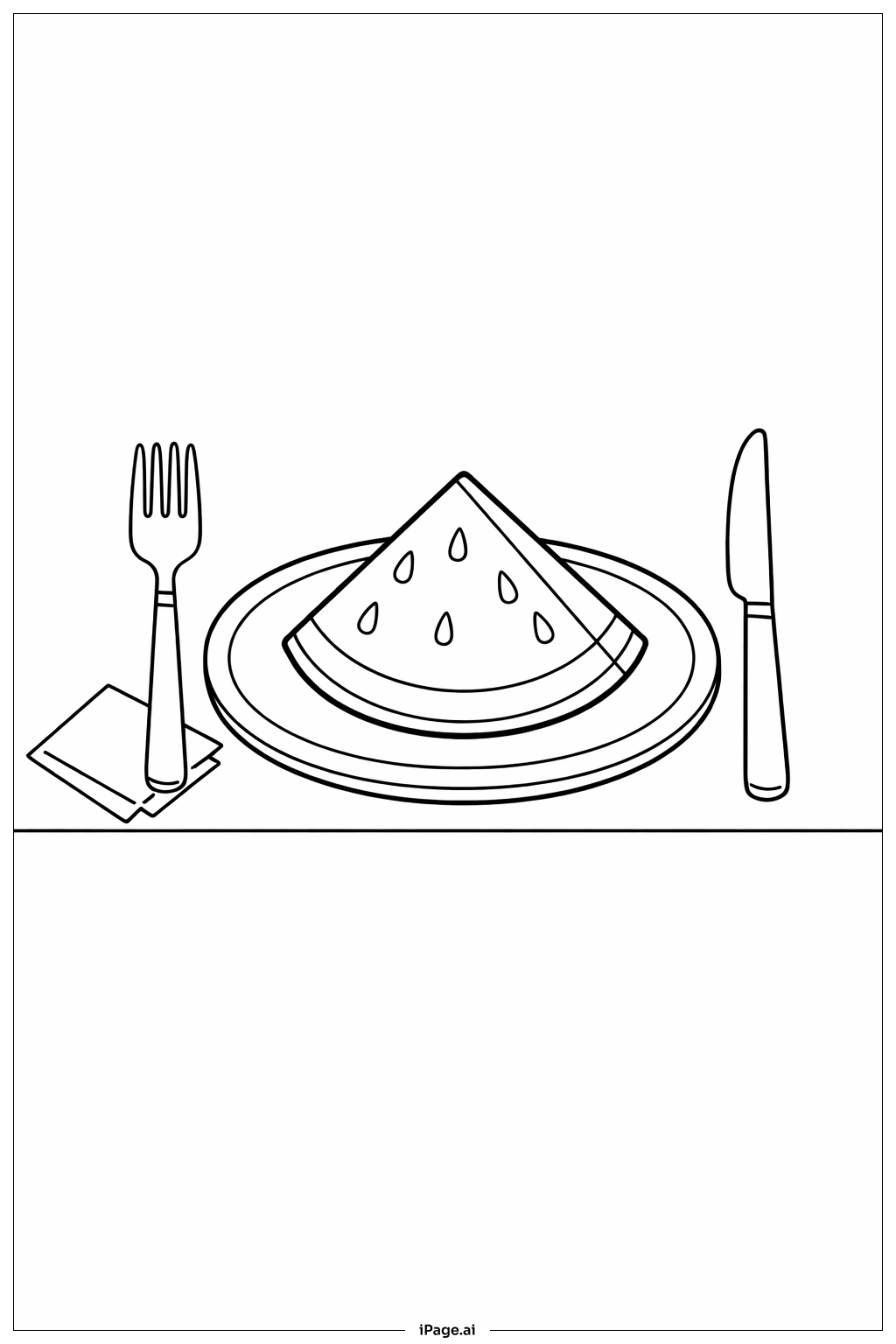
For this image, try using shades of bright red for the watermelon flesh to capture its juicy, ripe look. Use darker tones for the watermelon seeds to help them stand out against the red. The rind can be colored in gradients of green, from light green near the flesh to darker green on the outer edge. The plate offers a chance to use softer colors like white, light blue, or pastel shades to keep it subtle so the watermelon slice remains the focus. You can also shade carefully around the watermelon to create a sense of light and shadow, adding depth to your coloring. Experiment with blending colors gently to give the flesh and rind a natural and appealing appearance.
Coloring challenges: Which parts are difficult to color and need attention for Watermelon Slice On Plate coloring page?
• Fine Detailing of Seeds: Coloring the small watermelon seeds requires careful attention to keep them neat and distinct from the red flesh without overlapping. • Smooth Color Transitions: Achieving a natural look for the watermelon rind involves blending different shades of green smoothly from light to dark, which can be a challenge for beginners. • Plate Simplicity: While the plate is simple, shading it lightly to suggest a smooth, rounded surface demands subtlety so it doesn't overpower the watermelon slice. • Maintaining Contrast: Ensuring that the watermelon slice stands out means carefully balancing the intensity of red against the greens and the plate colors to avoid dullness. • Edge Definition: Coloring along the triangular edges cleanly helps keep the watermelon slice crisp and realistic, which takes steady hand control.
Benefits of coloring books: Advantages of drawing Watermelon Slice On Plate coloring page
Coloring this Watermelon Slice On Plate image helps improve hand-eye coordination and fine motor skills as children color inside small seed shapes and carefully shade around edges. It encourages the use of color blending techniques, especially when working on the rind to create smooth transitions. Coloring this familiar fruit also sparks creativity and learning about natural colors. The simple yet detailed image makes it fun for children aged 4 to 16 to practice patience and attention to detail. Overall, it is a relaxing activity that promotes focus and artistic expression.