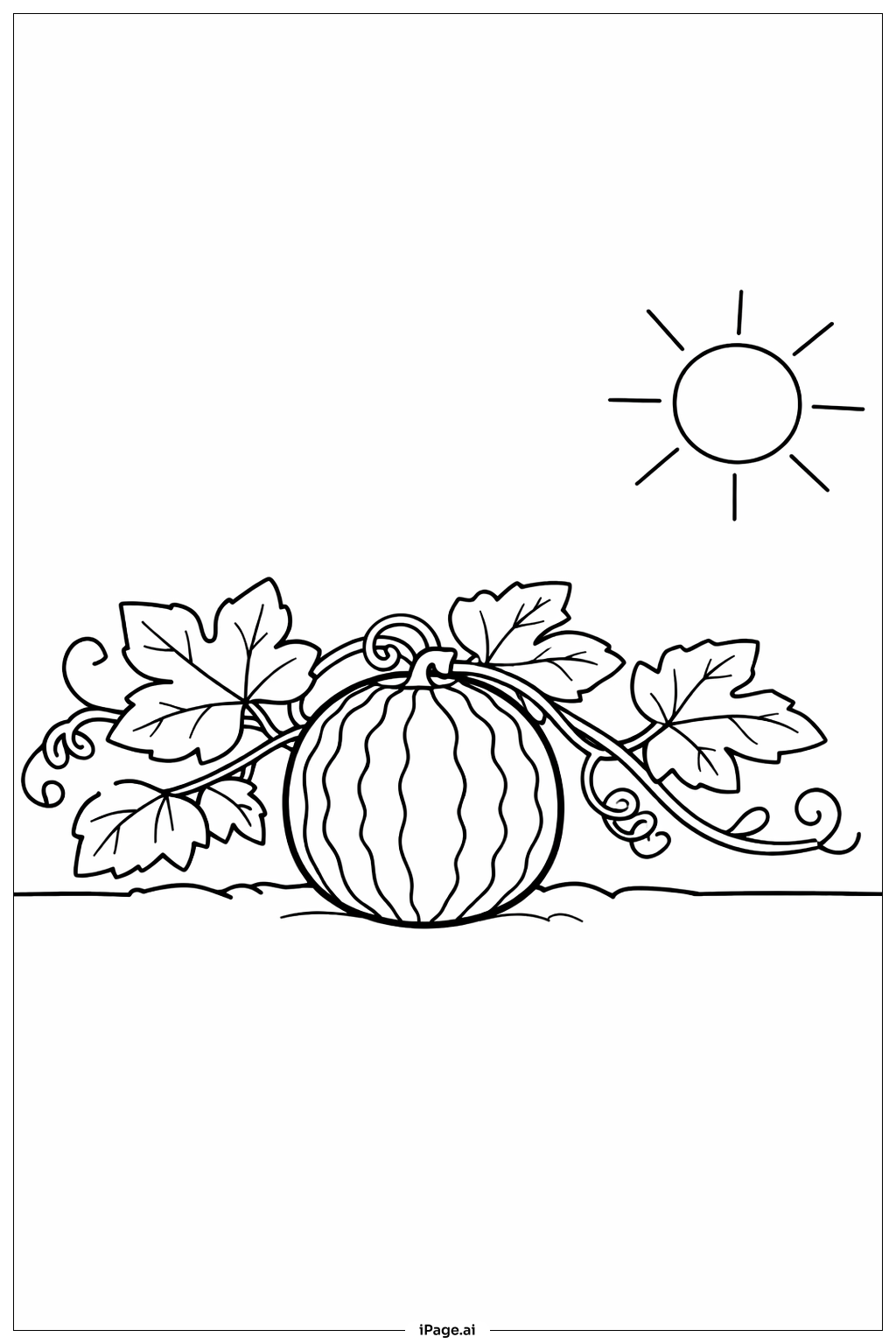
Coloring tips: How to color Watermelon Plant With Leaves coloring page well?
For this picture, use different shades of green for the leaves and vines to show their natural color. The watermelon can be colored with shades of green for the outside, and you can add some light green or yellow highlights to make it look more realistic. The wavy lines on the watermelon can be darker green. Color the soil brown to show earth, and use bright yellow or orange for the sun. Try blending colors gently for the leaves to add depth. Avoid coloring outside the lines for a neat look.
Coloring challenges: Which parts are difficult to color and need attention for Watermelon Plant With Leaves coloring page?
1. The many leaves and curly vines can be tricky to color carefully because they have small spaces and details. 2. Coloring the wavy lines on the watermelon while using different shades needs patience to keep the pattern clear. 3. Shading the leaves to show different green tones can be hard for young children. 4. The sun has thin rays that need careful coloring. 5. Making the soil look natural without coloring outside the lines is a challenge.
Benefits of coloring books: Advantages of drawing Watermelon Plant With Leaves coloring page
Coloring this watermelon plant helps children learn to recognize different parts of a plant, like leaves, vines, and fruit. It encourages focus and attention to detail because of the small leaves and patterns. Using multiple green shades improves color blending skills. Coloring the sun brightens creativity and understanding of natural light. Overall, it helps improve hand-eye coordination, patience, and fine motor skills while being fun and educational.