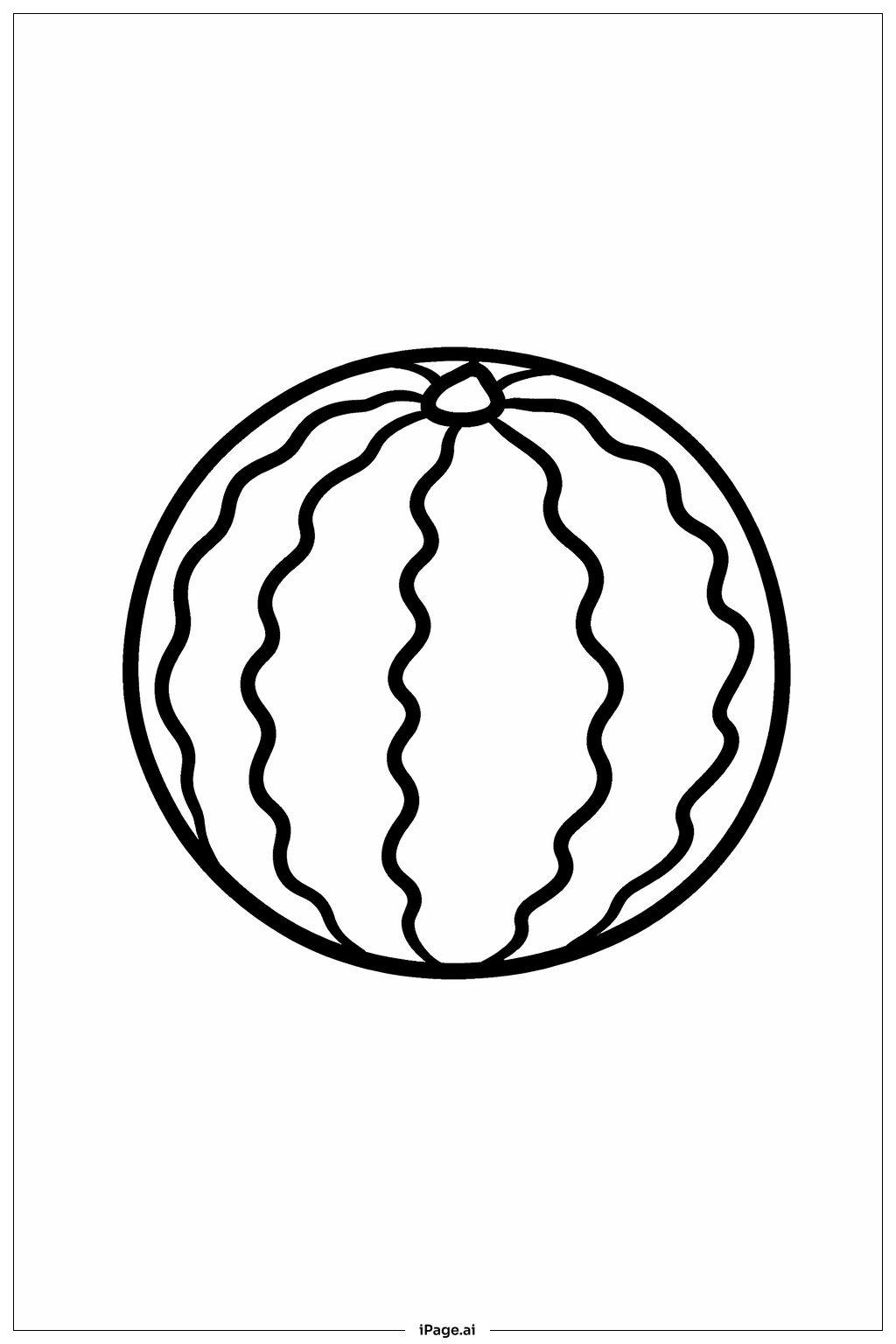
Coloring tips: How to color Watermelon Pattern Ball coloring page well?
Start with the watermelon rinds using bright green for the outer edge and a lighter green or pale yellow-green for the inner rind layer. Color the juicy flesh portions with vibrant red or pink shades to capture that fresh watermelon look. The seeds can be colored black or dark brown for a realistic appearance. Consider leaving a small white highlight on a few seeds to make them look shiny. For the background of the ball between the watermelon slices, you could use white, cream, or even a soft pastel color like light blue or yellow. Try using different shades of red for the flesh areas to add depth and dimension. You might color some slices darker and others lighter to make the ball look more three-dimensional and interesting.
Coloring challenges: Which parts are difficult to color and need attention for Watermelon Pattern Ball coloring page?
• Repetitive Pattern Consistency: The ball features numerous watermelon slices scattered across its surface, which means coloring the same elements repeatedly. Maintaining consistent colors throughout all the slices requires patience and attention. Young children might find it challenging to use the same color combinations for each watermelon slice, especially when managing multiple green shades for rinds and keeping the red flesh uniform across the entire design.
• Small Seed Details: Each watermelon slice contains several small teardrop-shaped seeds that need careful coloring. These tiny elements can be difficult for younger children to color neatly without going outside the lines. The seeds require good fine motor control and a steady hand, especially when using markers or crayons with broader tips. Coloring multiple small seeds throughout the entire image demands concentration and precision.
• Curved Line Navigation: The ball shape creates curved outlines and surfaces that require careful color application. Following the rounded edges of both the ball itself and the individual watermelon slices can be tricky, especially where slices curve around the sphere. Children need to adjust their coloring direction to follow these curves smoothly, which takes practice and spatial awareness.
• Color Layering for Dimension: To make the ball look three-dimensional rather than flat, children may want to use different shades or pressure levels with their coloring tools. Understanding where to apply lighter or darker tones to create shadows and highlights requires some artistic thinking. This technique helps bring the spherical shape to life but can be challenging for beginners who are still learning about depth and shading.
Benefits of coloring books: Advantages of drawing Watermelon Pattern Ball coloring page
Coloring this watermelon pattern ball offers wonderful developmental benefits for children. The repetitive pattern helps build focus and concentration skills as they work through multiple similar elements. This activity strengthens fine motor skills and hand-eye coordination, especially when coloring the small seeds and following curved lines. Children learn about color recognition and matching as they keep their watermelon slices consistent throughout the design. The circular, symmetrical nature of the ball introduces basic geometry concepts in a fun, approachable way. This page also encourages decision-making as children choose their color palette and determine how to create depth and dimension. The cheerful, summery theme brings joy and relaxation, making it a perfect stress-relieving activity. Completing this detailed page builds confidence and provides a strong sense of accomplishment when finished.