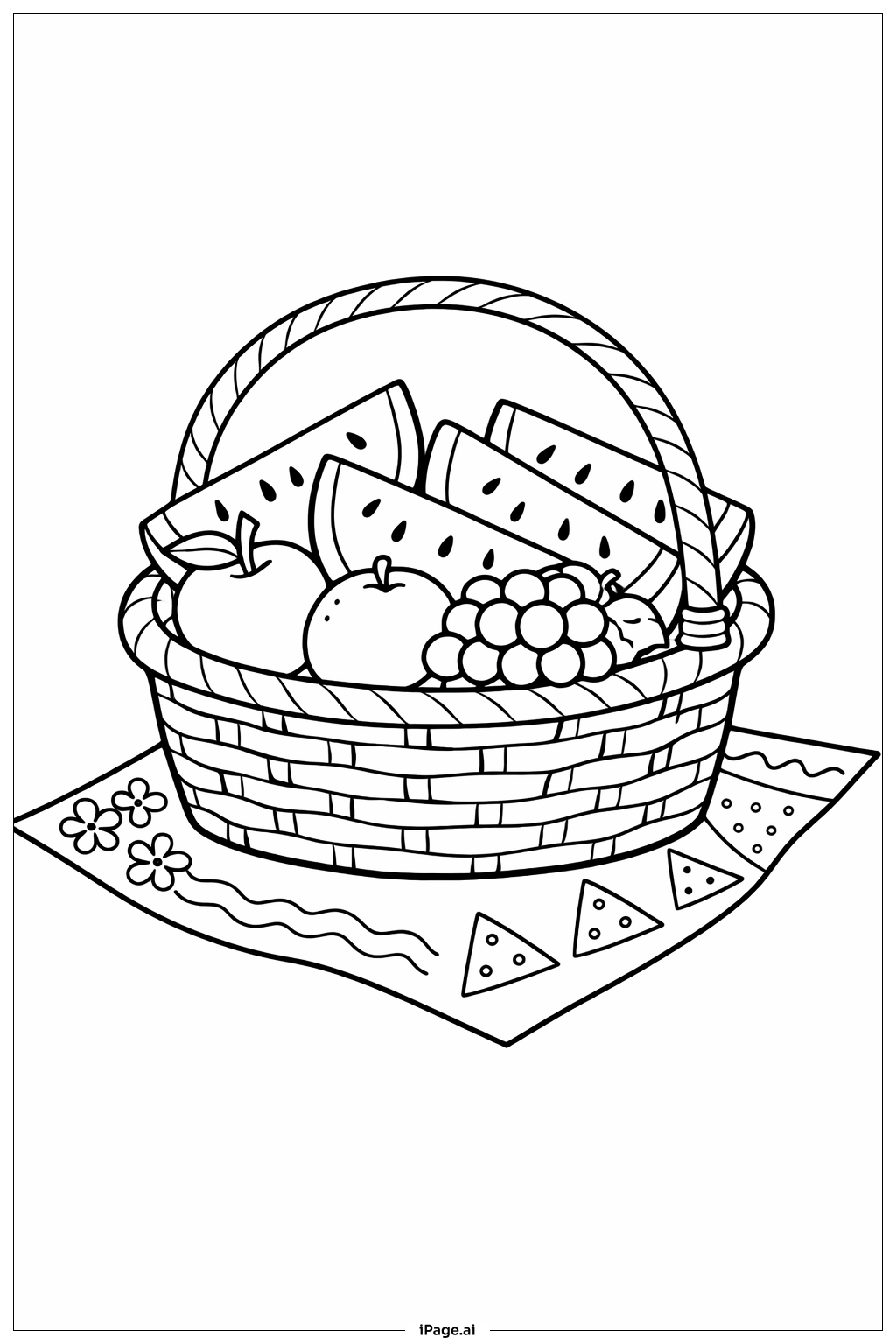
Coloring tips: How to color Watermelon Fruit Basket coloring page well?
Start with the watermelon rinds using a bright green for the outer skin. Add thin, curved stripes in a darker green on top. For the juicy flesh of the sliced pieces, use a bold red or pink, and fill in the seeds with dark brown or black. The basket looks great in warm tan, golden yellow, or light brown tones. Use short, diagonal strokes to show the woven texture. Color the leaves in different shades of green to add depth. The small flowers can be white, yellow, or soft pink. Try adding a pale green shadow on the whole watermelons to make them look round and full. Do not be afraid to mix shades and layer colors for a richer, more realistic look. Have fun and make it your own!
Coloring challenges: Which parts are difficult to color and need attention for Watermelon Fruit Basket coloring page?
• Watermelon Stripes and Skin Patterns: The outer skin of the watermelons features curved, irregular stripes that follow the round shape of the fruit. Coloring these stripes neatly without going outside the lines takes patience and a steady hand. Using a thin-tipped marker or colored pencil helps keep the stripes clean and accurate.
• Sliced Flesh Details: The cut watermelon sections show the inner flesh, seeds, and the white rind layer between the green skin and red center. Each of these three zones needs a different color applied carefully without bleeding into the next area. This small-scale detail work can be tricky, especially for younger colorists.
• Basket Weave Texture: The woven basket is made up of many overlapping strips that cross over and under each other. To make the weave look realistic, alternating strips should be colored slightly lighter or darker. Keeping track of which strip goes over and which goes under is a real challenge that requires focus and attention.
• Overlapping Fruits and Leaves: Several watermelons and leaves overlap each other in the basket. Where two shapes meet, colorists need to decide where one ends and the other begins. Using slightly different shades of the same color for overlapping elements helps separate them visually and prevents the image from looking flat.
• Leaf and Vine Shading: The decorative leaves and vines have natural curves and layers. Adding shading to show depth, such as a darker green along the edges or center veins, brings the leaves to life but requires careful blending to avoid muddy or uneven results.
Benefits of coloring books: Advantages of drawing Watermelon Fruit Basket coloring page
Coloring this Watermelon Fruit Basket page offers a wonderful mix of fun and learning for kids and adults alike. Working through the different shapes, from round whole watermelons to sliced pieces and a woven basket, helps build fine motor skills and hand-eye coordination. Children practice staying within lines and making careful, controlled movements that support their writing and drawing development.
The variety of textures in the image, including the basket weave, smooth fruit skin, and leafy vines, encourages creative thinking. Colorists get to experiment with color mixing and shading, which builds a natural understanding of how colors work together.
Because the scene is connected to a familiar and cheerful fruit, it sparks positive feelings and a sense of joy. Completing the page gives a strong sense of accomplishment, which builds confidence and self-esteem. For younger children, naming the fruit and colors out loud turns the activity into a casual learning moment.
For older kids and adults, the detailed textures offer a relaxing, meditative experience. Focusing on the image helps quiet the mind and reduce stress. Overall, this page is a great creative activity that is both calming and stimulating for any age.