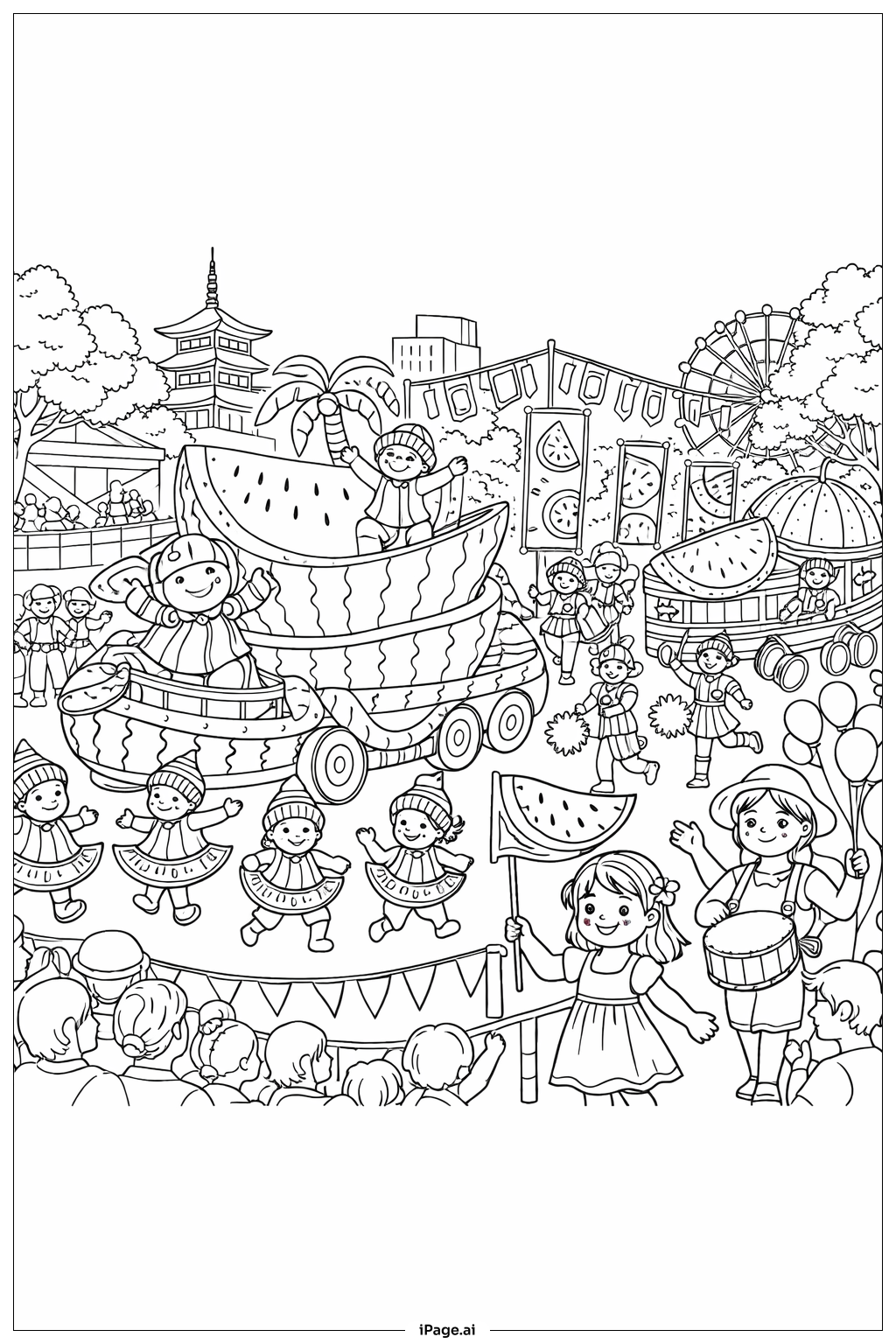
Coloring tips: How to color Watermelon Festival Parade coloring page well?
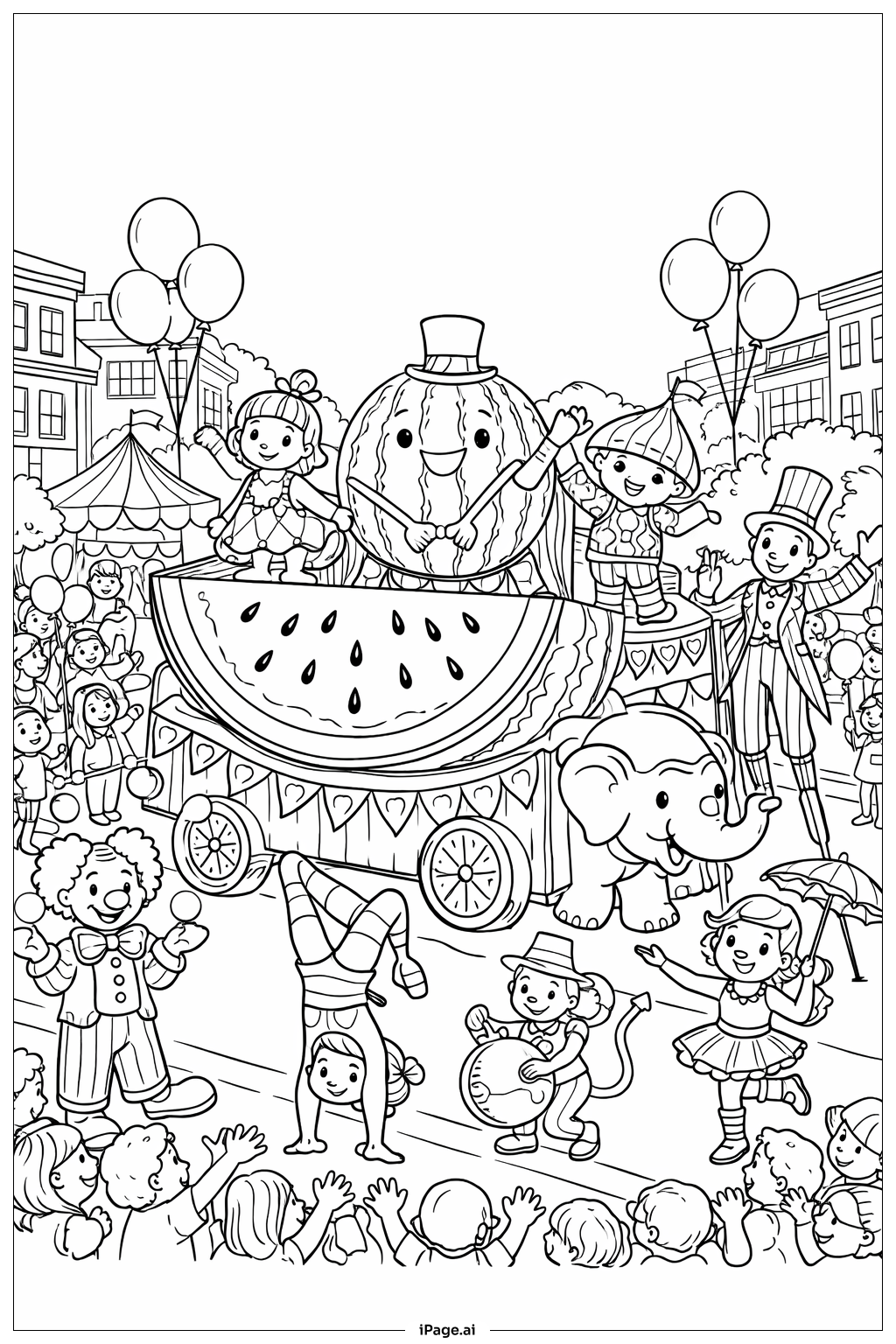
Start with the star of the parade - the watermelon character! Use bright pink or red for the watermelon flesh, and add black or dark brown seeds for authentic detail. Color the rind in classic green, perhaps using two shades for dimension - a darker green on the outside and lighter green toward the pink flesh. The crown can be golden yellow or bright orange to make it stand out. For the face, use rosy pink cheeks and keep the eyes white with black pupils. The banners and streamers offer a wonderful chance to use rainbow colors - try alternating red, yellow, blue, and green for a festive look. Add pops of purple and orange in the confetti and decorations. Keep some background areas light blue or sunny yellow to suggest a beautiful parade day.
Coloring challenges: Which parts are difficult to color and need attention for Watermelon Festival Parade coloring page?
• Character Facial Features: The watermelon character's face requires careful attention to keep the eyes, mouth, and cheeks looking friendly and expressive. Young colorists may find it challenging to stay within the lines of the curved smile and circular eyes, especially when adding details like highlights or pupils that bring the character to life.
• Layered Decorative Elements: The overlapping banners, streamers, and confetti create depth but can be tricky to color. Children need to identify which elements are in front and which are behind to choose appropriate color schemes. This spatial awareness challenge helps develop visual perception but may require patience and planning.
• Seed Placement and Pattern: The watermelon seeds scattered throughout need consistent coloring to look realistic. Keeping each small seed neatly colored within its boundaries requires fine motor control and concentration. The repetitive nature of coloring multiple seeds can test a child's patience and attention to detail.
• Crown and Accessory Details: The decorative crown features small points and embellishments that need precise coloring. These tiny areas can be challenging for younger children still developing hand-eye coordination. Choosing colors that make the crown stand out against the watermelon requires color theory understanding.
• Balancing Multiple Color Zones: With so many different elements in the parade scene, deciding on a cohesive color palette that keeps the composition balanced and visually appealing presents a creative challenge that encourages planning and artistic decision-making skills.
Benefits of coloring books: Advantages of drawing Watermelon Festival Parade coloring page
Coloring this Watermelon Festival Parade page offers wonderful developmental benefits for children. It strengthens fine motor skills as they carefully color within the various shapes and sizes, from large watermelon sections to tiny seeds and decorations. The activity promotes focus and concentration, helping kids practice patience as they complete the detailed scene. Choosing colors for the festival elements encourages creative expression and decision-making - should the banners be rainbow-colored or matching? This builds confidence in artistic choices. The cheerful parade theme naturally lifts mood and creates positive associations with creative activities. As children work on the overlapping elements, they develop spatial awareness and understanding of foreground and background. The repetitive motion of coloring is also calming and can reduce stress, making this a perfect quiet-time activity that combines fun with learning.