Coloring tips: How to color Watermelon Farm Field coloring page well?
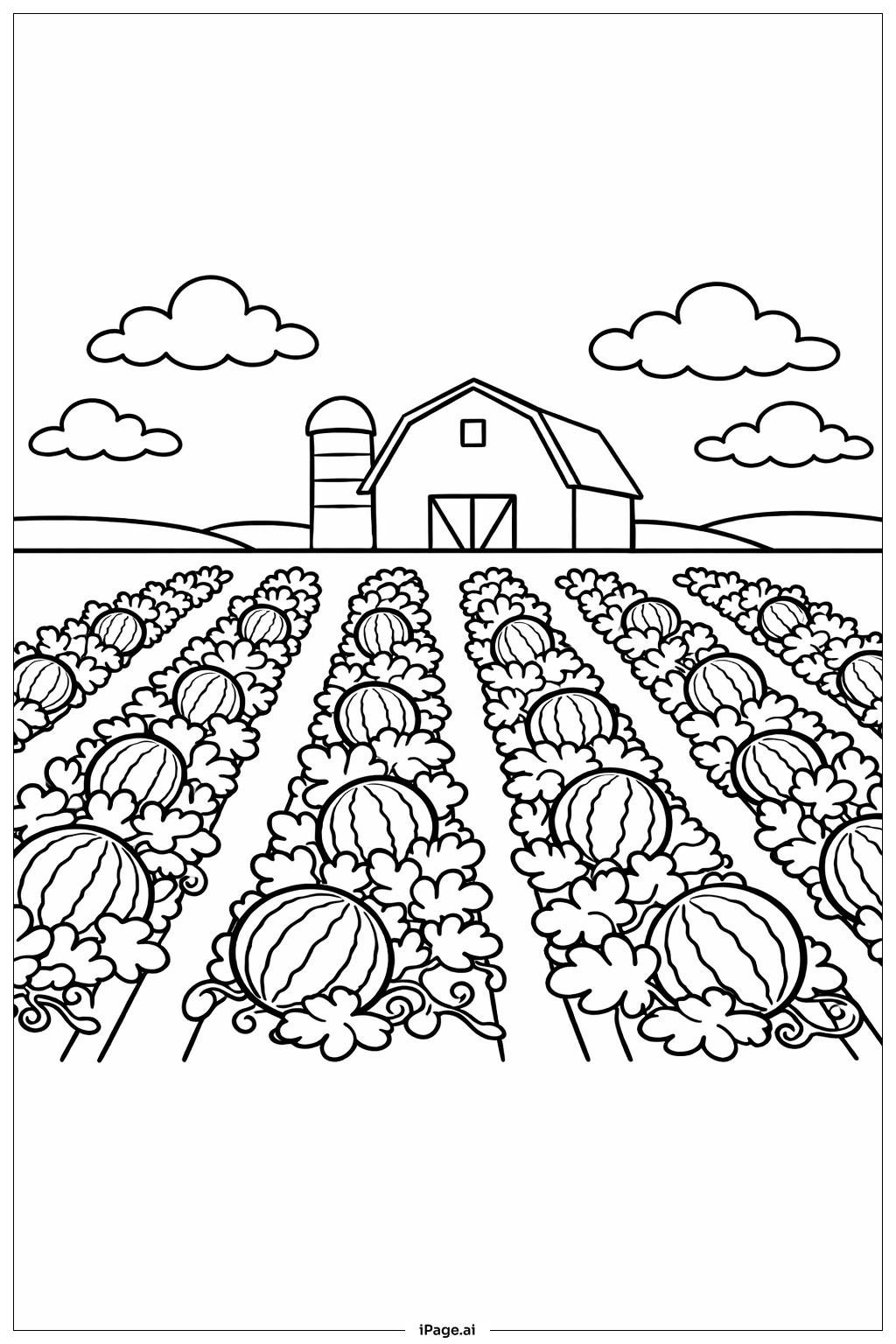
Start with the watermelons first. Use bright green for the outer skin, adding darker green stripes along the surface. The inside flesh, if shown, should be a vivid red or pink with small black seeds scattered throughout. For the leaves, use different shades of green to show light and shadow — lighter green for the tops of leaves and darker green underneath. The curling vines can be a medium or olive green. The soil on the ground works well in warm brown or tan tones. If the sky is included, a soft light blue gives a nice summer feel. Use yellow or golden tones for areas touched by sunlight. Encourage young colorists to experiment with shading — pressing harder with a pencil or layering colors can make the watermelons look round and three-dimensional. There are no wrong color choices here, so have fun and make the farm your own!
Coloring challenges: Which parts are difficult to color and need attention for Watermelon Farm Field coloring page?
• Overlapping Leaves and Vines: The farm field is filled with leaves and vines that cross over each other in many places. Keeping track of which leaf is in front and which is behind can be tricky. Colorists need to pay attention so they do not accidentally color two overlapping leaves the same shade, which could make the image look flat and hard to read.
• Watermelon Stripe Patterns: Each watermelon has curved, alternating stripes running along its rounded surface. Coloring these stripes neatly while following the curve of the fruit takes patience and a steady hand. Younger children may find it challenging to stay within the curved stripe lines, especially on the larger melons.
• Creating a Sense of Depth: The field stretches into the distance, with plants and melons appearing smaller toward the back. To make the scene look realistic, colorists should use lighter or less saturated colors for distant objects and richer, deeper colors for those in the foreground. This technique, known as atmospheric perspective, can be hard for beginners to apply.
• Leaf Shading and Texture: The broad watermelon leaves have veins running through them and naturally catch light differently depending on their angle. Adding shading under the leaves and along the veins makes them look more lifelike, but blending colors smoothly in small, detailed areas requires care and practice.
• Soil and Ground Detail: The ground beneath the plants has texture and variation. Coloring it with a single flat tone can make it look dull. Mixing shades of brown, tan, and even a little gray helps the soil look natural, but balancing these colors without making the ground look muddy takes some skill.
Benefits of coloring books: Advantages of drawing Watermelon Farm Field coloring page
Coloring this Watermelon Farm Field page offers a wide range of benefits for children and young colorists. First, it builds fine motor skills. Carefully coloring within the vines, leaves, and striped watermelons helps strengthen hand control and pencil grip, skills that are useful in writing and drawing too. Second, it encourages creativity. There is no single correct way to color a farm scene, so kids are free to explore different color combinations and make artistic choices that feel uniquely their own. Third, it teaches children about nature and where food comes from. Seeing how watermelons grow on vines in a field connects art with real-world knowledge about farming and plants. Fourth, the repetitive, focused nature of coloring is calming. It helps children slow down, concentrate, and find a peaceful rhythm, which can reduce stress and improve attention span. Fifth, completing the page gives a genuine sense of accomplishment. Finishing a detailed coloring page builds confidence and encourages kids to take on more creative challenges. Overall, this page is both educational and enjoyable.