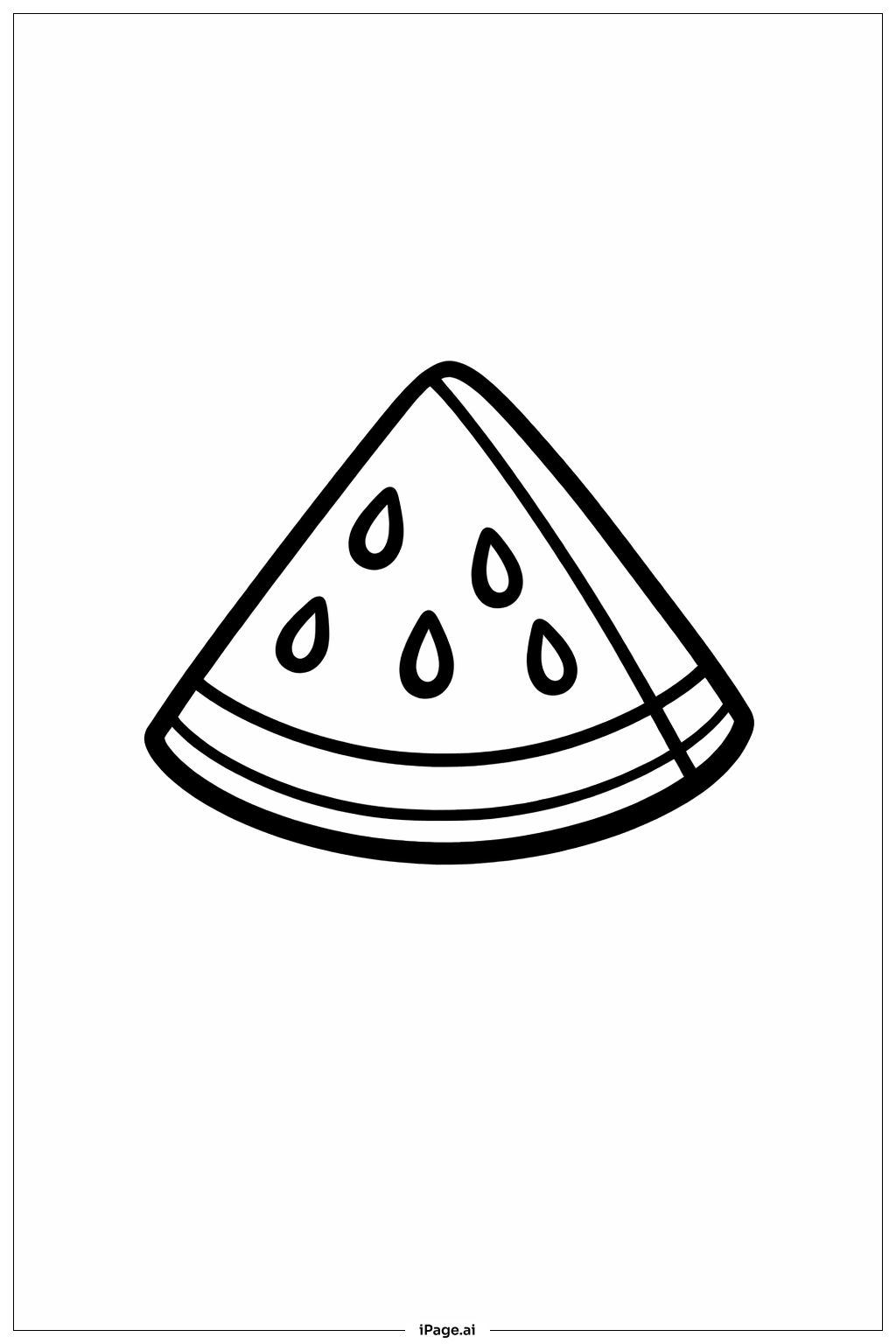
Coloring tips: How to color Tiny Watermelon Slice coloring page well?
Use bright green colors for the watermelon rind to show the outer skin. For the white inner rind, use a light gray or very pale green. Color the juicy part with red or pink shades to make it look fresh and tasty. The seeds should be colored black or dark brown to stand out clearly. Try to stay inside the lines and use different shades to add depth. You can also add small highlights with white or lighter colors to give the slice a shiny effect.
Coloring challenges: Which parts are difficult to color and need attention for Tiny Watermelon Slice coloring page?
1. Coloring the small seeds carefully without going over the lines can be tricky. 2. Coloring the rind with two separate layers needs attention to keep colors from mixing. 3. Staying inside the thin curved lines at the bottom edge of the slice might require fine motor skills. 4. Adding color gradients or shading could be challenging for younger children. 5. Maintaining neatness while coloring large areas like the juicy part can take patience and control.
Benefits of coloring books: Advantages of drawing Tiny Watermelon Slice coloring page
Coloring this tiny watermelon slice helps improve hand-eye coordination as children practice staying within the lines. It encourages attention to detail, especially when coloring the seeds and rind layers. Using different colors promotes creativity and understanding of natural fruit colors. The activity also supports fine motor skills development, which is important for writing and other crafts. Plus, it’s a fun way for kids to learn about healthy food while enjoying art.