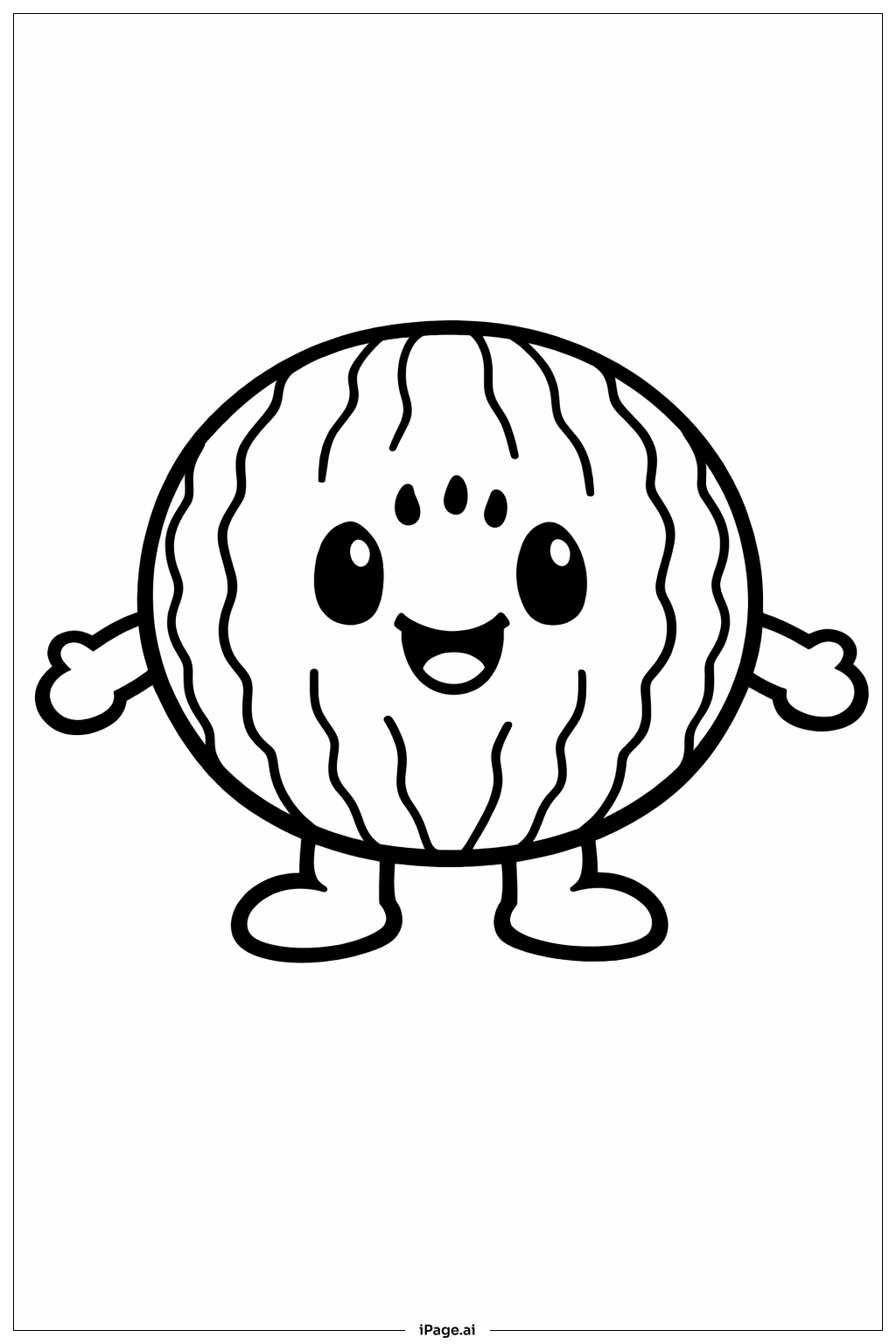
Coloring tips: How to color Cute Watermelon Character coloring page well?
Start with the watermelon's body using bright green for the rind, adding darker green stripes for a realistic look. The leaf-like arms can be colored in fresh spring green or lime shades. For the face, use pink or rosy tones for the cheeks to make the character look extra cheerful. The eyes can be colored with black pupils and white or light blue highlights to make them sparkle. Add a touch of red or pink inside the mouth for dimension. The small stars surrounding the character can be colored in yellow, gold, or even rainbow colors for a magical effect. Consider using lighter and darker shades of the same color to create depth and make the stripes pop. You can also add tiny details like shading along the edges to give the watermelon a three-dimensional appearance.
Coloring challenges: Which parts are difficult to color and need attention for Cute Watermelon Character coloring page?
• Stripe Pattern Consistency: The wavy stripes on the watermelon's body require careful attention to maintain even spacing and consistent curves. Young children may find it challenging to stay within these narrow, curved lines while alternating between light and dark green shades. The stripes wrap around the round shape, which adds complexity to keeping the pattern uniform throughout the entire body.
• Facial Expression Details: The character's face includes small but important elements like eye highlights, pupils, and the curved smile that give it personality. Coloring the eyes to look bright and lively requires precision, especially when adding the tiny highlight spots that make them sparkle. The smile also needs careful coloring to maintain its cheerful expression without making it look uneven or messy.
• Shading and Dimension: Creating a three-dimensional appearance on a round watermelon shape can be tricky. Children learning to color may struggle with understanding where to place lighter and darker shades to show the curved surface. The transition between different green tones on the rind needs to be smooth to avoid a patchy appearance.
• Small Decorative Elements: The stars and tiny details around the character are small spaces that require good motor control and precision. Staying inside these little shapes without going over the lines can be challenging for younger children or those still developing fine motor skills.
Benefits of coloring books: Advantages of drawing Cute Watermelon Character coloring page
Coloring this cute watermelon character helps children develop important fine motor skills through practicing control with crayons or markers. The varying sizes of spaces, from large body sections to tiny stars, provide excellent practice for hand-eye coordination. The friendly, smiling face encourages emotional connection and makes coloring a joyful experience. Children learn about color mixing and shading by experimenting with different green tones for the stripes. The repetitive stripe pattern helps develop focus and concentration as they work to maintain consistency. This adorable character also sparks creativity, allowing kids to make personal choices about colors beyond traditional watermelon shades. The simple yet engaging design builds confidence as children successfully complete a fun project they can proudly display. Additionally, coloring this cheerful fruit character can encourage positive associations with healthy eating.