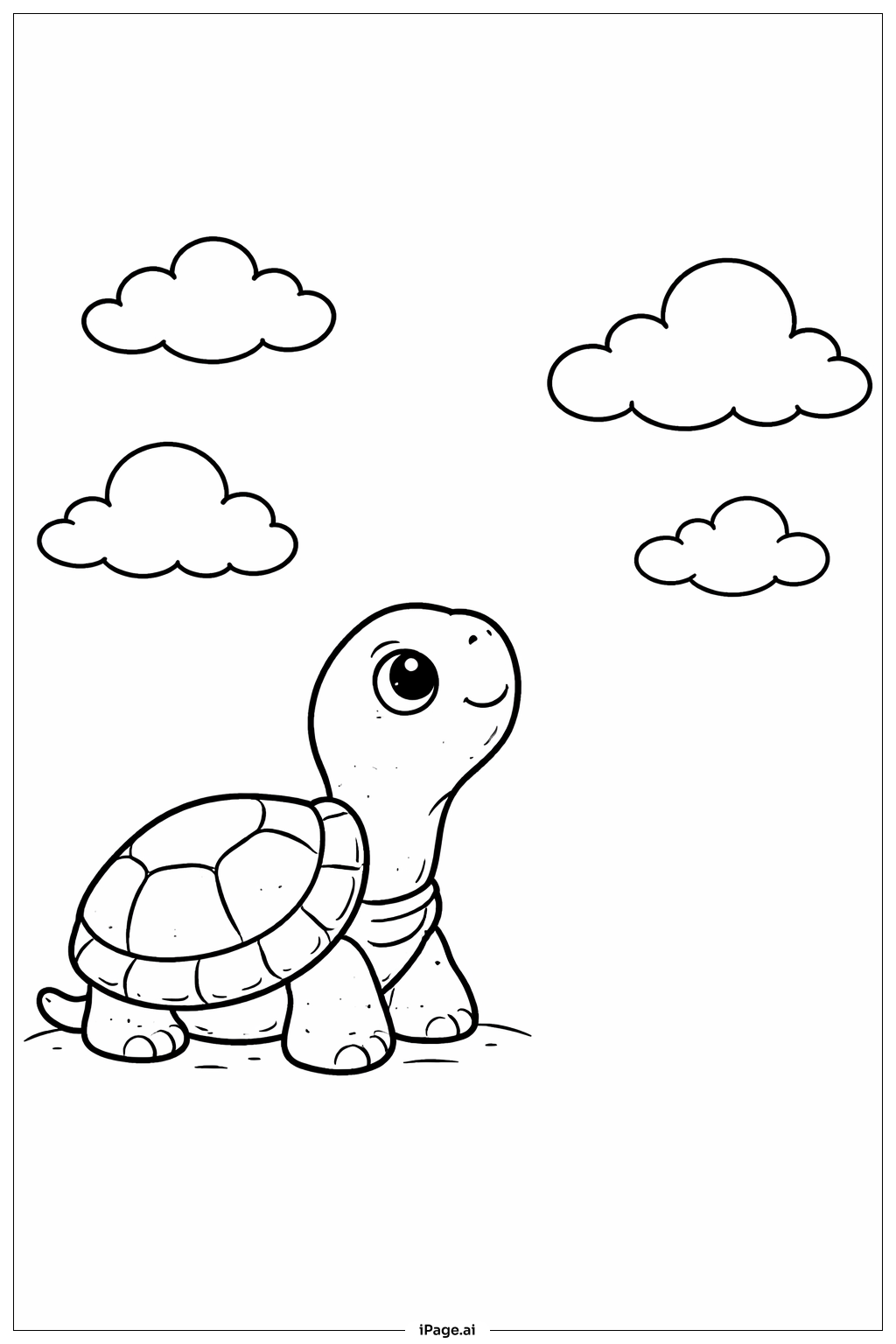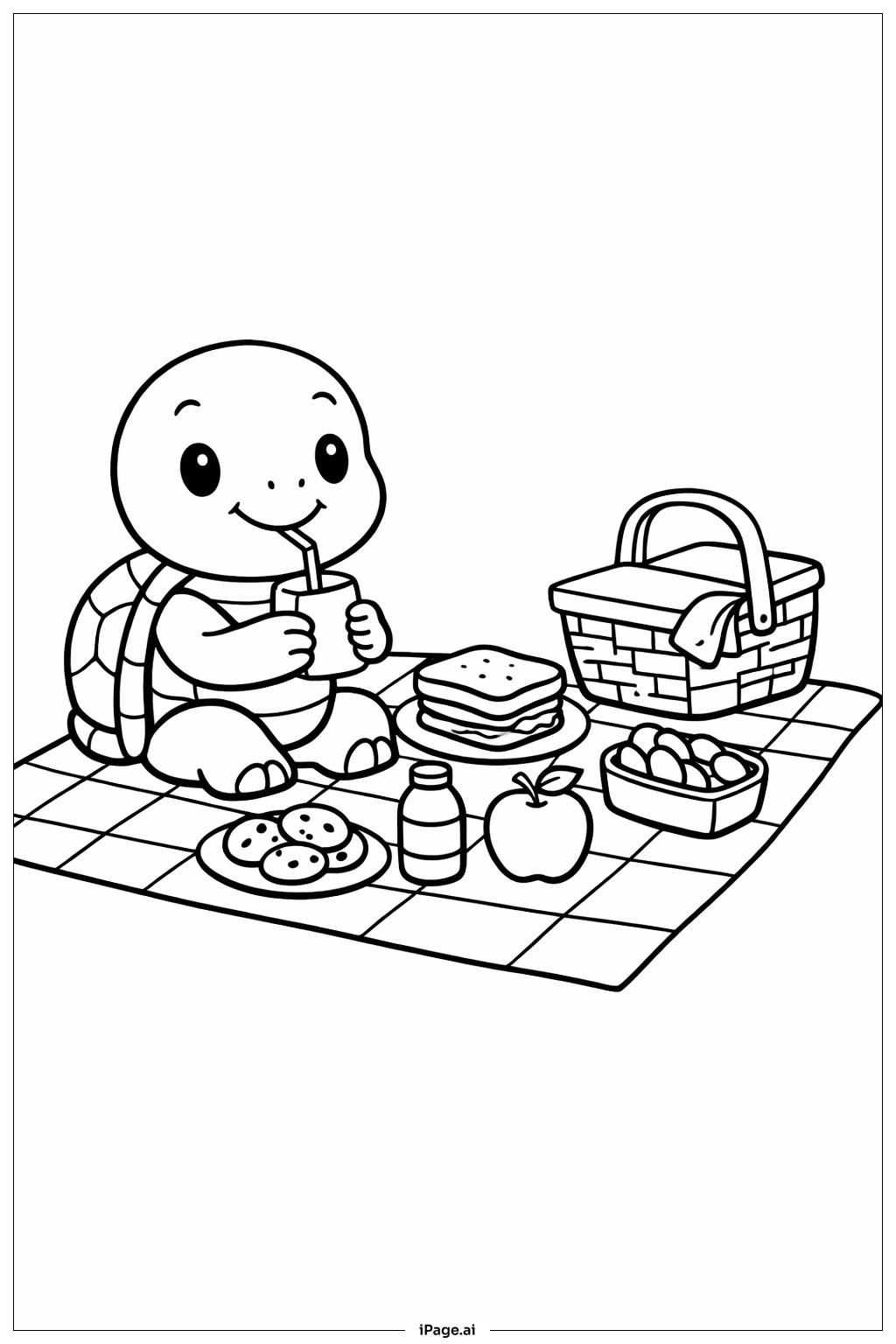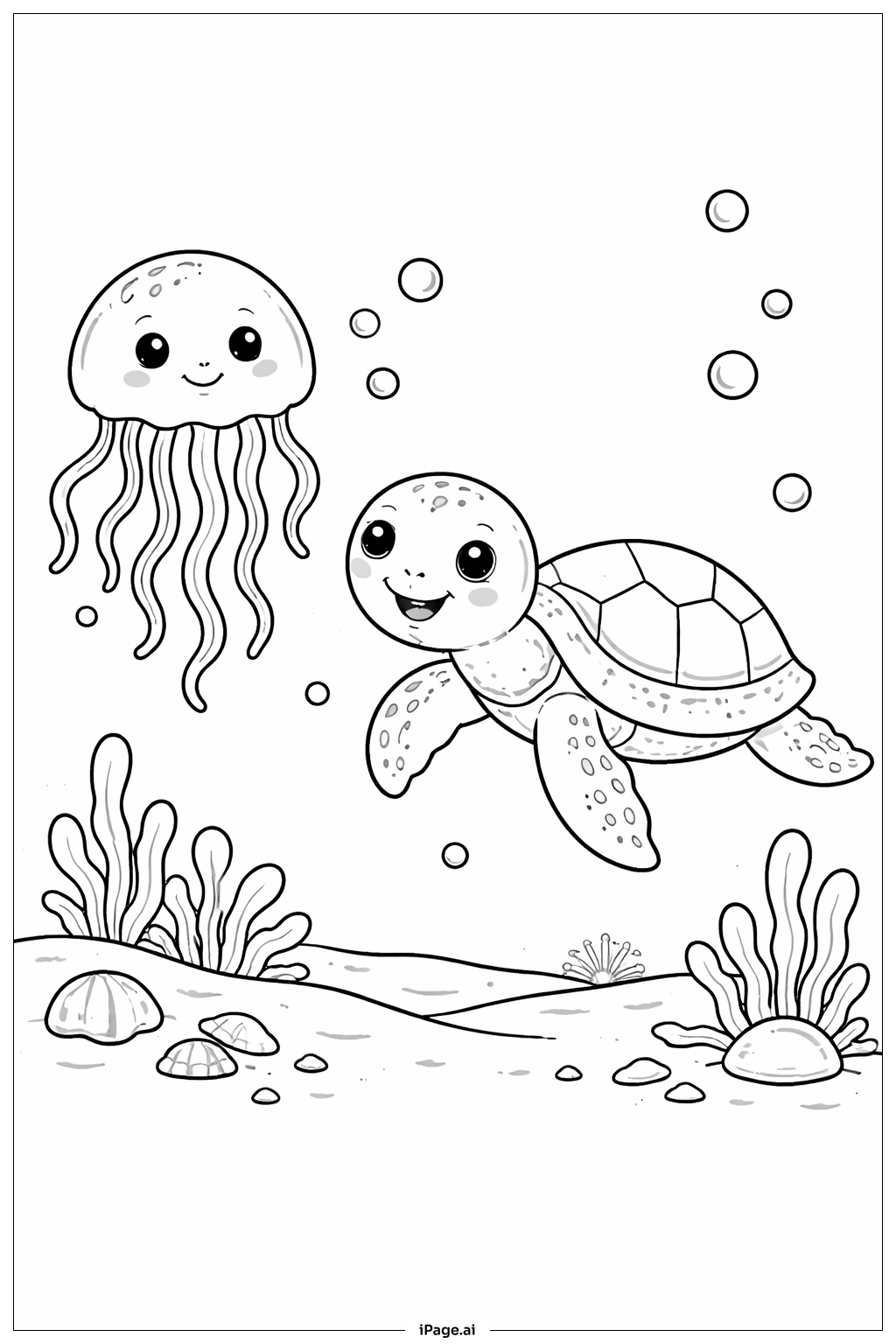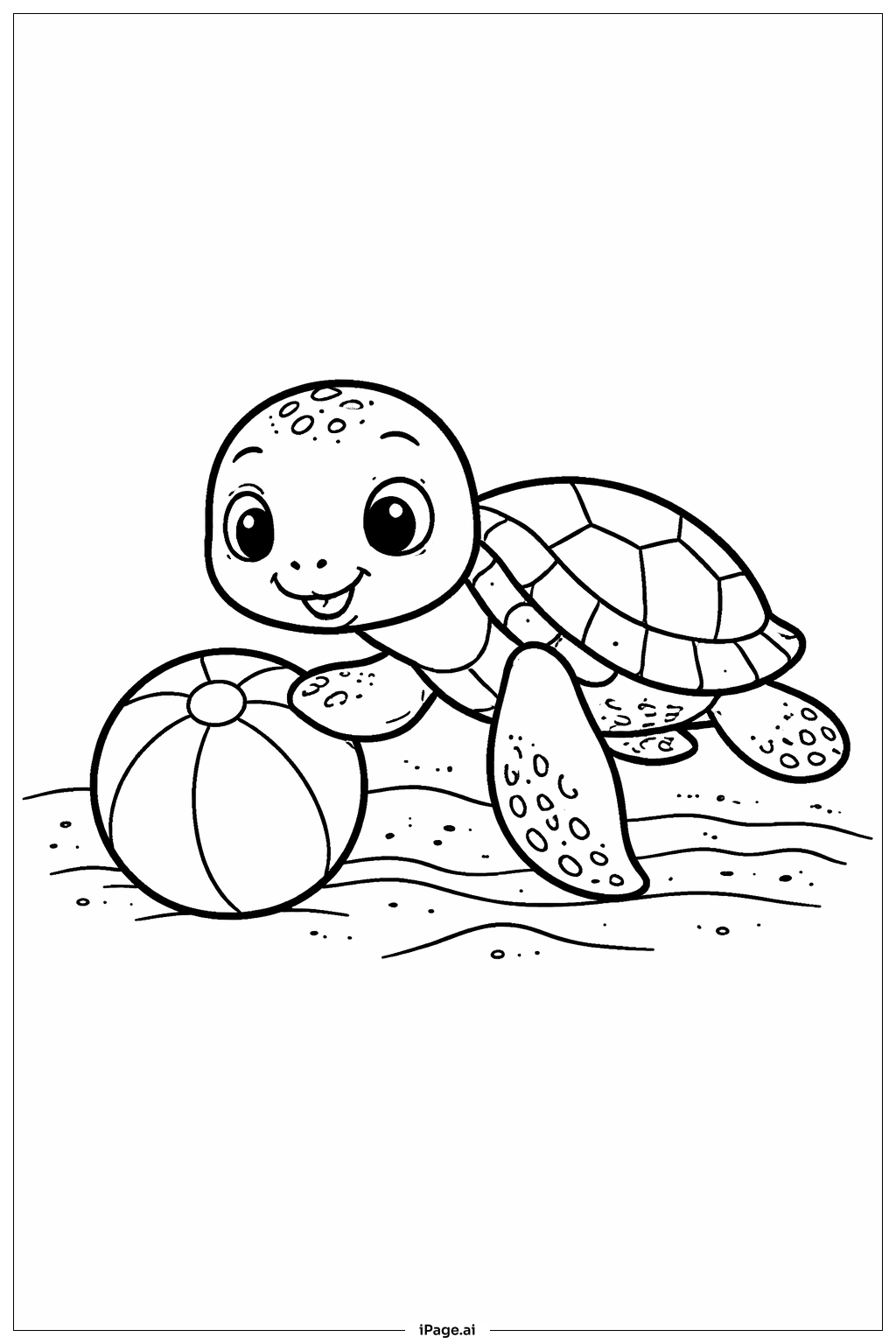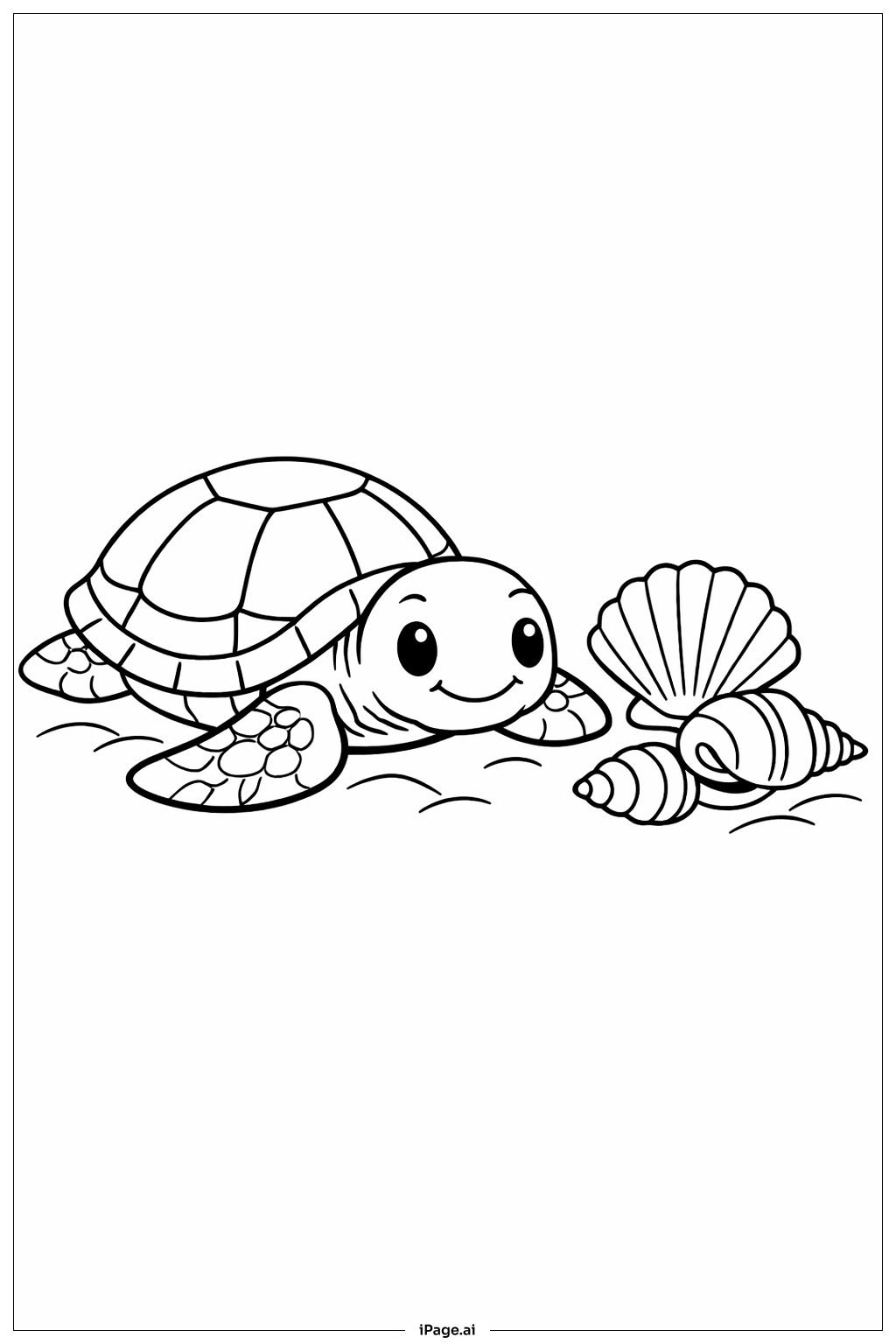
Coloring tips: How to color Turtle With Seashells coloring page well?
Start with the turtle's shell. Use green shades like olive or emerald for the main shell sections. Add darker green or brown to the borders between sections to make them stand out. Use a lighter green or yellow-green for the turtle's head, neck, and flippers. Give the face warm, friendly colors like peach or tan.
For the seashells, use a variety of colors to make each one unique. Try pink, peach, tan, cream, and light purple. Add gentle shading with a slightly darker version of each color to show the shell's curves and ridges.
Color the background with soft ocean blues and teals. Use pale sandy yellow for the ocean floor. Add white or light blue for the bubbles. Keep the overall palette bright and cheerful to bring this underwater scene to life.
Coloring challenges: Which parts are difficult to color and need attention for Turtle With Seashells coloring page?
• Turtle Shell Geometry: The turtle's shell is divided into many geometric sections, each with its own inner patterns. Staying within the small bordered areas requires careful control of your coloring tool. Young colorists may find it tricky to fill each segment neatly without crossing the lines. Using fine-tipped markers or sharpened colored pencils will help a lot here.
• Seashell Textures and Patterns: Each seashell has its own unique surface details — spiral ridges, scalloped edges, and fine lines. Coloring these small details with different tones of the same color adds depth and realism, but it takes patience and a steady hand. Rushing through these areas can flatten the look of the shells.
• Shading and Depth: Creating a sense of three-dimensional form on both the turtle and the shells means applying lighter colors in highlighted areas and darker tones in shadowed areas. This technique, called shading, can be challenging for beginners who are used to flat, single-color fills.
• Background Details: The bubbles and wave lines in the background seem simple, but coloring around them neatly without accidentally filling them in is harder than it looks. Leaving bubbles white or coloring them very lightly requires careful attention and control.
• Color Coordination: With so many different elements in the scene, choosing colors that work well together across the turtle, multiple shells, and the background takes planning. Without a thoughtful color scheme, the image can look busy or unbalanced. Taking a moment to plan your palette before starting makes a big difference.
Benefits of coloring books: Advantages of drawing Turtle With Seashells coloring page
Coloring this Turtle With Seashells page offers a wide range of benefits for children and beginners alike.
Working on the turtle's shell segments and tiny seashell patterns helps build fine motor skills and hand-eye coordination. Children practice controlling their movements to stay within lines, which also supports handwriting development.
Choosing colors for the turtle, shells, and ocean background encourages creative thinking and self-expression. Kids get to make their own artistic choices, building confidence in their decisions.
The repetitive, focused nature of coloring the detailed patterns has a calming effect. It helps children slow down, concentrate, and enter a peaceful, mindful state — similar to meditation for adults.
Learning to shade the curved surfaces of the turtle shell and seashells introduces early art concepts like light, shadow, and depth. These are foundational skills for drawing and painting later on.
The ocean theme also sparks curiosity about marine life and nature. Kids may want to learn more about sea turtles and seashells after spending time with this page, making it a gentle gateway to science and nature exploration.
Overall, this coloring page is both fun and educational, making it a rewarding activity for children of all ages.