Coloring tips: How to color Turtle In Seaweed Garden coloring page well?
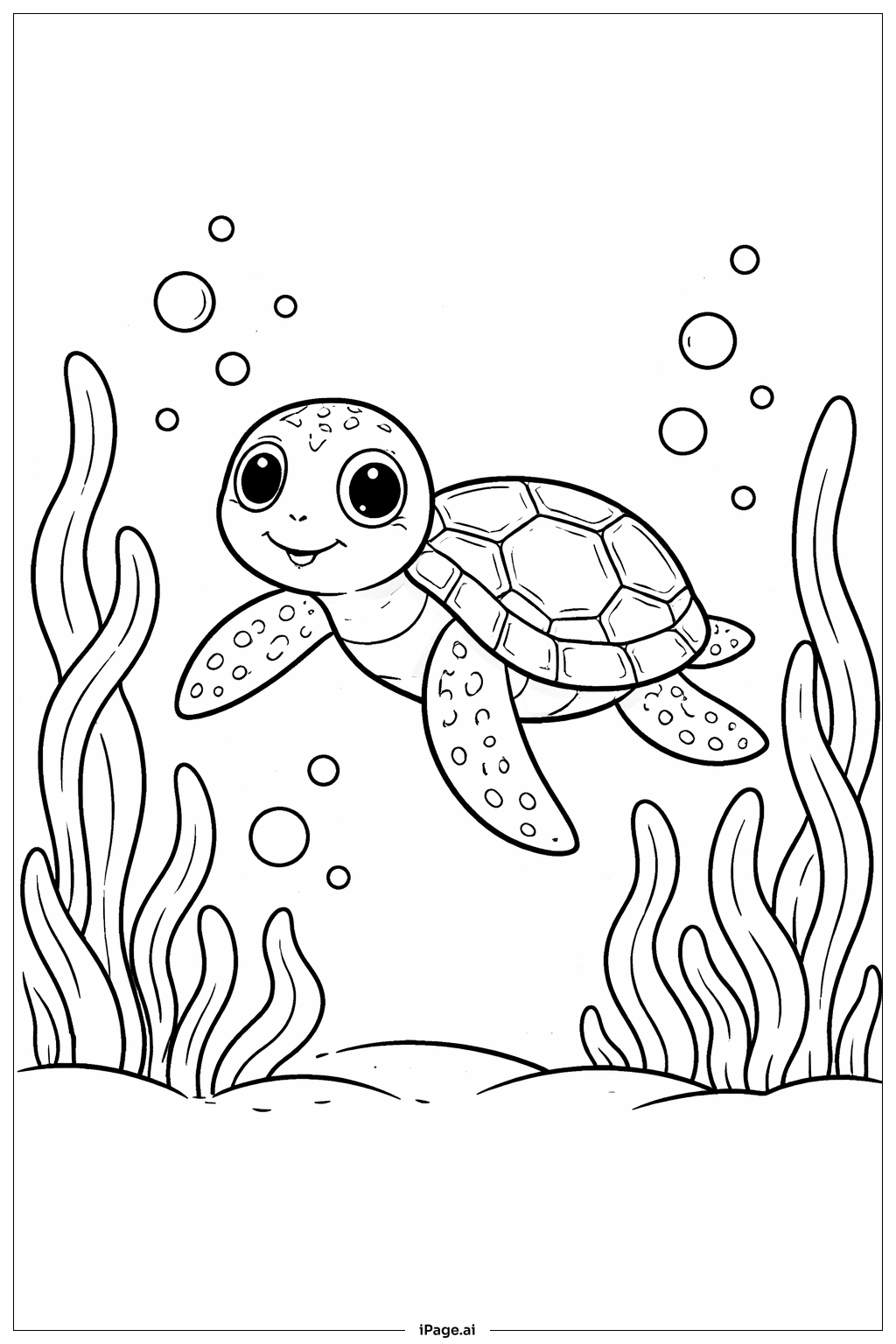
Use different shades of green for the seaweed to make it look lively and real. The turtle's shell can be colored in brown, yellow, or green tones to give it a natural look. Try to color the spots on the turtle’s flippers in a slightly darker or lighter shade to create contrast. For the bubbles, use light blue or leave them white with a hint of blue around the edges to make them look transparent. The sea floor can be colored in sandy colors like beige or light brown. Blend colors gently to show the flow of water and the softness of the underwater garden.
Coloring challenges: Which parts are difficult to color and need attention for Turtle In Seaweed Garden coloring page?
1. Coloring the turtle’s shell requires attention to detail because of the many small sections; keeping colors inside the lines might be challenging.
2. The thin and wavy seaweed shapes can be tricky to color evenly without going outside the lines.
3. Adding shading and depth to the bubbles to make them look transparent can be difficult for young colorers.
4. Coloring the spots on the turtle’s flippers needs care to avoid coloring them all the same, which might make the turtle look flat.
5. Maintaining a soft blend for the sea floor and seaweed to show the underwater effect may require practice with coloring techniques.
Benefits of coloring books: Advantages of drawing Turtle In Seaweed Garden coloring page
Coloring this turtle in its seaweed garden helps children improve their fine motor skills and hand-eye coordination. It encourages patience and focus, especially when coloring the detailed shell and delicate shapes of the seaweed. Choosing colors for the underwater scene enhances creativity and teaches children about nature, such as sea life and underwater plants. The calming theme of the sea environment helps reduce stress and promotes relaxation while coloring. Overall, this picture offers a fun and educational experience for young artists.