Coloring tips: How to color Turtle Family Walk coloring page well?
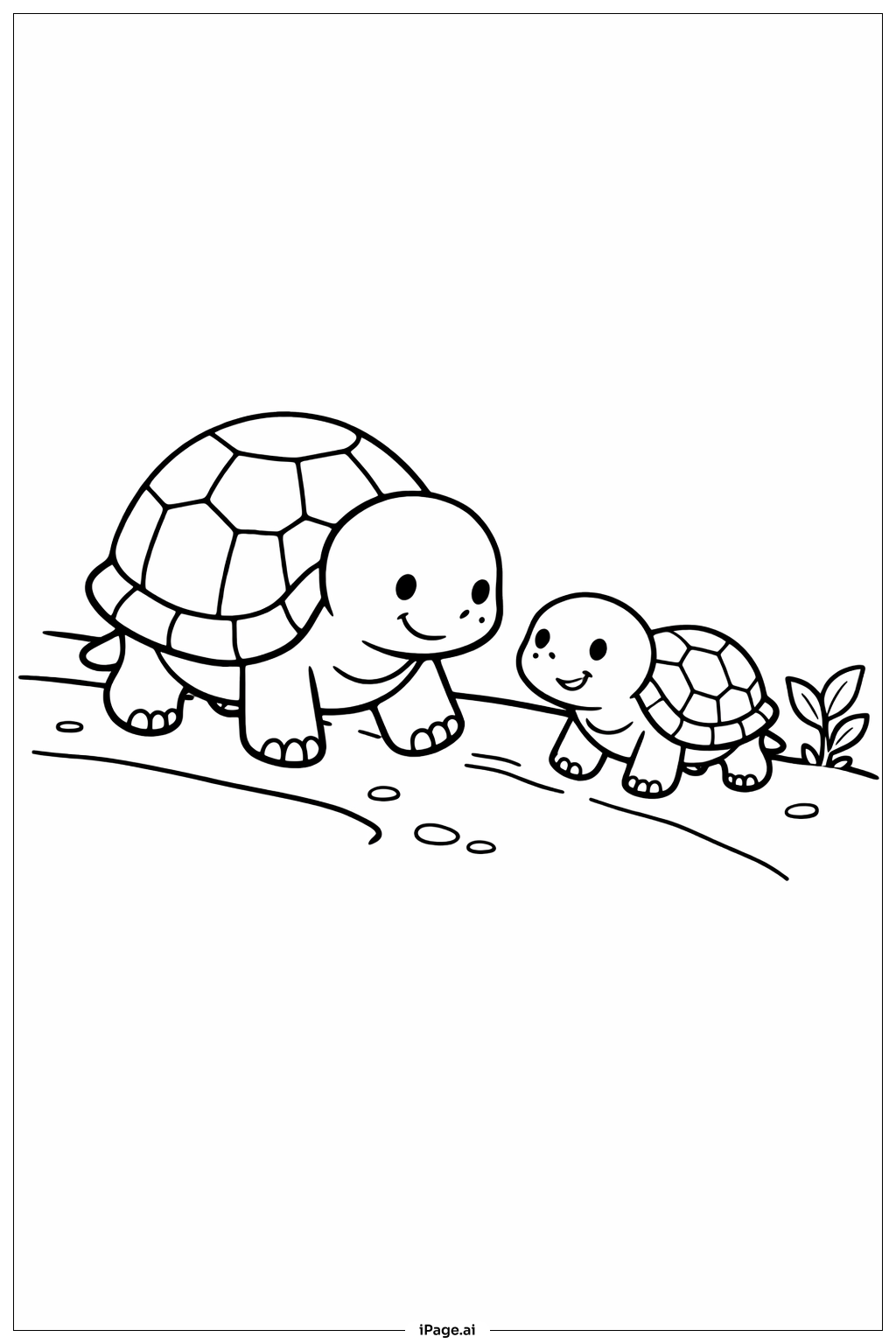
Start with the turtle shells since they are the focal point of the image. Use earthy green and brown tones for a natural look, or go bold with bright colors like teal, orange, and yellow for a fun, creative style. The geometric patterns on the shells look great with alternating shades to make each section stand out. Use a darker green for the turtles' skin and legs, adding a slightly lighter shade to the belly area for contrast. For the background, soft greens and browns work well for grass and soil. You can use light blue or white space to suggest sky. Baby colorists can keep it simple with just two or three colors, while older kids and Adults can try blending and shading to add depth to the shells and surroundings. Have fun mixing realistic and imaginative color choices!
Coloring challenges: Which parts are difficult to color and need attention for Turtle Family Walk coloring page?
• Shell Pattern Complexity: The turtle shells are filled with intricate geometric sections and raised scale-like patterns. Carefully coloring each segment without going outside the lines requires steady hand control and patience. Younger children may find it helpful to use chunky crayons or markers and focus on one section at a time rather than trying to finish the whole shell at once.
• Maintaining Color Consistency Across Two Turtles: Since the image features both a parent and a baby turtle, keeping a consistent color theme between the two characters can be tricky. If you use different shades for each turtle, make sure the overall palette still looks harmonious. Planning your color choices before you start can save a lot of rework later.
• Small Leg and Head Details: The turtles' legs, toes, and facial features like eyes and mouth are small and closely spaced. Using fine-tipped colored pencils or thin markers works best here. Coloring these tiny areas without smudging into larger sections nearby takes care and a light touch.
• Depth and Shading on Rounded Surfaces: Turtle shells are dome-shaped, meaning light hits them from above and shadows form on the sides. Recreating this three-dimensional look by adding darker tones to the edges and lighter tones to the center of the shell is a rewarding challenge for more experienced colorists.
• Background Balance: The natural background elements like grass and ground need to complement the turtles without overpowering them. Choosing colors that contrast gently with the turtle bodies helps the characters remain the clear focal point of the finished piece.
Benefits of coloring books: Advantages of drawing Turtle Family Walk coloring page
Coloring this Turtle Family Walk page offers a wide range of wonderful benefits for children and Adults alike. For younger kids, carefully filling in the detailed shell patterns builds fine motor skills and improves hand-eye coordination. Staying within the lines trains focus and concentration, skills that carry over into reading and writing.
The family theme of the image encourages children to think about relationships, togetherness, and the love between parents and their young. This can spark meaningful conversations between kids and caregivers as they color side by side.
For older children and Adults, the intricate shell geometry provides a satisfying and meditative coloring experience. Working through each section of the pattern promotes mindfulness and helps reduce stress. Choosing color combinations also nurtures creativity and artistic confidence.
The nature-based setting of the image connects colorists to the natural world, sparking curiosity about turtles and wildlife. It can serve as a gentle introduction to learning about animal families and habitats.
Overall, this page is a joyful, calming activity that brings people of all ages together, encourages creativity, and supports emotional and cognitive development in a fun and accessible way.