Coloring tips: How to color Turtle Exploring Reef coloring page well?
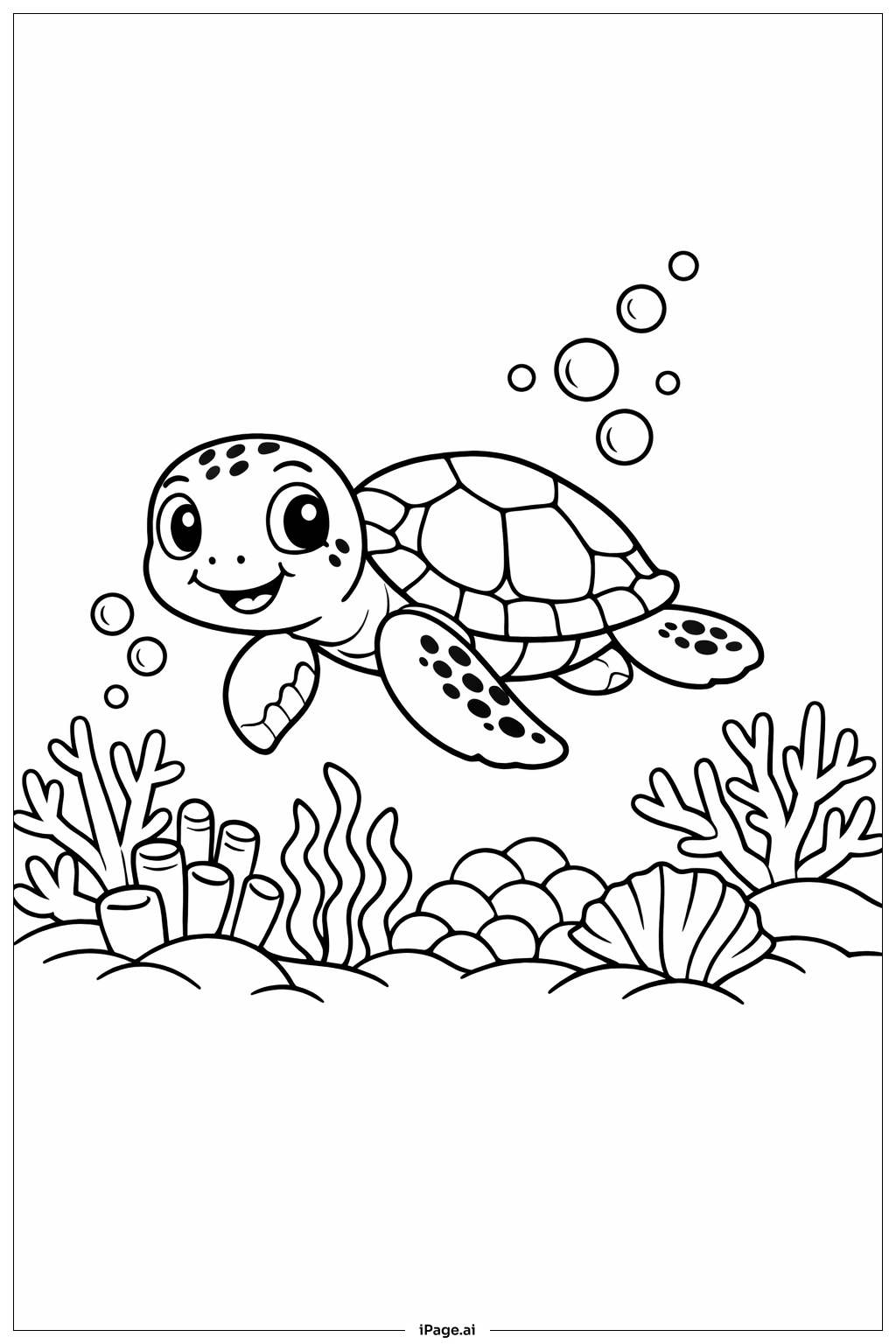
Use different shades of green and brown for the turtle's shell and flippers to make it look natural. The turtle's skin can be a lighter green or gray color. Use bright colors like orange, pink, red, and yellow for the coral reefs to make them stand out. For the seaweed, try different greens. The bubbles can be left white or colored lightly with blue for a transparent effect. Use soft blue or turquoise for the background, but do not cover the turtle or coral. This will make the turtle and reef look like they are swimming in the ocean.
Coloring challenges: Which parts are difficult to color and need attention for Turtle Exploring Reef coloring page?
1. Coloring the turtle's shell segments evenly can be tricky because each segment is small and needs careful coloring to look neat.
2. The spots on the turtle's flippers and head are small, requiring attention to avoid coloring outside the lines.
3. The coral shapes vary, some are narrow and tubular, making it hard to color in without smudging.
4. Keeping the bubbles light and transparent can be challenging because they need a soft touch to avoid making them look solid.
5. Balancing bright coral colors with the turtle's natural tones requires good color selection to keep the picture lively but realistic.
Benefits of coloring books: Advantages of drawing Turtle Exploring Reef coloring page
Coloring this picture helps children improve their hand-eye coordination and fine motor skills. It encourages creativity by allowing them to choose different colors for the turtle and coral reef. The picture also teaches about marine life and the underwater environment in a fun way. Coloring the small details like spots and coral shapes helps kids practice patience and concentration. Overall, it invites children to explore nature and express themselves through art.