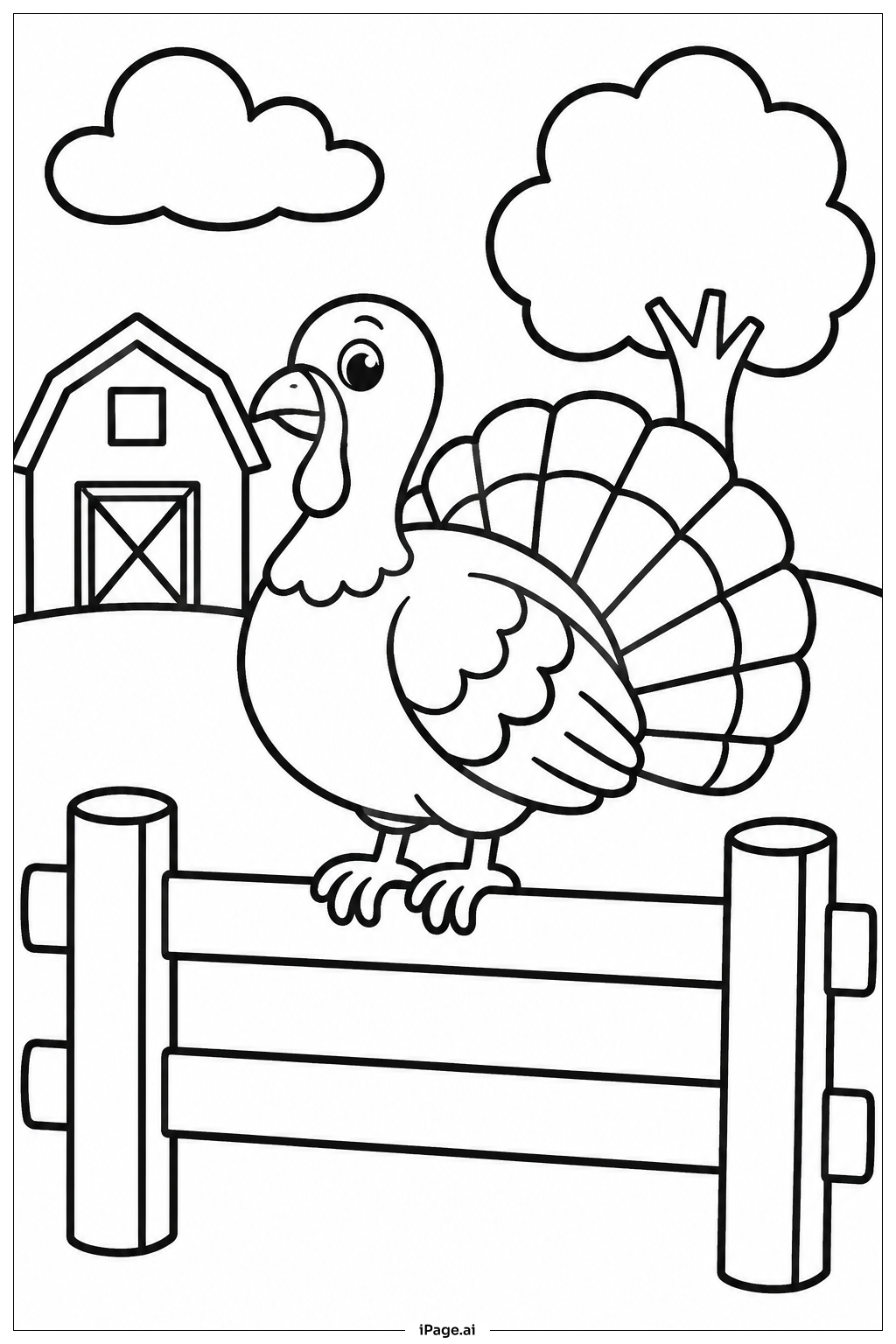
Coloring tips: How to color Turkey On Fence coloring page well?
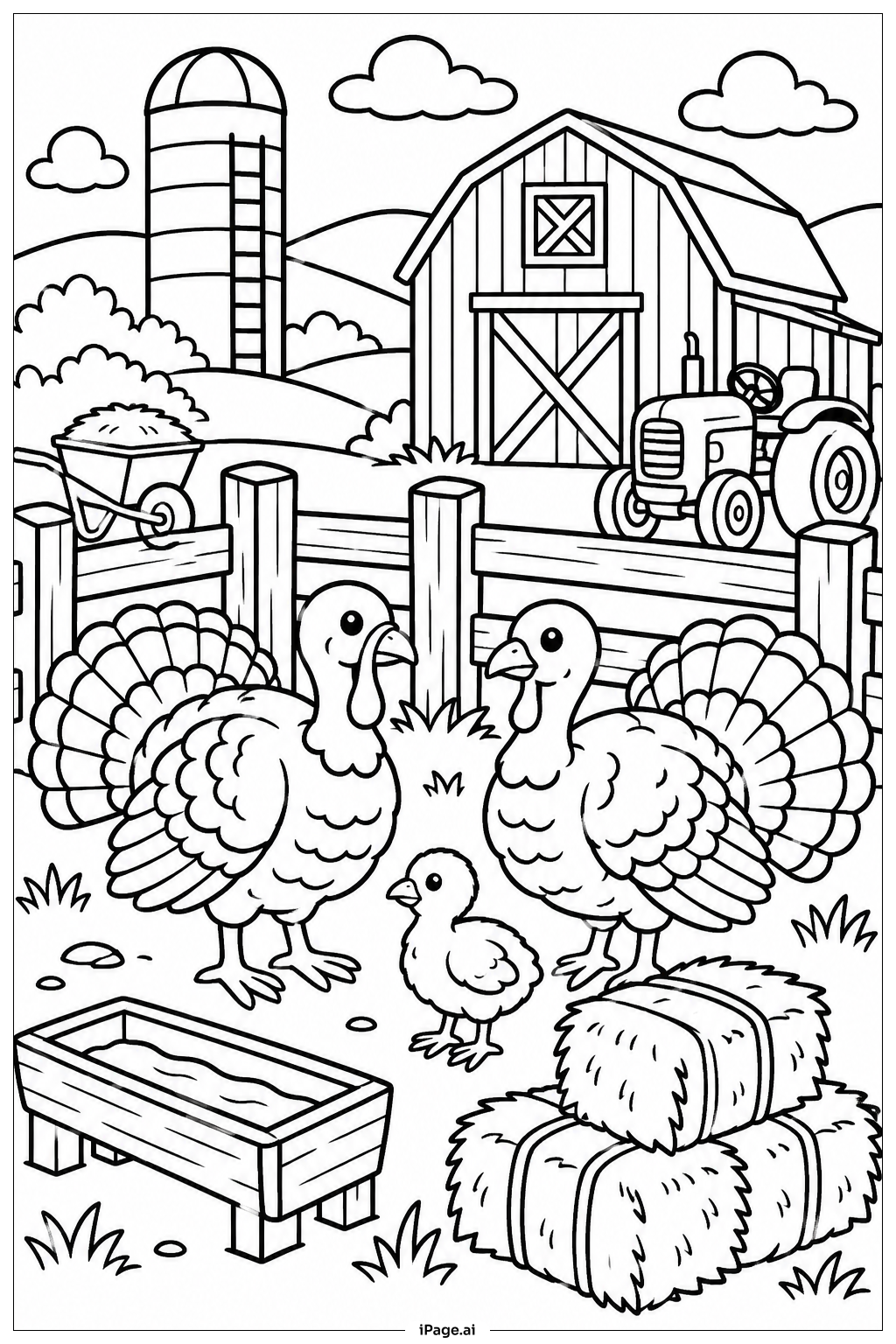
Try using warm and rich browns and reds for the Turkey’s feathers, mixing darker and lighter shades to bring out the texture. The turkey’s head can be colored with bright reds and blues to highlight its unique skin. For the fence, use natural wood tones like beige, light brown, or gray to give it a rustic look. You can add green or yellow tones around the fence to suggest grass or foliage, making the scene more lively. Feel free to be creative and add your own background colors too, like a blue sky or soft sunrise colors to enhance the outdoor setting.
Coloring challenges: Which parts are difficult to color and need attention for Turkey On Fence coloring page?
• Detailed Feathers: The Turkey’s feathers have many small shapes that require careful coloring to show the intricate patterns without going over the lines. This needs patience and attention to detail.
• Facial Features: The Turkey’s head features such as the wattle and snood are small and irregular, making it hard to stay precise while coloring these areas.
• Fence Texture: The wooden fence has rough lines and cracks that should be colored differently to create a realistic wood effect. Balancing the shades to show this texture can be challenging.
• Balancing Colors: Using contrasting colors on the Turkey’s body and fence requires careful planning to keep a natural and harmonious look.
• Small Leg and Feet Areas: The Turkey’s legs and feet are narrow with fine details, making it harder to color neatly without smudging or overlapping other parts.
Benefits of coloring books: Advantages of drawing Turkey On Fence coloring page
Coloring this Turkey On Fence image helps improve fine motor skills as children practice staying inside small spaces and shaping curves around detailed feathers. It encourages creativity by letting them explore realistic and imaginative color combinations for the Turkey and the wooden fence. This image also promotes focus and patience because of the intricate details involved. Additionally, coloring an animal helps develop observation skills, encouraging kids to notice textures and features in nature. Overall, it provides a relaxing yet stimulating activity suitable for children of many ages.