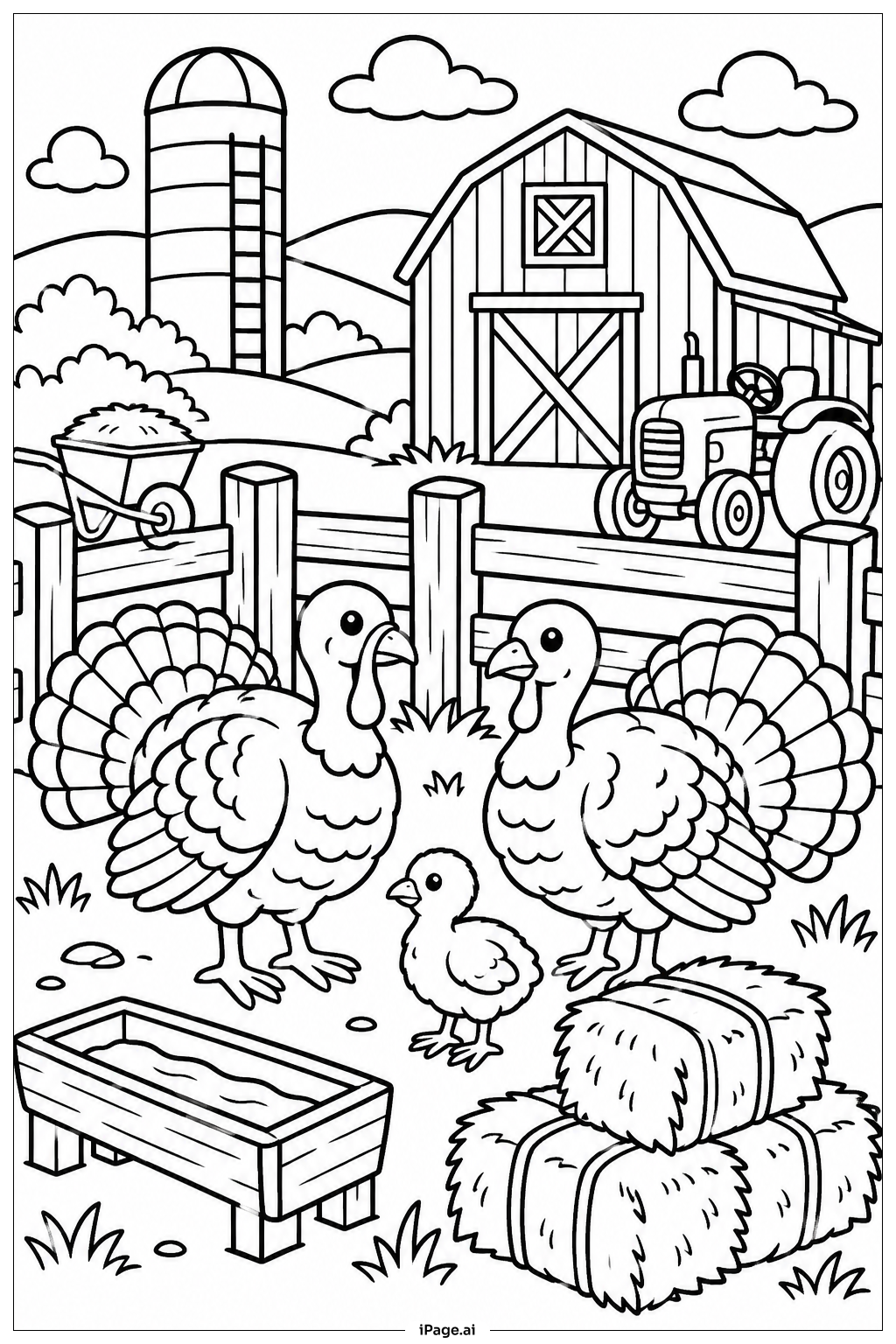
Coloring tips: How to color Turkey Family In Farmyard coloring page well?
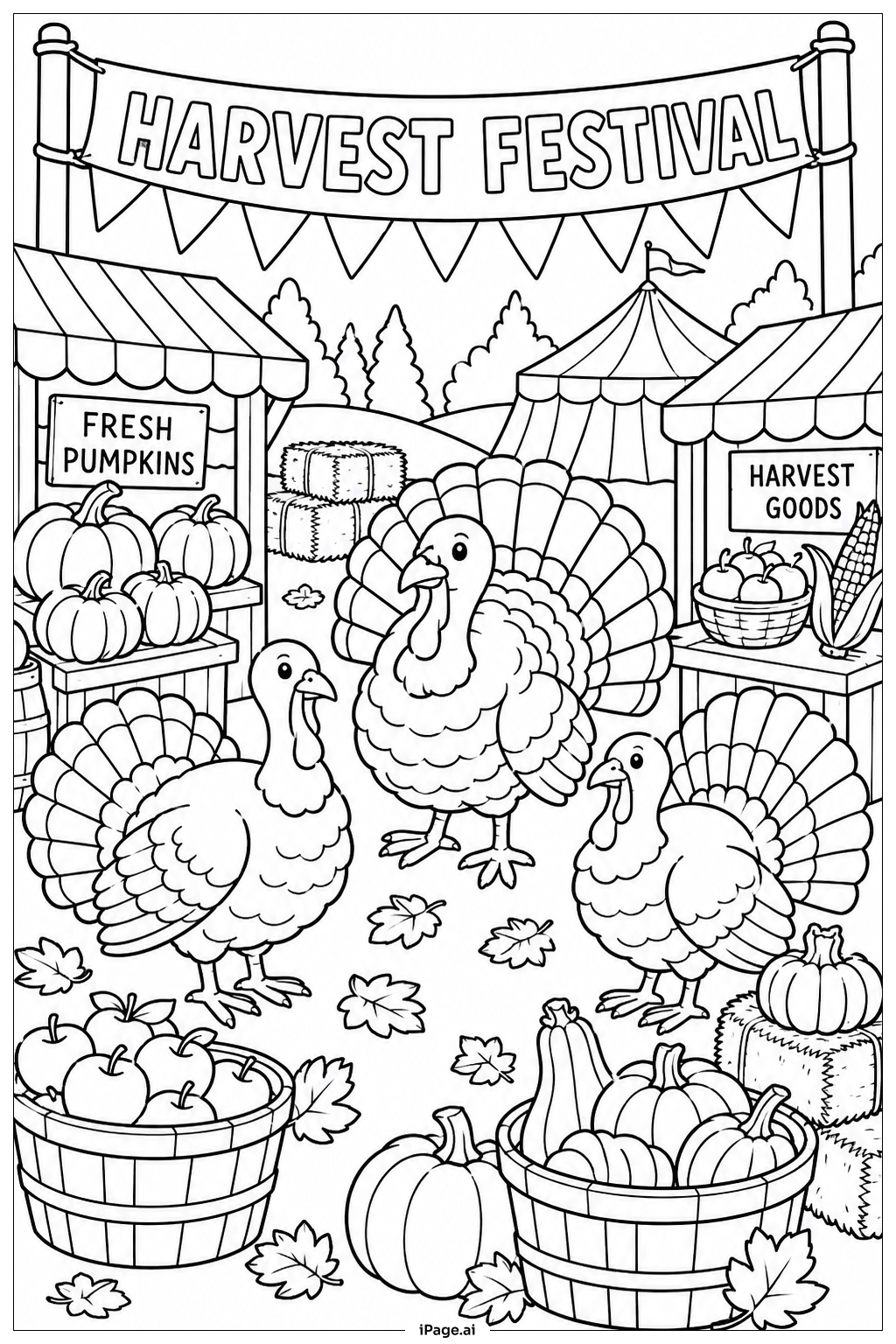
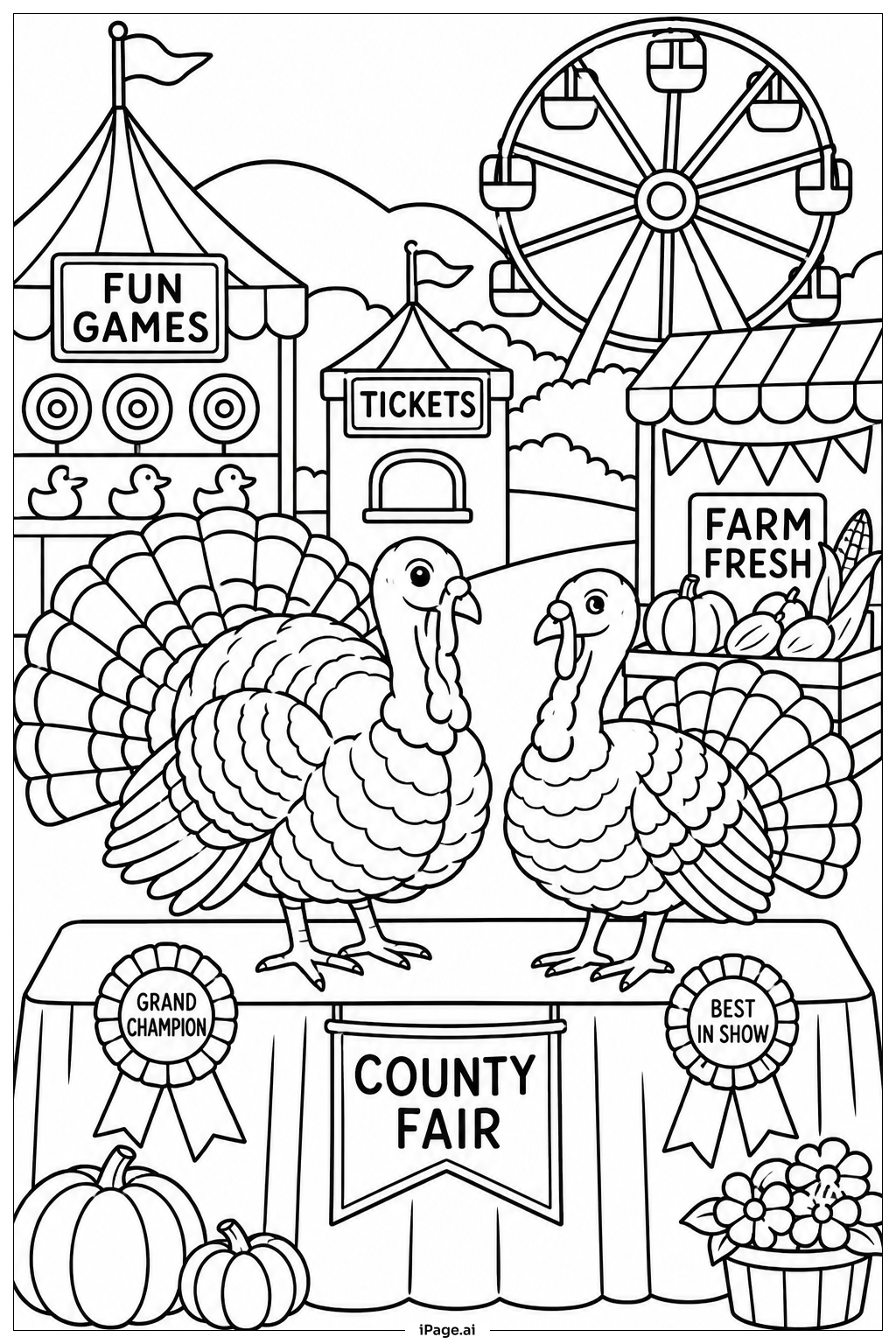
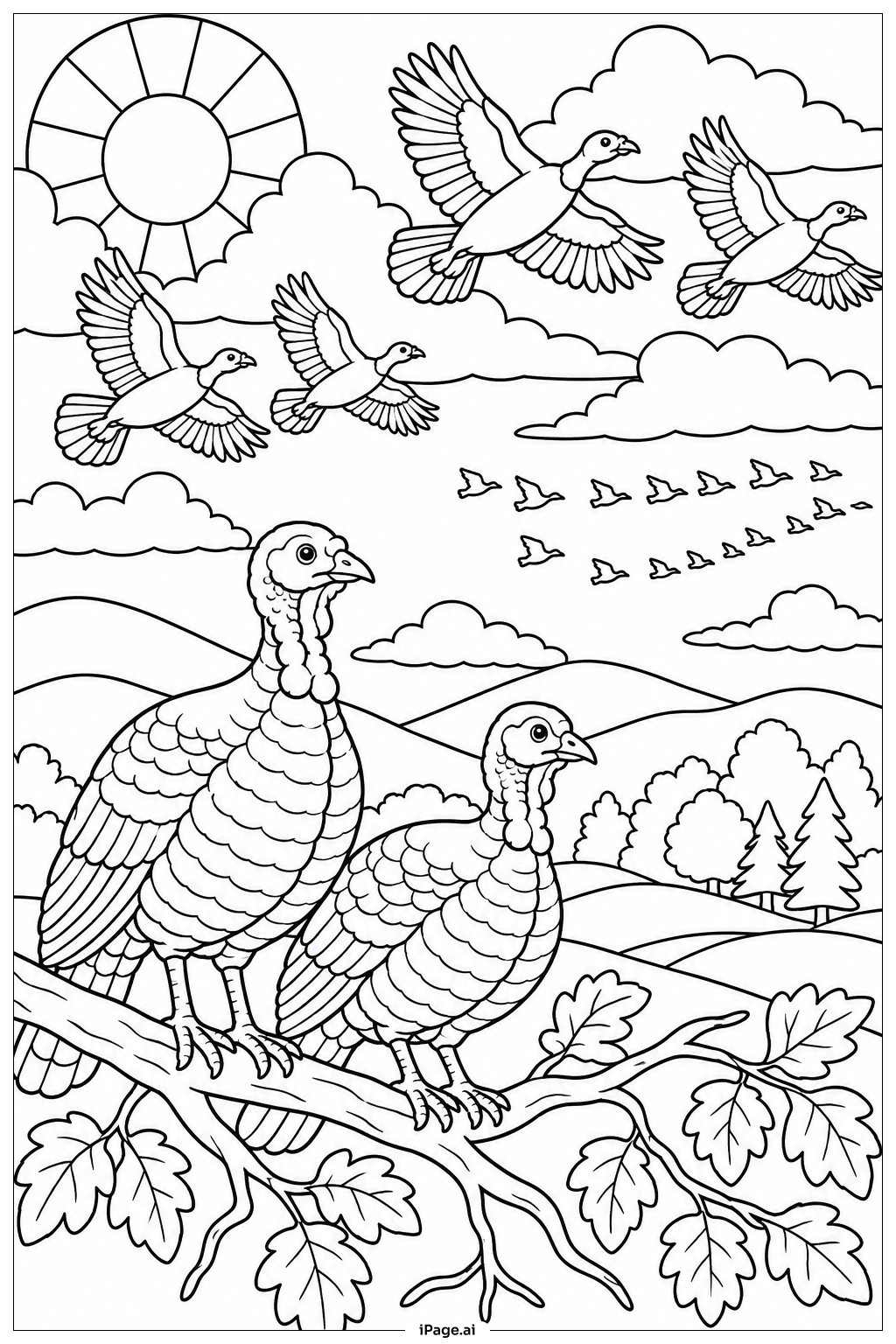
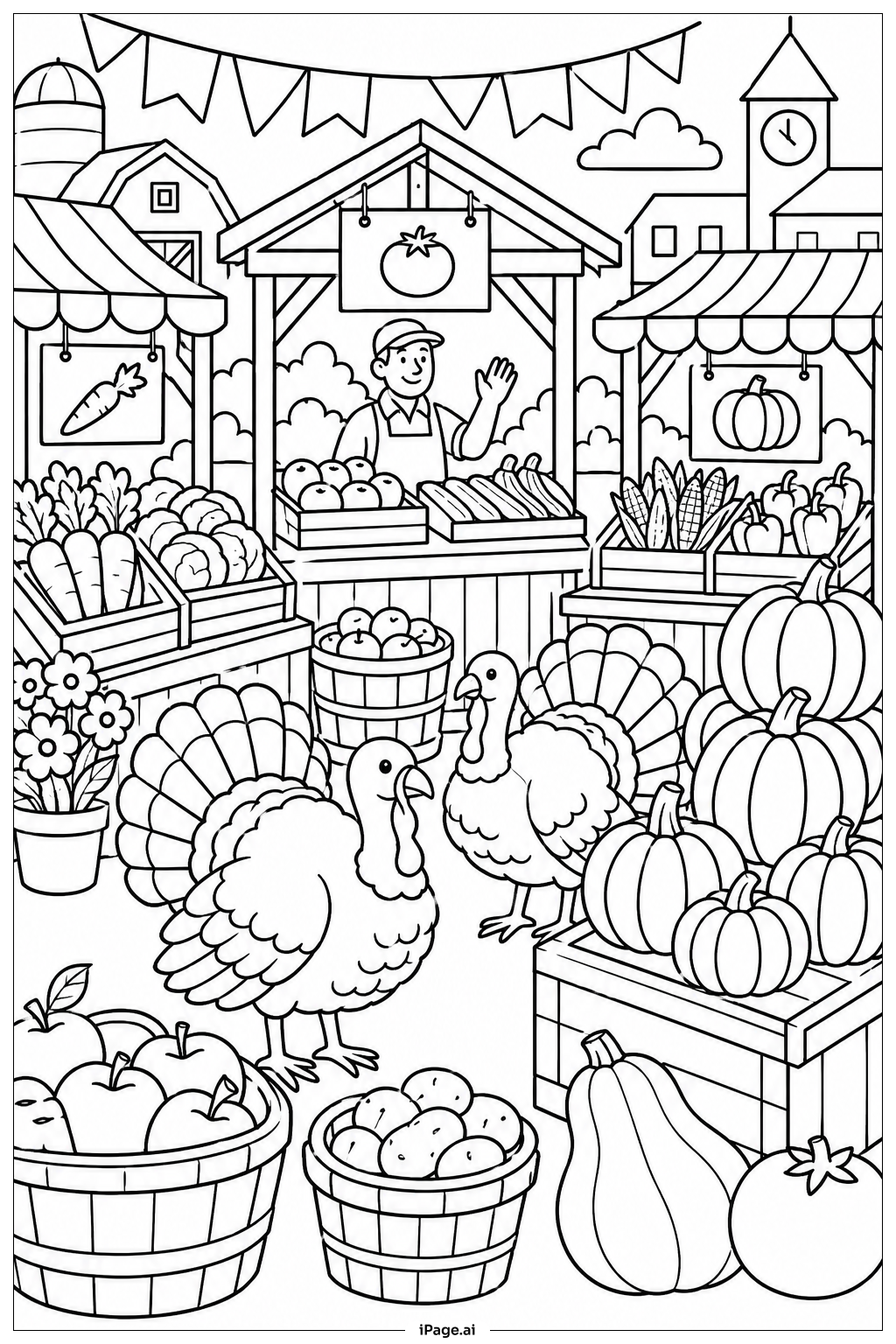
This picture is perfect for using warm brown, reddish, and golden colors to bring the turkeys' feathers to life. You can use shades of orange and pale yellow for the young turkeys, making them look soft and fluffy. Color the feathers with alternating shades to highlight their beautiful textures. The farmyard background can be colored with green shades for grass and plants, and light browns or tans for the wooden fence and hay. Use blue or soft gray for the sky and barn roof to give a calm farm feeling. Don't forget to color tiny details like the stones and twigs on the ground with subtle grays and earth tones to make the scene vivid.
Coloring challenges: Which parts are difficult to color and need attention for Turkey Family In Farmyard coloring page?
• Feather Texture: The turkey's feathers have many small lines and overlapping patterns. Coloring these carefully to show dimension requires patience and fine strokes.
• Multiple Animals: With several turkeys in different sizes and postures, it can be challenging to keep consistent coloring that distinguishes adults from poults clearly.
• Background Details: The fence, barn, plants, and ground elements involve tiny parts that need precise coloring to maintain the overall balance without overpowering the main figures.
• Natural Colors: Selecting the right combination of earthy and warm tones that blend well but also stand out demands some color theory knowledge.
• Overlapping Elements: Some turkeys are positioned in front of others or near background objects, making it tricky to color edges neatly without mixing different layers.
Benefits of coloring books: Advantages of drawing Turkey Family In Farmyard coloring page
Coloring this Turkey Family In Farmyard image helps children improve their fine motor skills as they work on small detailed areas like feathers and background features. It encourages focus and patience while choosing and blending natural colors to depict the animals and farm elements realistically. This activity also sparks curiosity about farm life and animals, enhancing observational skills and learning about nature. Moreover, coloring multiple similar figures fosters attention to detail and helps develop color differentiation abilities. Overall, it provides a fun and educational experience that combines creativity with knowledge about animal families in their environment.