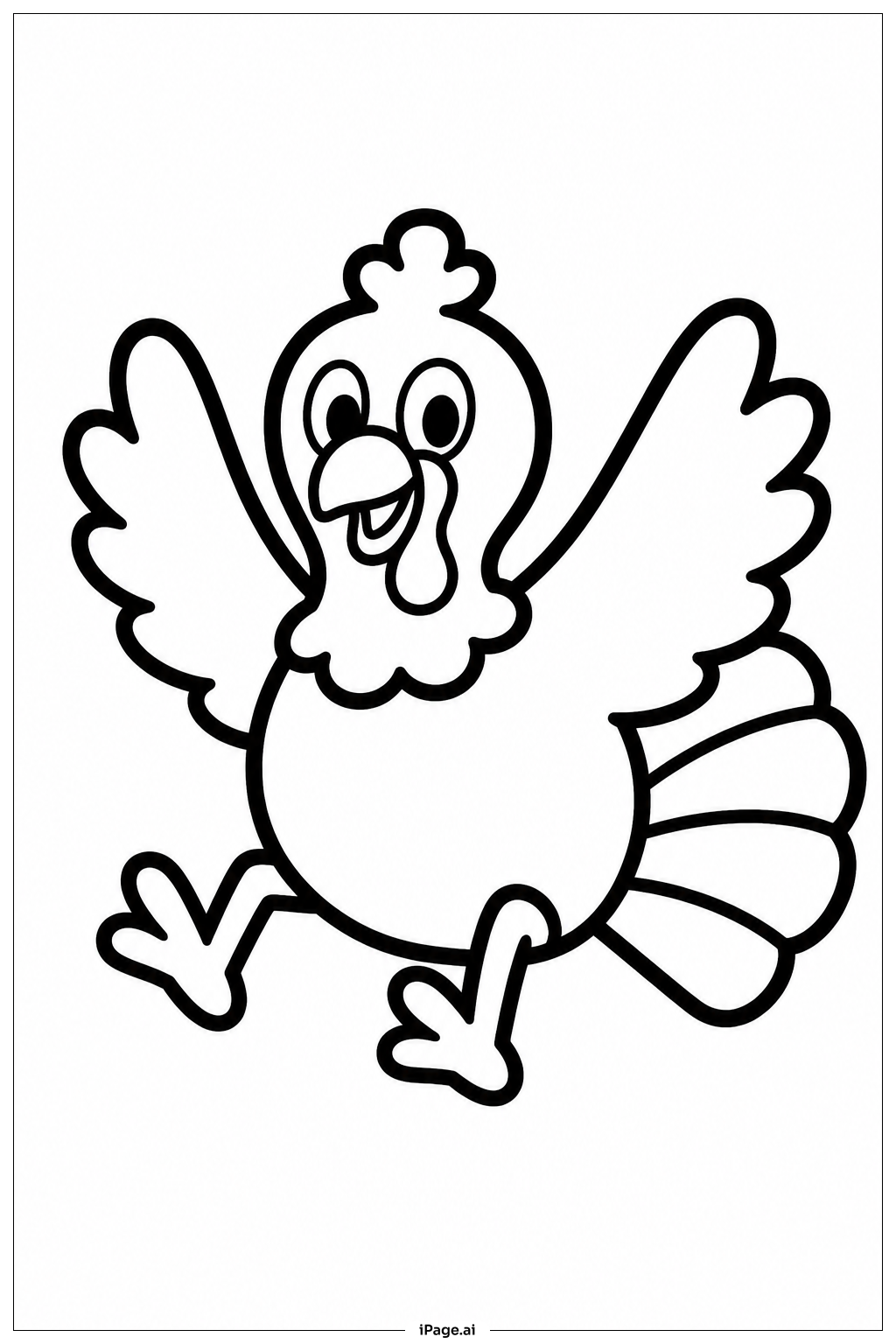
Coloring tips: How to color Turkey Jumping coloring page well?
For this Turkey Jumping image, use a variety of warm colors to bring the bird to life. Browns, oranges, and reds are perfect for the feathers. You can add lighter cream or beige tones to highlight parts of the turkey’s body and wings. Try adding some blue or green shades to the background to create contrast and make the Turkey stand out. Don’t be afraid to mix colors in the feathers to show movement and texture. Bright reds and blues can be used on the wattles and head for extra detail. Keep the grass or ground colors in natural greens and browns to complete a lively scene.
Coloring challenges: Which parts are difficult to color and need attention for Turkey Jumping coloring page?
• Feather Details: The Turkey has many overlapping feathers with intricate shapes. Coloring these evenly while showing texture can be tricky and requires patience to avoid coloring outside the lines. • Wing and Tail Spread: The wide wings and tail feathers need careful color blending to capture their depth and movement. Layering colors can help but can be challenging for younger children. • Small Features: The turkey’s head has fine details like the wattle and beak that require precision with coloring tools. These small parts must be colored carefully to keep the image neat. • Dynamic Pose: Because the turkey is jumping, its legs and feet are bent and not in a simple standing position. Coloring these parts to show movement can be complicated. • Background Elements: Although subtle, the background with grass and sky needs a softer coloring approach to contrast the bright turkey without overwhelming it.
Benefits of coloring books: Advantages of drawing Turkey Jumping coloring page
Coloring this Turkey Jumping image helps improve fine motor skills through detailed feather and small feature shading. It encourages creativity by mixing warm and natural colors to represent the animal and environment realistically. Children develop focus and patience as they work on challenging parts like wings and tail feathers. This image also teaches observation skills by capturing the motion and posture of the turkey in mid-air. Finally, coloring an active animal scene can boost enjoyment and connection with nature, making learning about turkeys more fun and memorable.