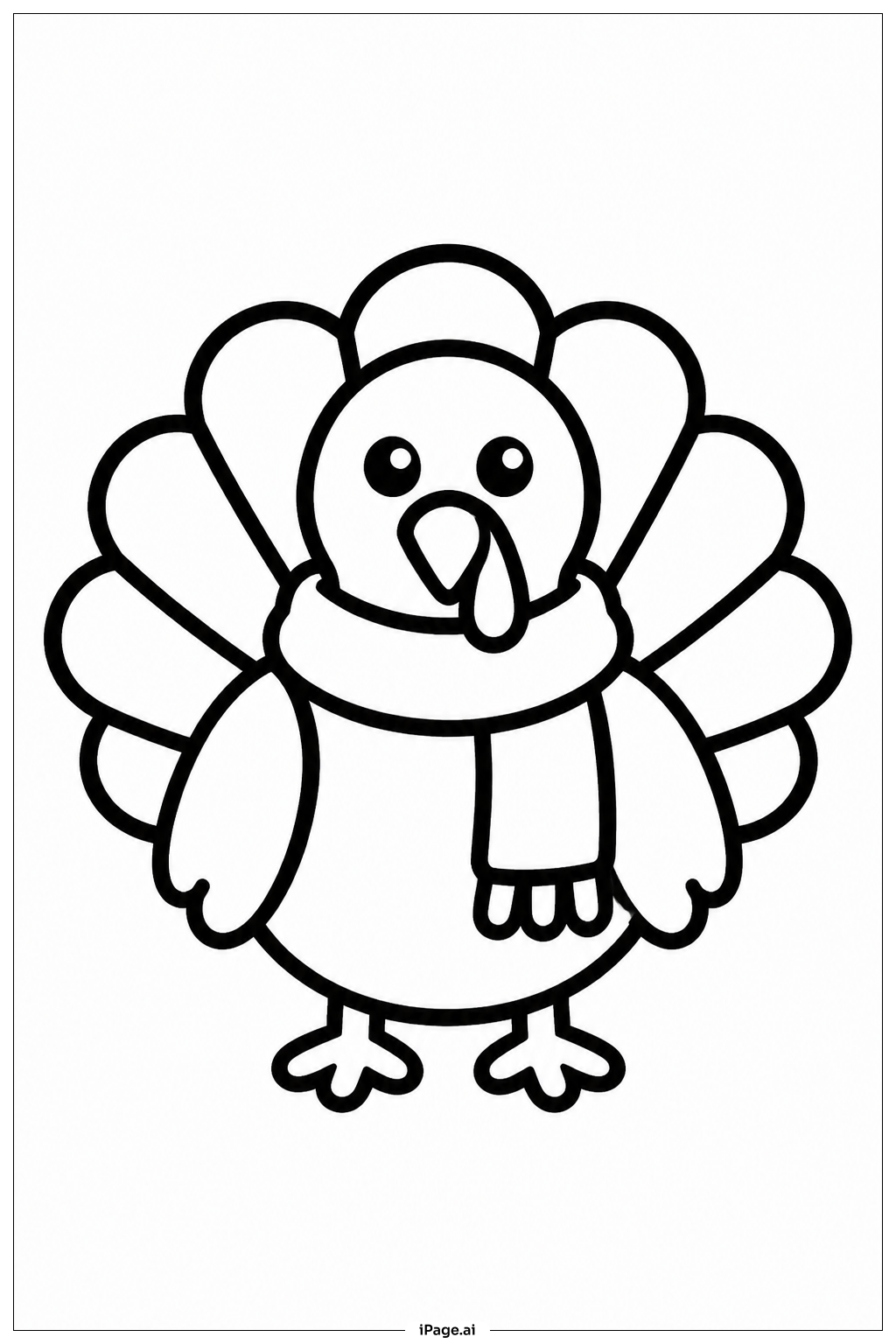
Coloring tips: How to color Turkey In Scarf coloring page well?
Start with the turkey's body using warm browns and tans for a realistic look, or get creative with autumn colors like oranges, reds, and golds. The magnificent tail feathers offer a wonderful opportunity to use multiple colors - try alternating bands of bronze, copper, burgundy, and deep orange. For the scarf, choose festive colors like red, orange, yellow, or traditional winter shades like blue, green, or purple with contrasting stripes or patterns. The turkey's head can be colored with pale blues or grays, with a bright red wattle and snood. Don't forget to add a warm orange or yellow to the beak and feet. Consider using colored pencils for fine feather details and markers or crayons for larger areas.
Coloring challenges: Which parts are difficult to color and need attention for Turkey In Scarf coloring page?
• Feather Texture and Patterns: The turkey's body features numerous overlapping feathers that require careful attention to create realistic texture. Each feather has individual barbs and patterns that need different shading techniques to show depth and dimension, making it challenging to avoid a flat appearance.
• Tail Feather Details: The impressive fan-shaped tail contains multiple large feathers with intricate patterns and bands. Coloring each feather distinctly while maintaining harmony across the entire tail spread requires planning and patience, especially when deciding whether to use repeating patterns or varied colors.
• Scarf Fabric Texture: Creating the soft, woven appearance of the scarf fabric presents a unique challenge. The fringed ends need delicate line work, and adding realistic folds and shadows to show how the fabric drapes around the turkey's neck requires understanding of light and dimension.
• Small Facial Features: The turkey's head contains small, detailed areas including the snood, wattle, beak, and eyes that require precision coloring. These tiny spaces can be difficult to color neatly without going outside the lines, especially for younger children.
• Color Coordination: Balancing the natural earth tones of the turkey with the decorative scarf colors requires thoughtful planning to ensure the entire image looks cohesive rather than chaotic, while still making both elements stand out.
Benefits of coloring books: Advantages of drawing Turkey In Scarf coloring page
Coloring this turkey wearing a scarf helps children develop fine motor skills through the detailed feather work and small facial features. The repetitive feather patterns encourage focus and patience, building concentration abilities. This seasonal image provides an excellent opportunity to learn about autumn, Thanksgiving traditions, and how we care for animals. The combination of natural and whimsical elements sparks creativity and imagination. Children practice color theory by choosing complementary colors for the turkey and scarf. The varying sizes of spaces to color - from large tail feathers to tiny facial details - help kids practice controlling their coloring tools with different levels of precision, building confidence in their artistic abilities.