Coloring tips: How to color Turkey At Pond coloring page well?
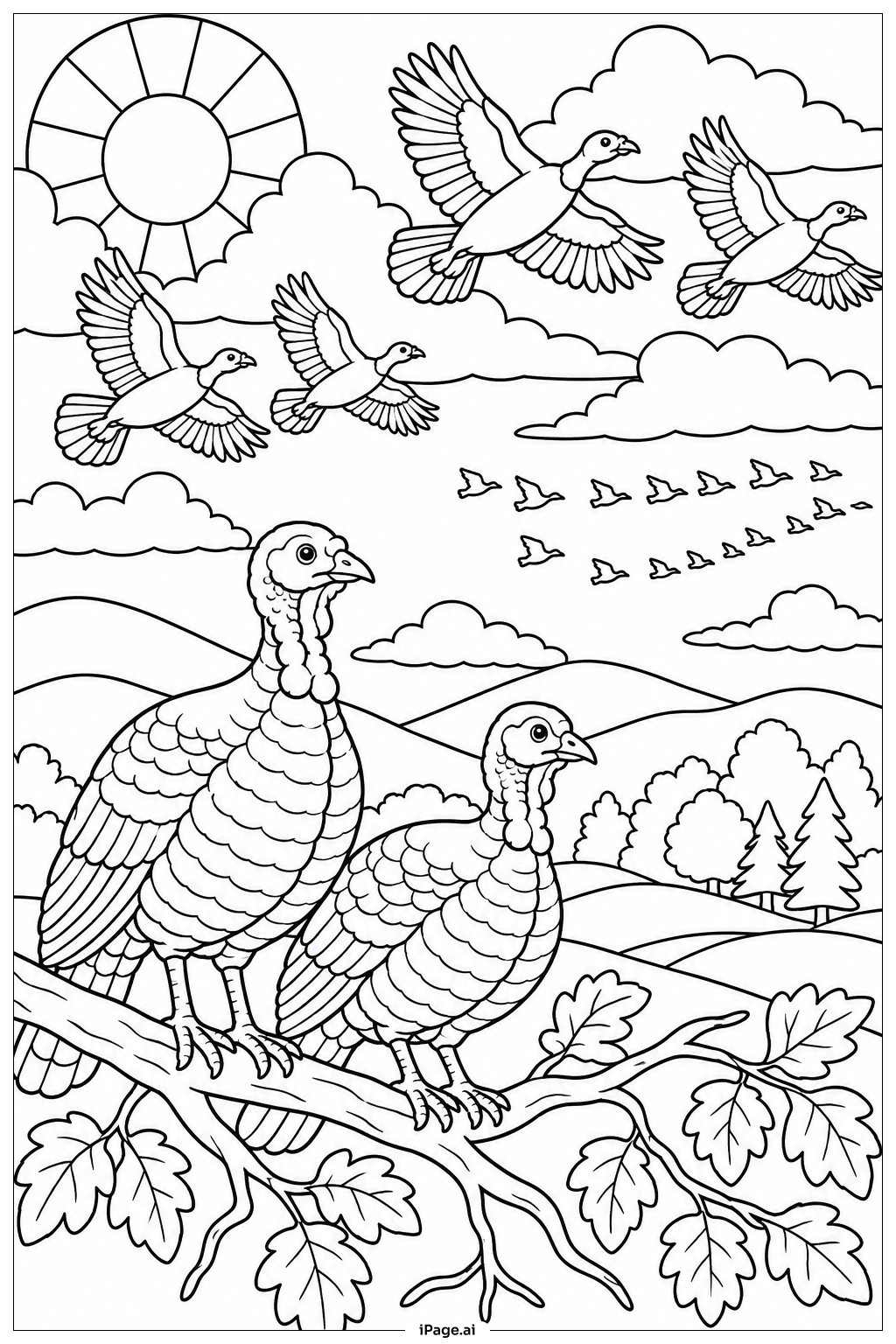
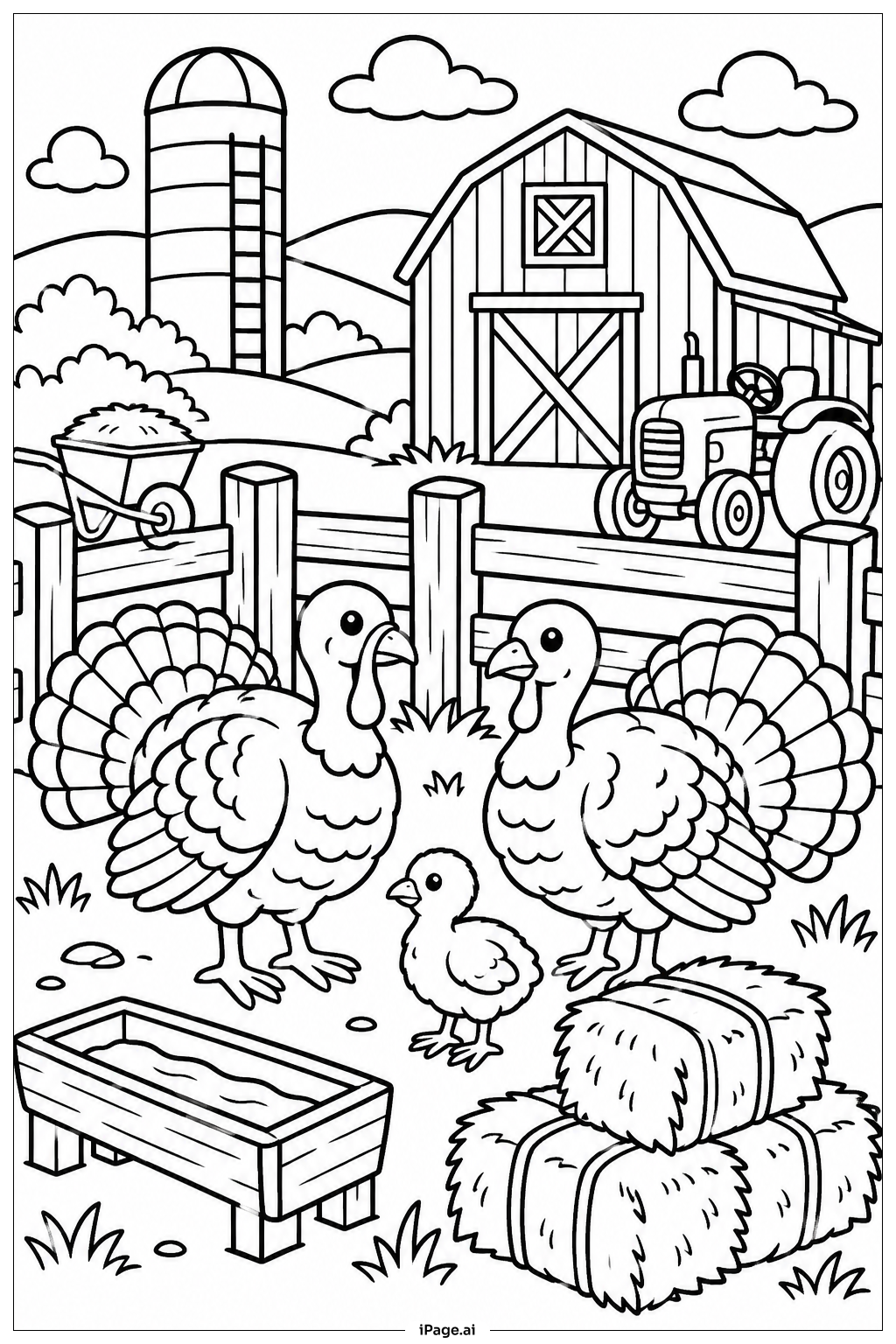
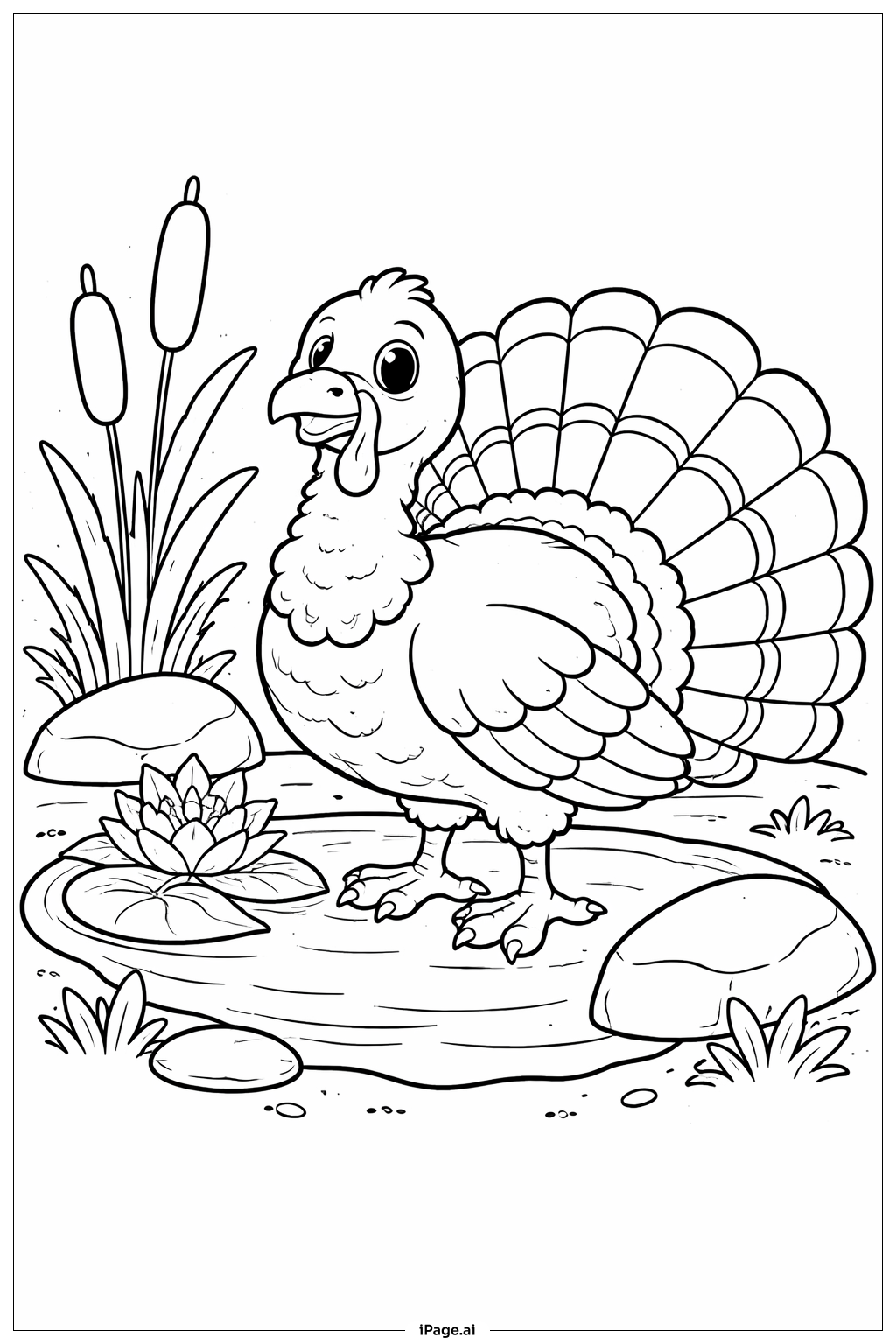
For this Turkey At Pond image, try using warm colors for the Turkey’s feathers like rich browns, deep reds, and golden yellows. The tail feathers can have a mix of light and dark shades for contrast. The pond water could be shades of blue and green to show its calmness, with some lighter tones for reflections. Use different greens and browns for the plants and grasses around the pond to give a natural feeling. To make the hills and sky gentle and soft, choose pastel blues and light grays. Adding touches of white or very light blue near the pond’s surface can show sunlight reflections. Let your creativity flow by blending colors gently to bring out the peaceful mood.
Coloring challenges: Which parts are difficult to color and need attention for Turkey At Pond coloring page?
• Feather Detail: Coloring the Turkey’s feathers can be tricky because they have many small sections. It requires patience to stay within the lines and to use colors that show different shades and texture. • Water Reflection: Showing the reflection of the Turkey and plants in the pond means using lighter tones and blending colors smoothly, which might be difficult for beginners. • Plant Variety: The variety of grasses and plants around the pond require using multiple greens and browns, making it important to choose distinct colors that still look natural together. • Fine Lines: Some parts, like the Turkey’s wattles and small rocks, have fine lines that need careful coloring to avoid bleeding outside the lines. • Background Balance: The hills and sky are simple but should be colored softly, so they do not compete with the detailed foreground. Finding the right balance of color intensity is a subtle challenge.
Benefits of coloring books: Advantages of drawing Turkey At Pond coloring page
Coloring this Turkey At Pond image can help children develop fine motor skills as they carefully color the detailed feathers and plants. It encourages focus and patience because of the varying textures and small parts. Choosing and blending colors improves creativity and color recognition. The natural scene invites relaxation and mindfulness, making coloring a calming activity. Working on the reflections and background helps build an understanding of light and shadow. Overall, it’s a fun way to learn about nature while practicing coloring techniques in a peaceful outdoor setting.