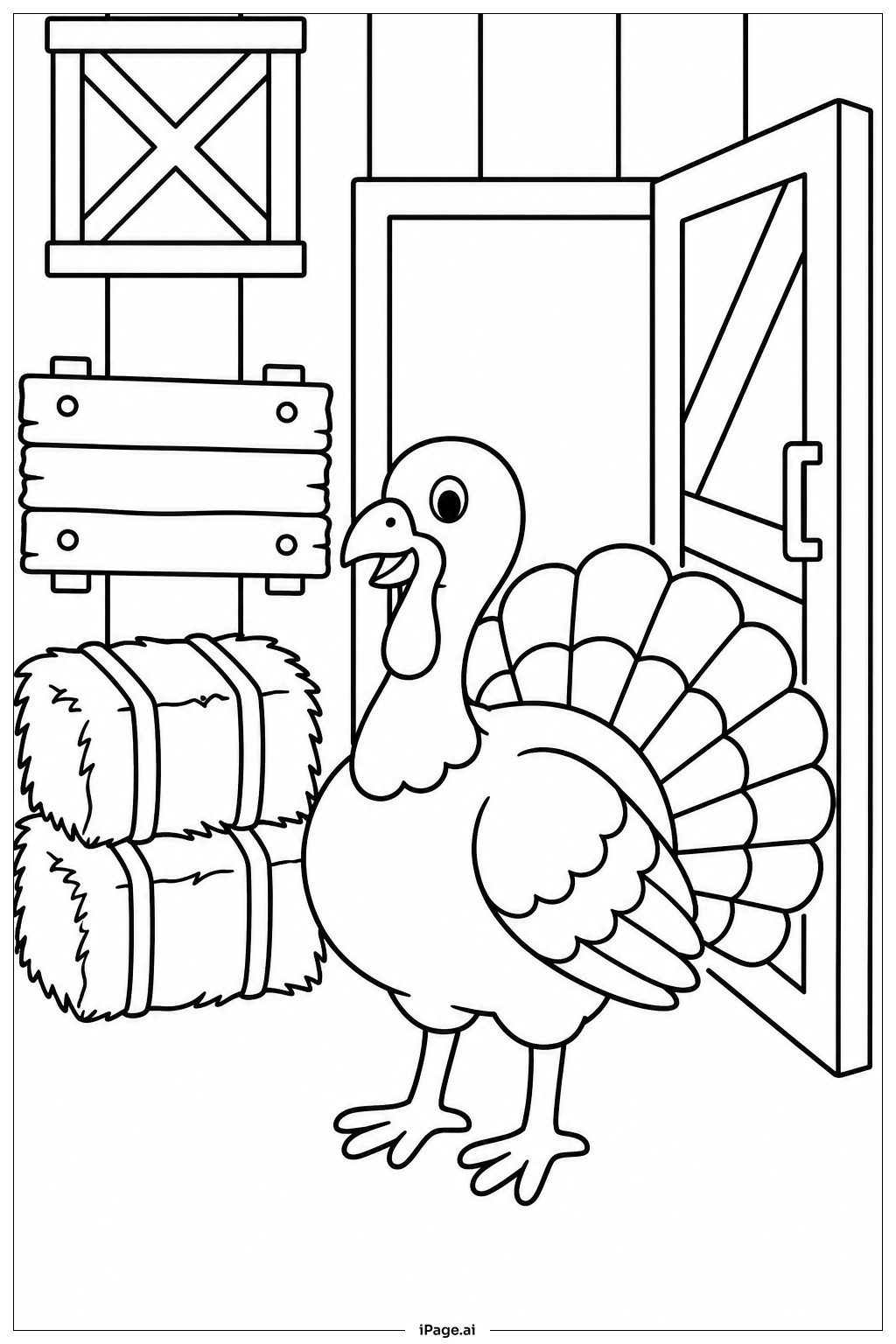
Coloring tips: How to color Turkey At Barn Door coloring page well?
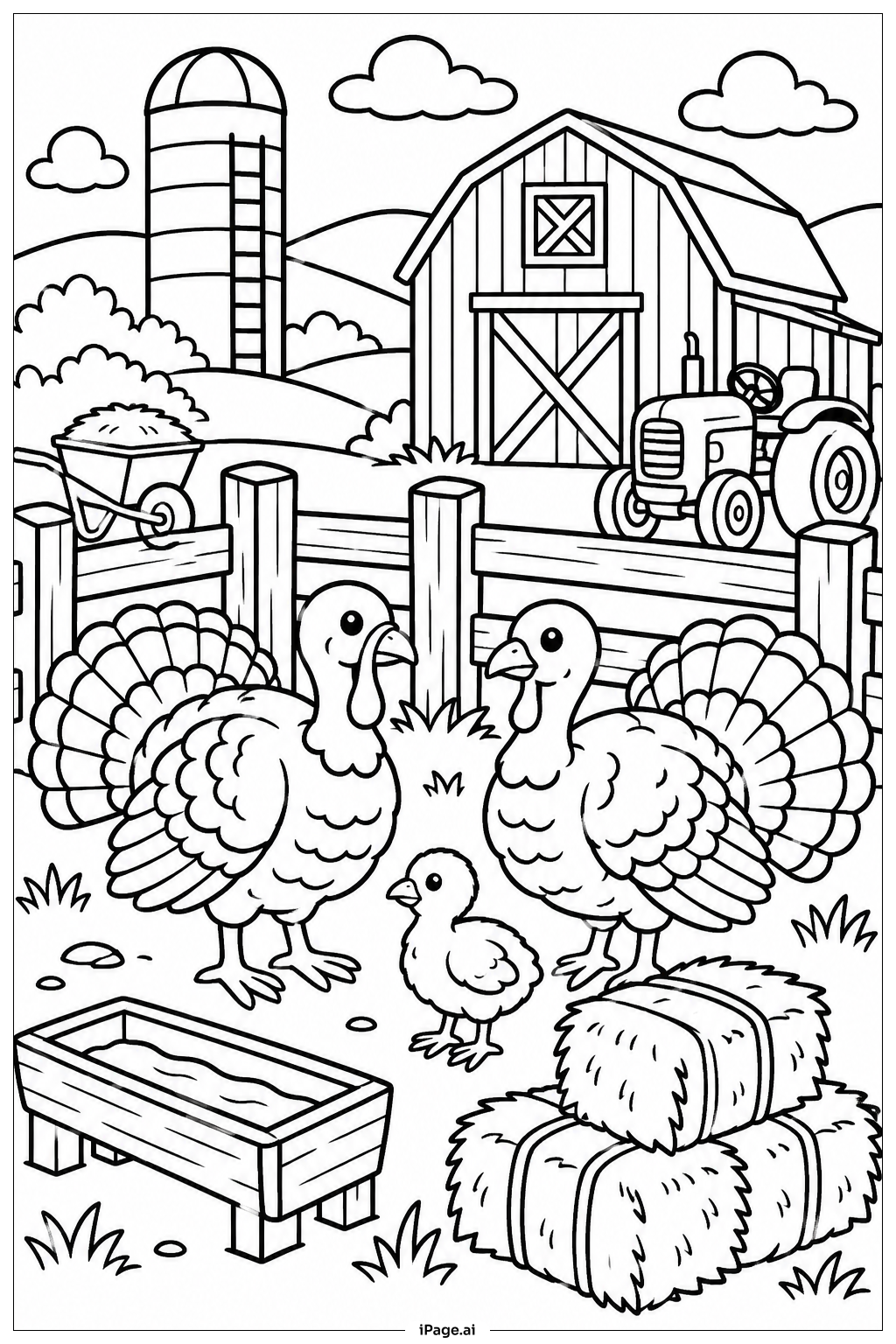
You can use warm autumn colors for the turkey’s feathers such as rusty reds, rich browns, and golden yellows. Try blending shades to show the feather layers. The barn door can be colored in natural wood tones like light brown or deep mahogany. Adding a hint of green or brown for the grass will make the scene lively. Feel free to add blue or gray tones to the background sky to create contrast. Use darker colors around the hinges and edges of the barn door to highlight its structure. You may also add bright colors like red or orange to the turkey’s wattle and beak to bring it to life. Take your time to color inside the lines but have fun experimenting with different shades.
Coloring challenges: Which parts are difficult to color and need attention for Turkey At Barn Door coloring page?
• Feather Texture: The many small feathers on the turkey’s body require careful coloring to show their layered appearance. Blending colors smoothly can be a challenge for younger colorists.
• Wood Grain Detail: The barn door has fine details like wood planks and hinges that need steady hands to color within narrow spaces without smudging.
• Contrast Balancing: Choosing colors that make the turkey stand out against the barn door requires thinking about light and dark contrasts.
• Small Elements: Features such as the turkey’s beak, eyes, and wattle need precise coloring because of their small size and importance for the turkey’s expression.
• Background Ground: The grass and leaves offer opportunity but also challenge in mixing colors naturally to avoid a flat look without overwhelming the main subjects.
Benefits of coloring books: Advantages of drawing Turkey At Barn Door coloring page
Coloring this image helps develop fine motor skills through careful attention to small details like feathers and wood textures. It encourages observation as children think about natural colors of a turkey and barn while allowing creativity in shading and blending. Staying within the lines builds hand-eye coordination and patience. The scene’s calm farmyard setting can inspire relaxation and focus. Coloring the various elements promotes an understanding of contrast and spatial awareness. Overall, it offers a fun way to learn about farm animals and farm life while practicing important artistic skills suitable for children aged 4 to 16.