Coloring tips: How to color Turkey And Squirrel coloring page well?
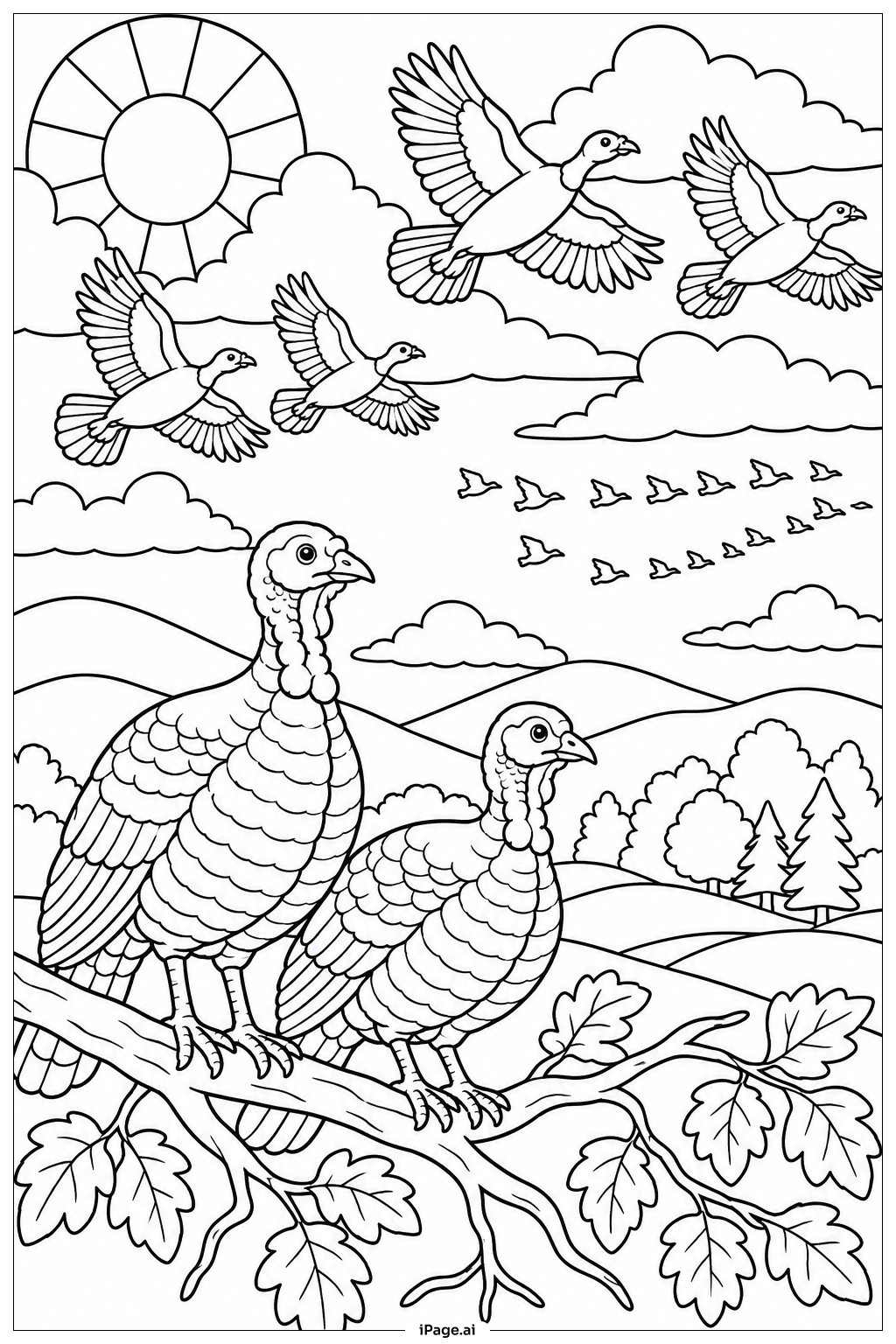
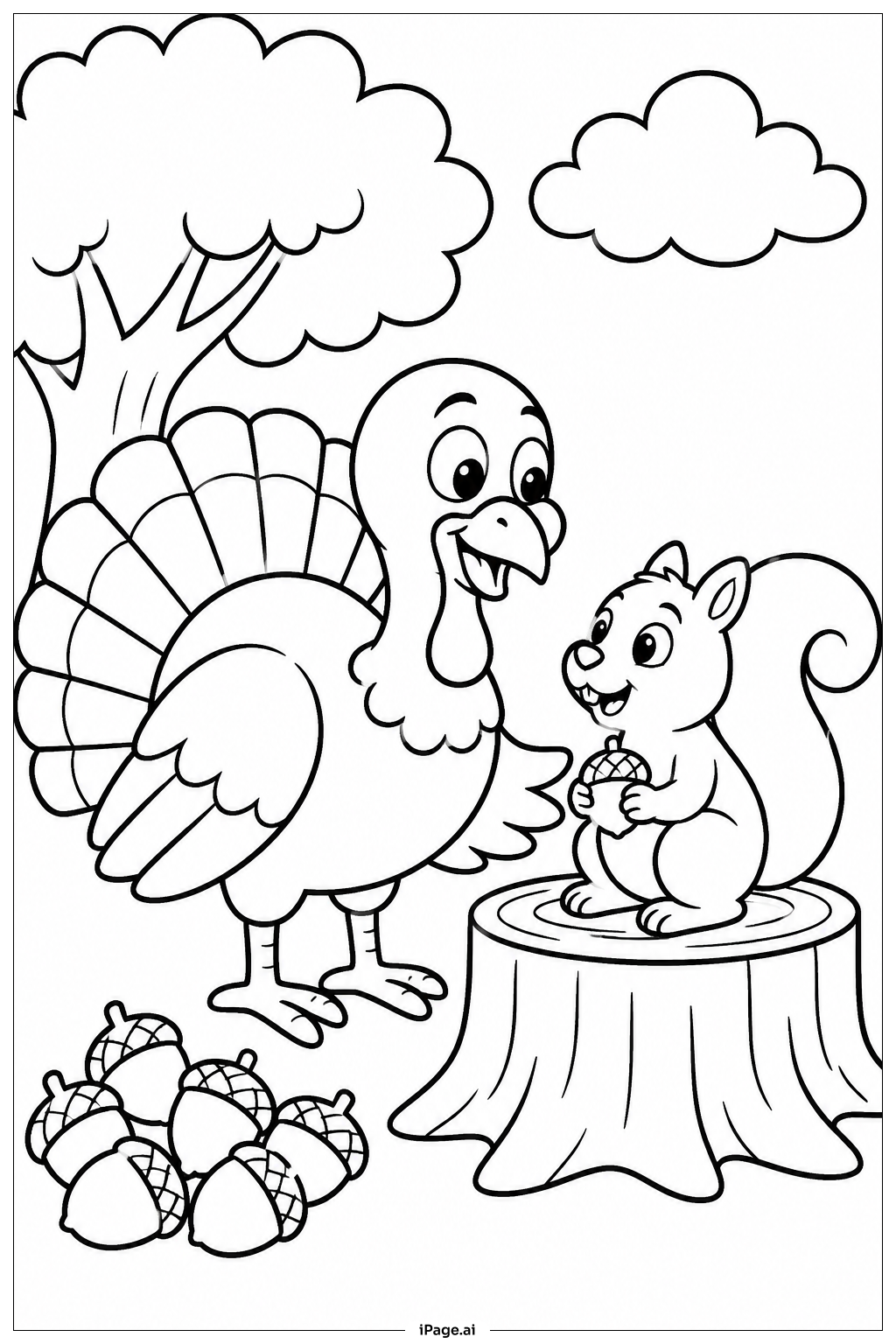
For this picture, start by coloring the Turkey with warm earthy tones. Use shades of brown, gold, and reddish-orange for the feathers to show its natural beauty. The wattle and snood around the Turkey’s neck can be bright red to stand out. For the Squirrel, soft browns, grays, or even reddish hues will work well to capture its fluffy fur. Don’t forget to use green for the leaves and branches to create a lively forest background. Adding lighter and darker tones will help make the animals look more three-dimensional. Try using crayons or colored pencils for smooth blending. You can also add a blue sky or autumn shades in the background to enhance the outdoor feel.
Coloring challenges: Which parts are difficult to color and need attention for Turkey And Squirrel coloring page?
• Feather Detail: The Turkey’s feathers have many lines and patterns that can be hard to color neatly. Staying inside the small spaces takes patience and careful hand control.
• Fur Texture: Coloring the Squirrel’s tail to show fluffiness requires using soft strokes and blending colors to give a natural furry look.
• Small Areas: Leaves and branches around the animals have tiny shapes that may be tricky for younger children to fill without coloring outside the lines.
• Color Choices: Selecting realistic yet vibrant colors for both animals and the background needs some thought to avoid dull or clashing tones.
• Layering: Adding shadows and highlights to make the animals appear three-dimensional involves layering colors, which may be challenging for beginners.
Benefits of coloring books: Advantages of drawing Turkey And Squirrel coloring page
Coloring this image helps children develop fine motor skills by practicing careful hand movements within detailed shapes. It encourages observation as they choose colors to match the natural look of the Turkey and Squirrel. Working on blending and shading builds patience and focus, which are important for learning. This activity also sparks creativity by allowing young artists to decide how they imagine the forest scene and its characters. Finally, coloring animals and nature fosters an appreciation for wildlife and encourages curiosity about the environment.