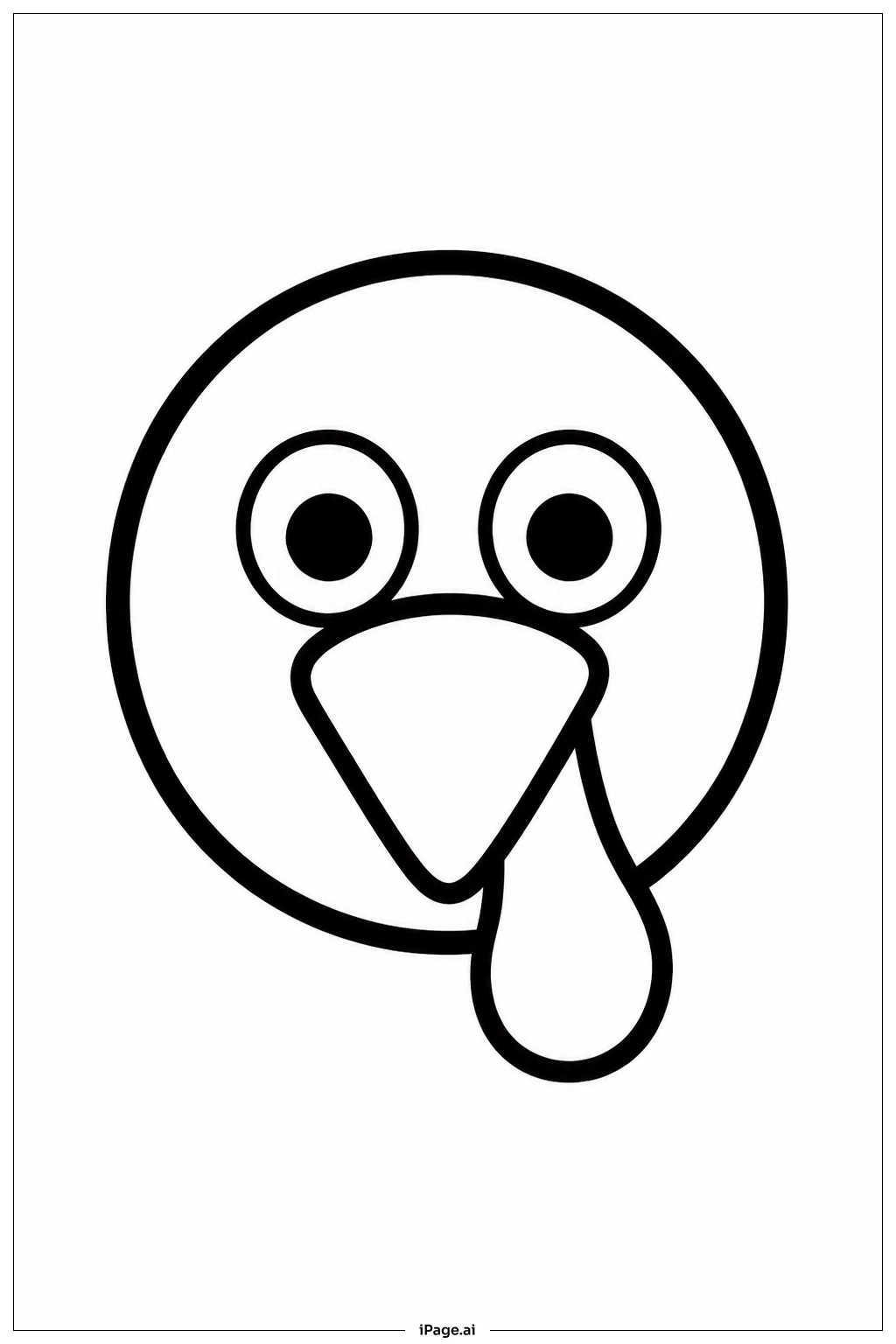
Coloring tips: How to color Cartoon Turkey Face coloring page well?
You can color the turkey’s feathers in shades of brown, orange, and gold to make it look warm and autumn-like. Try using red or bright pink for the wattle to make it stand out. The beak is usually yellow or light orange, so feel free to use those colors. For the eyes, you can pick bright colors like blue or green for the iris to make the turkey look more playful. Don’t forget to color the background or leave it white to highlight the turkey’s face. You can also add dots or patterns on the feathers to make your artwork unique and fun.
Coloring challenges: Which parts are difficult to color and need attention for Cartoon Turkey Face coloring page?
• Feather Details: The feathers around the turkey’s face are close together and curved, which might make it tricky to color each section neatly without overlapping. Take your time to stay inside the lines. • Wattle Shape: The wattle has a bumpy and uneven shape that can be challenging to color uniformly. It may require careful shading to give it a natural feel. • Eye Expression: The large eyes have small highlights and thin lines that add expression. Coloring them without covering these details needs a steady hand. • Beak Edges: The edges around the beak and mouth are narrow, so coloring these areas without coloring outside requires precision. • Symmetry: The turkey’s face is mostly symmetrical, so matching colors on both sides evenly might be a good challenge for attention and coordination.
Benefits of coloring books: Advantages of drawing Cartoon Turkey Face coloring page
Coloring this Cartoon Turkey Face helps children improve their hand-eye coordination and fine motor skills because of the various small details to color carefully. It encourages creativity as young artists choose different color combinations to make their turkey unique. The simple yet expressive design helps build focus and patience while coloring the feathers and facial features. It also offers an opportunity to learn about turkeys and autumn themes, which can expand knowledge about animals and seasons. Overall, this coloring activity is fun, relaxing, and educational for children aged 4 to 16.