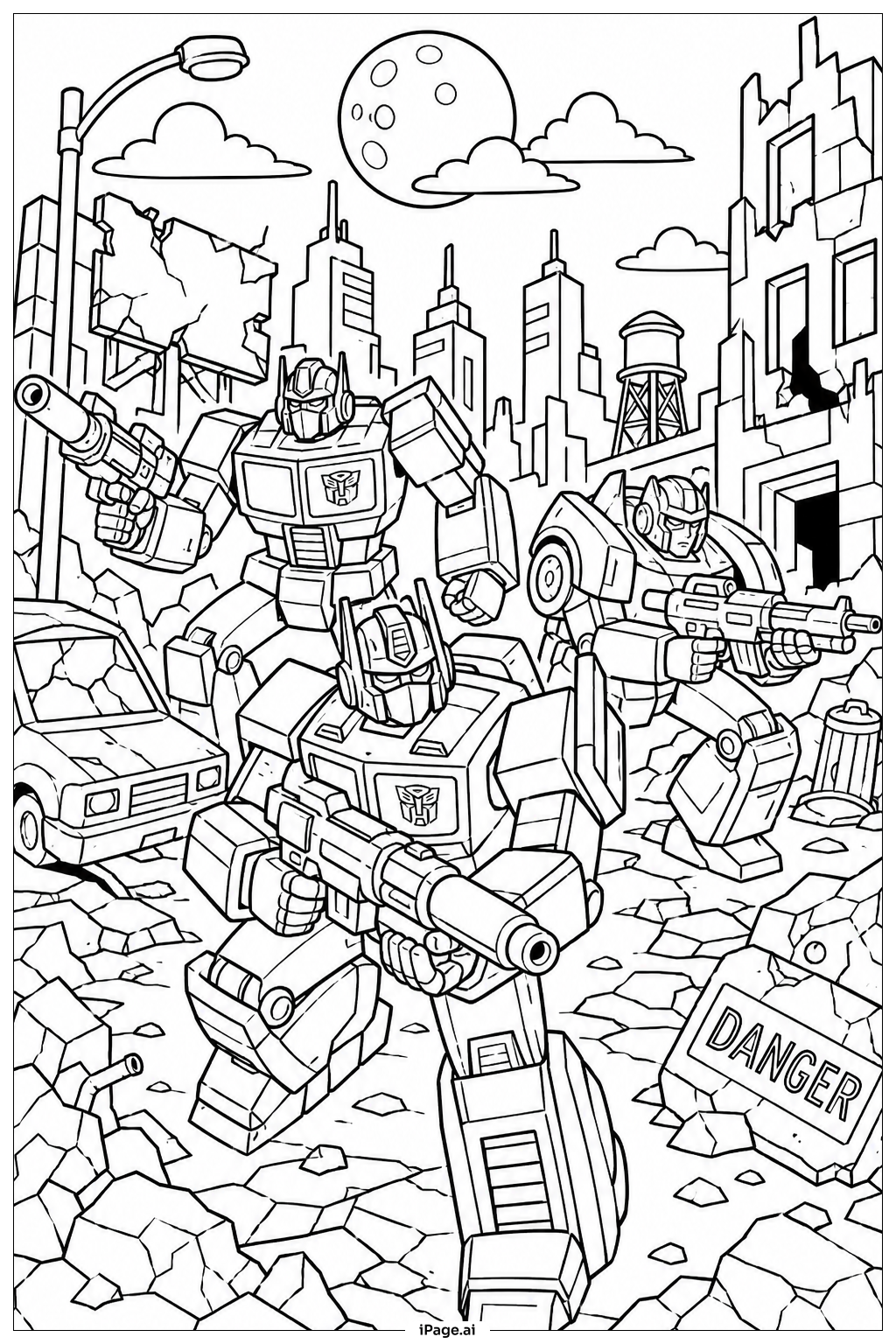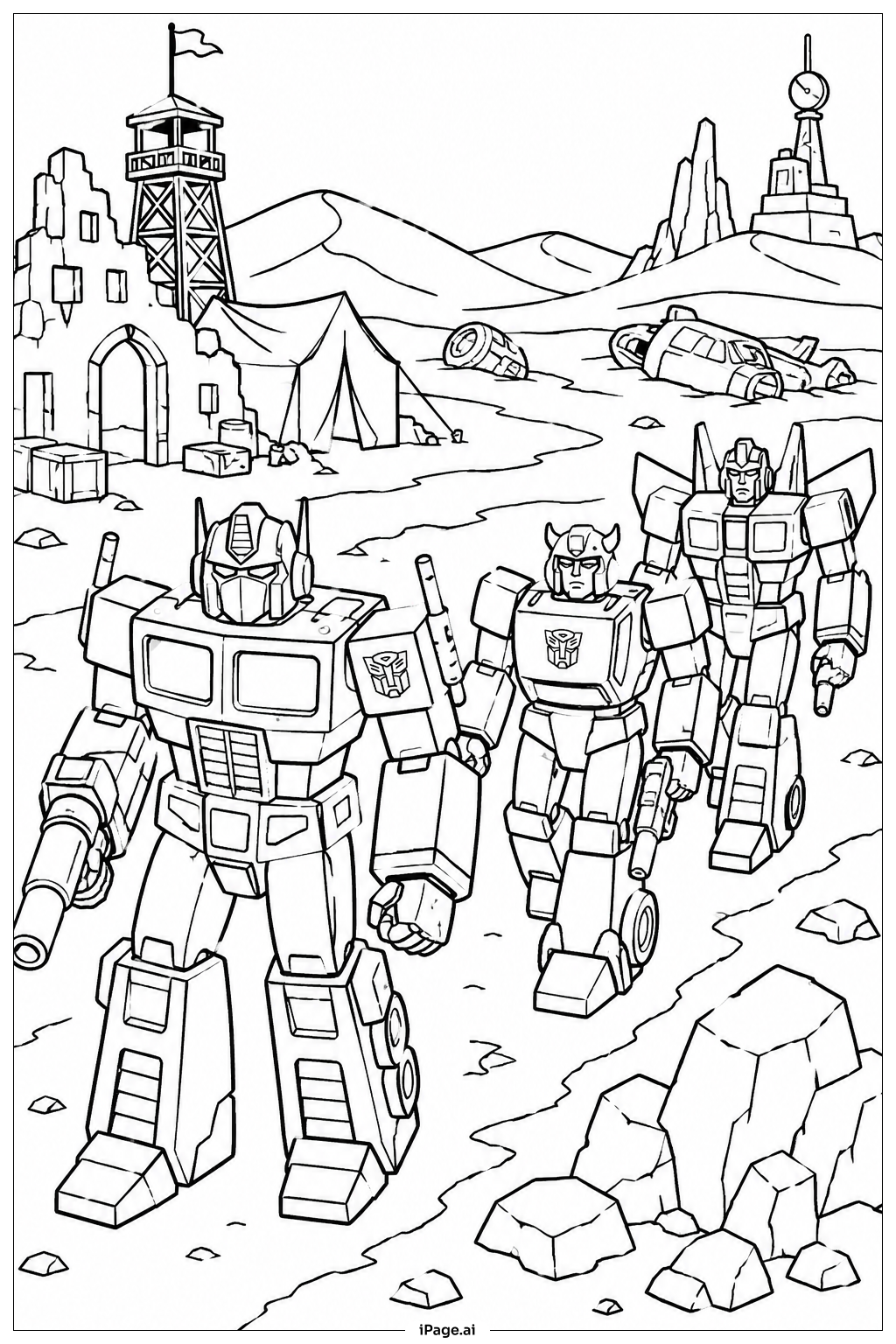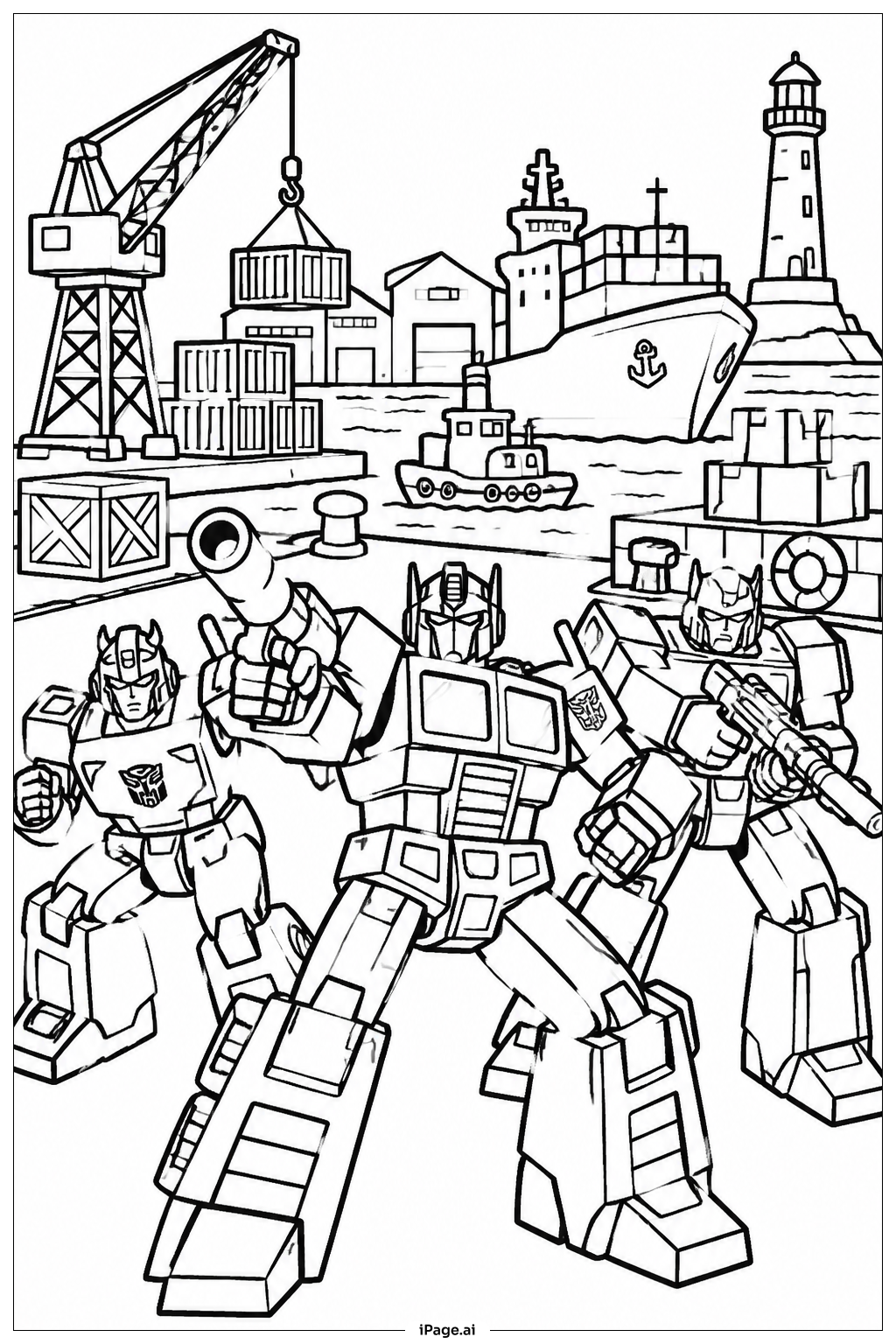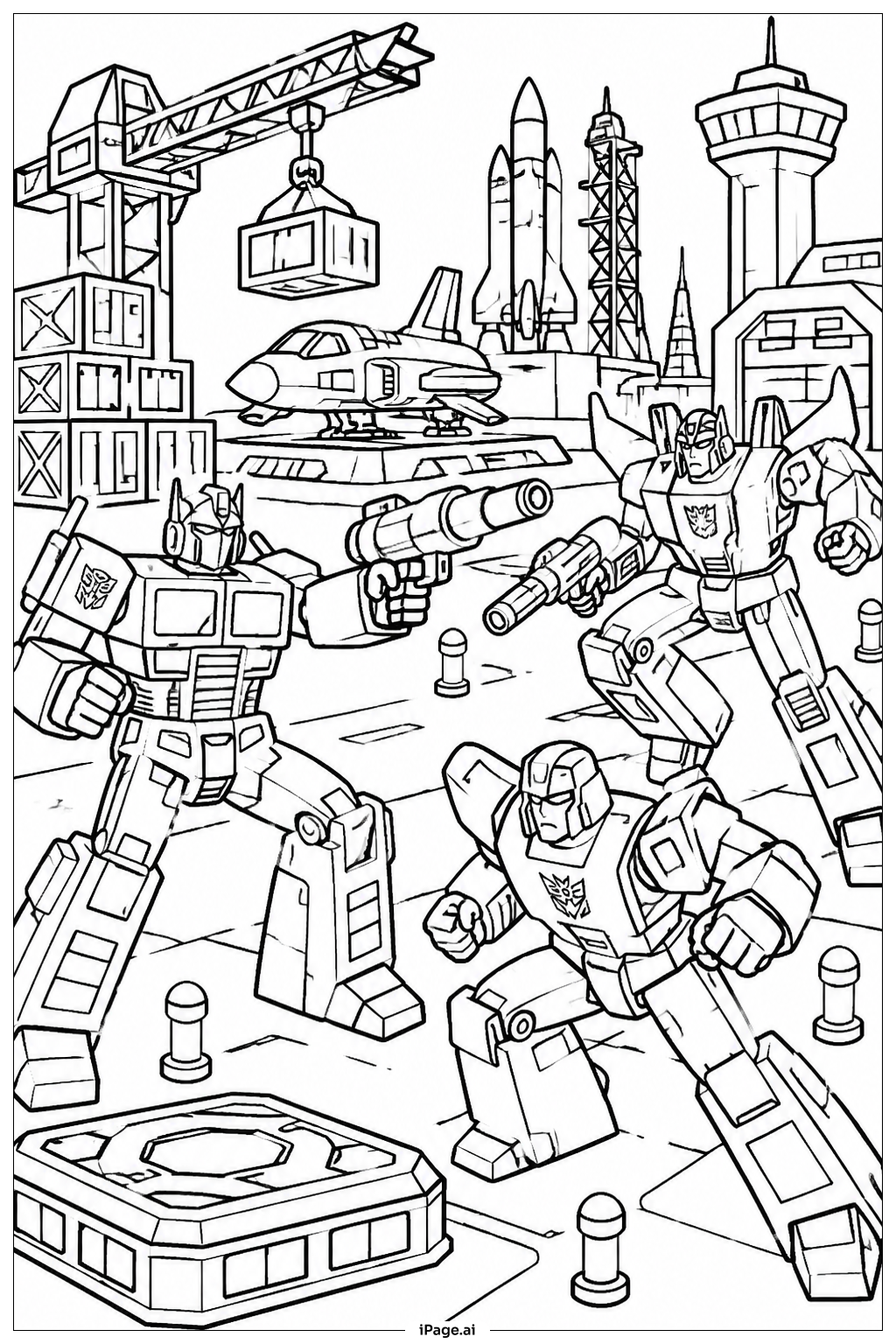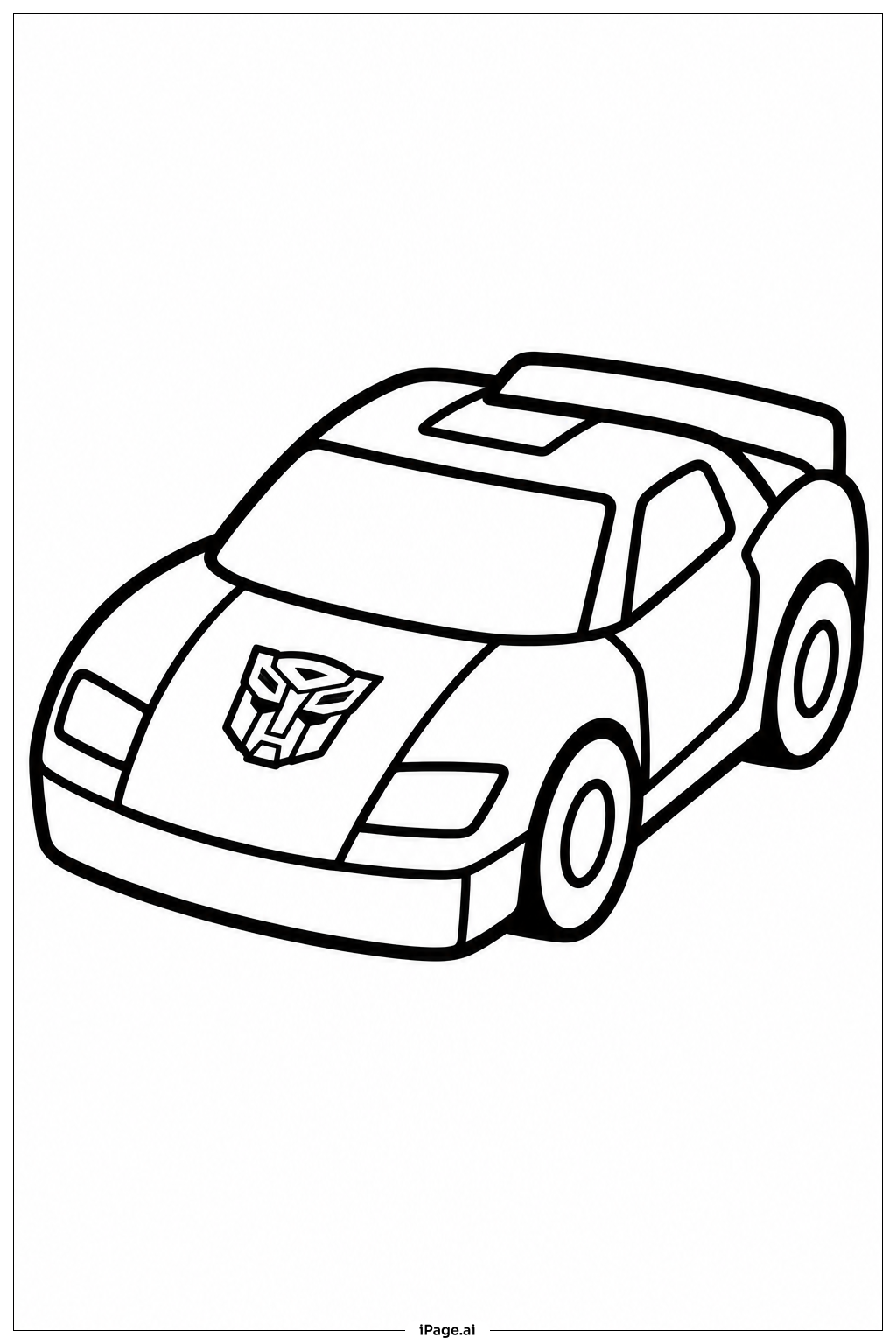
Coloring tips: How to color Transformers Tiny Car Mode coloring page well?
Start with the car body using bold, classic Autobot colors like red, blue, or yellow. These strong primary colors bring the vehicle to life and stay true to the Transformers universe. Use a slightly darker shade of the same color for the side panels and hood creases to add depth. Color the wheels black with silver or gray hubcaps to give them a realistic, metallic look. The windshield and windows look great in light blue or teal to simulate glass. Add silver or gray to mechanical details like vents, joints, and rivets to highlight the robotic elements. For a fun twist, try a metallic gold or chrome effect on small accent pieces. Kids can also get creative and invent their own Transformer color scheme — there are no rules when it comes to making it your own. Use darker tones in tight corners and lighter tones on raised surfaces to make the design pop off the page.
Coloring challenges: Which parts are difficult to color and need attention for Transformers Tiny Car Mode coloring page?
• Panel Lines and Body Segments: The car body is divided into many small panels separated by thin lines. Staying inside each section without bleeding color into neighboring areas requires a steady hand and a fine-tipped coloring tool. This is one of the trickiest parts of the image for younger colorists.\n\n• Mechanical Details on the Surface: Small rivets, vents, grilles, and joint markers are scattered across the vehicle. These tiny elements are easy to miss or accidentally color over. Taking time to identify each detail before coloring helps preserve the mechanical look of the design.\n\n• Wheel and Tire Coloring: The chunky wheels have layered details including the outer tire, the rim, and inner hubcap geometry. Each layer needs a different color or shade to look three-dimensional. Switching between black, gray, and silver in such a small space can be challenging.\n\n• Creating a Metallic Look: Transformers are machines, so the finished coloring should ideally feel metallic and shiny. Achieving this effect with standard crayons or markers is difficult. Colorists need to think about where light would hit the car and leave those spots lighter while darkening the shadowed areas to simulate a metallic surface.\n\n• Balancing Colors Across the Whole Car: Because the car has many separate sections, it is easy to end up with colors that clash or feel unbalanced. Planning out a color palette before starting — and making sure similar sections share related tones — helps the final result look unified and intentional.
Benefits of coloring books: Advantages of drawing Transformers Tiny Car Mode coloring page
Coloring this Transformers Tiny Car Mode page offers a great mix of fun and skill-building for kids and fans alike. The detailed mechanical design encourages focus and patience as colorists work through each panel and small feature. This kind of careful, deliberate work helps strengthen fine motor skills and hand-eye coordination, especially for younger children still developing pencil control.\n\nDeciding which colors to use for different parts of the car builds creative thinking and color awareness. Kids learn to think about contrast, shading, and how colors interact with each other. It also sparks imagination — colorists can recreate a favorite Transformer or dream up an entirely original one.\n\nFor Transformers fans, this page is also a way to connect with a beloved universe in a hands-on, personal way. Completing the page gives a real sense of accomplishment and pride. For older kids and teens, the challenge of adding depth and metallic effects pushes artistic skills to the next level. Overall, this coloring page is a rewarding activity that blends creativity, focus, and storytelling all in one.