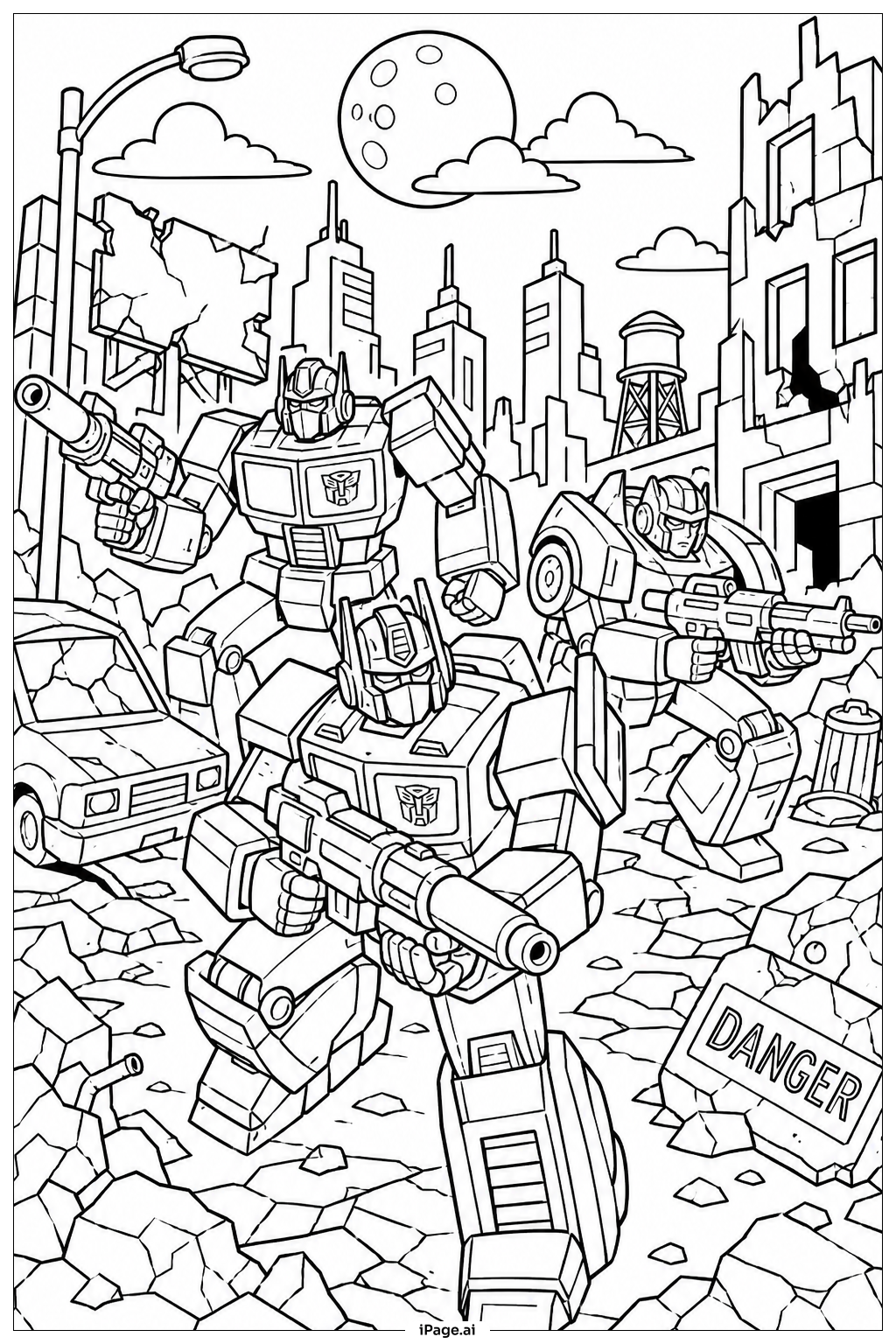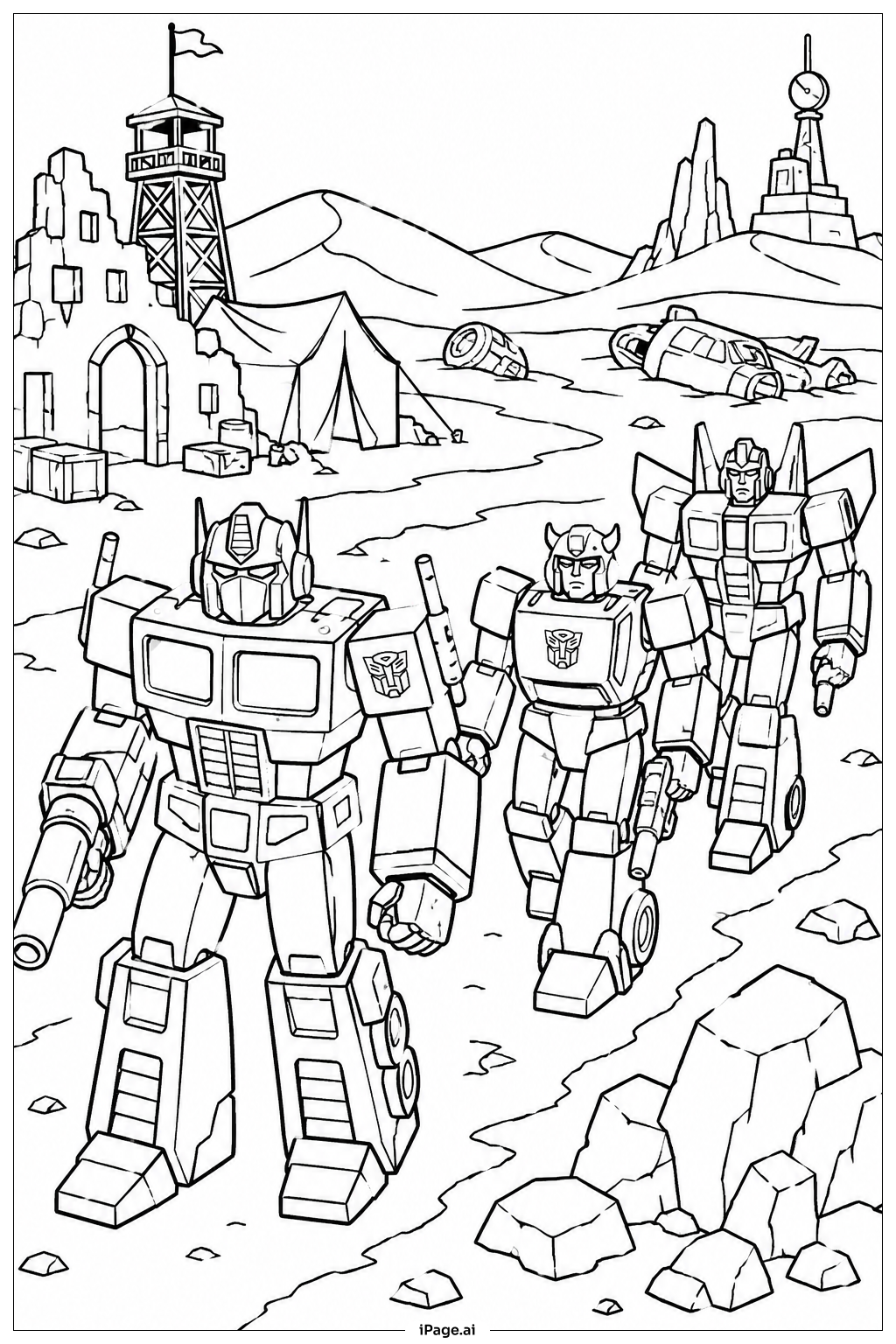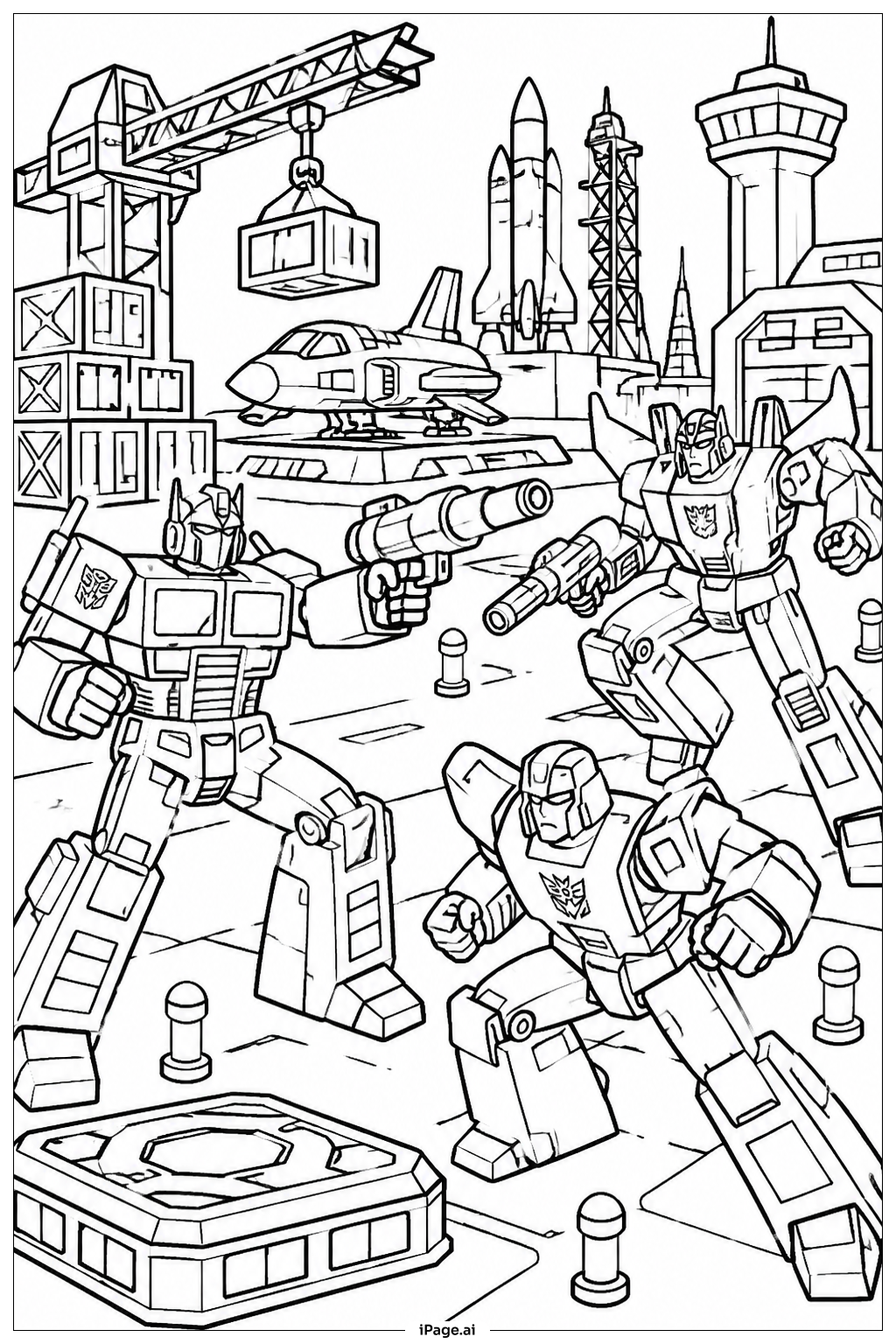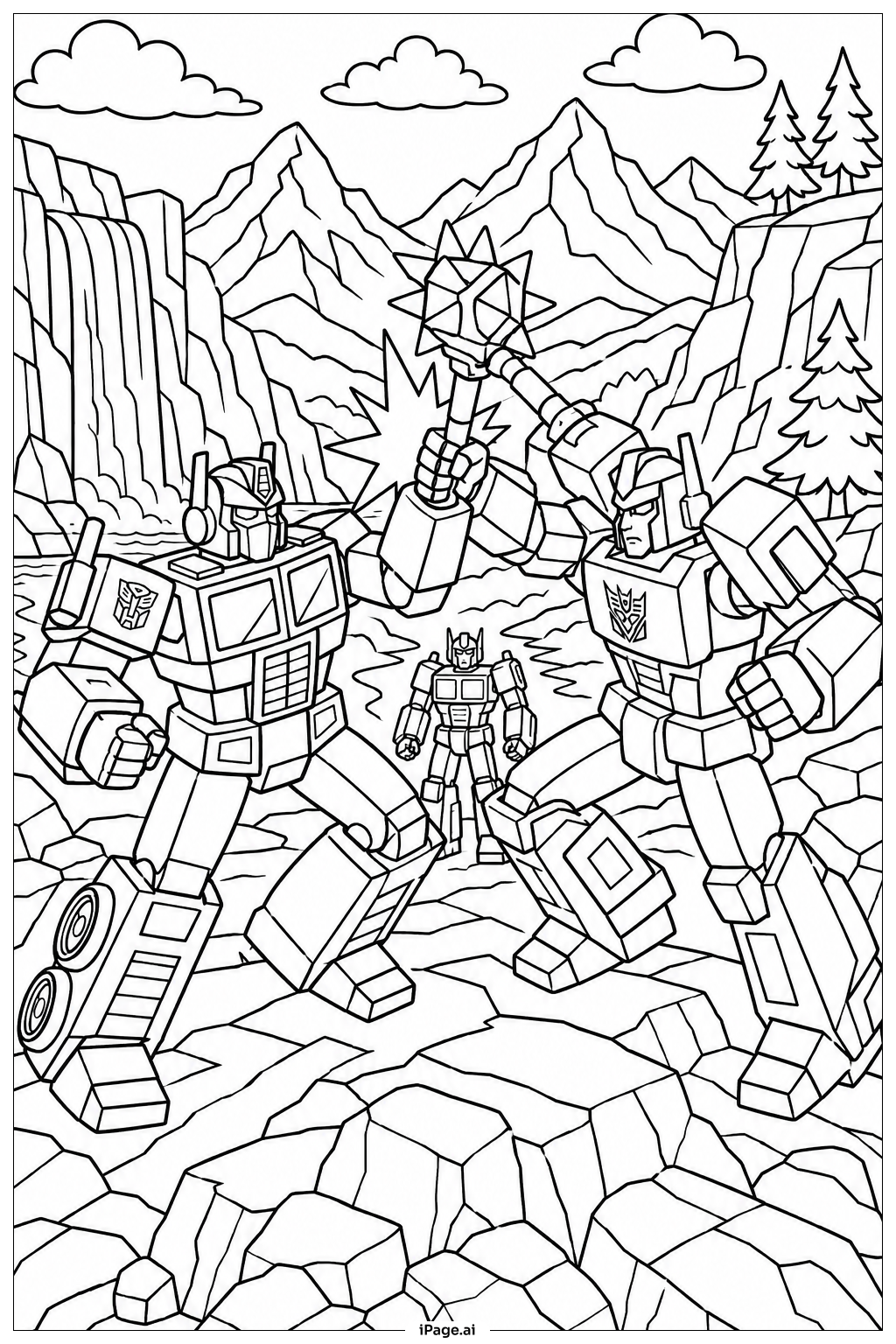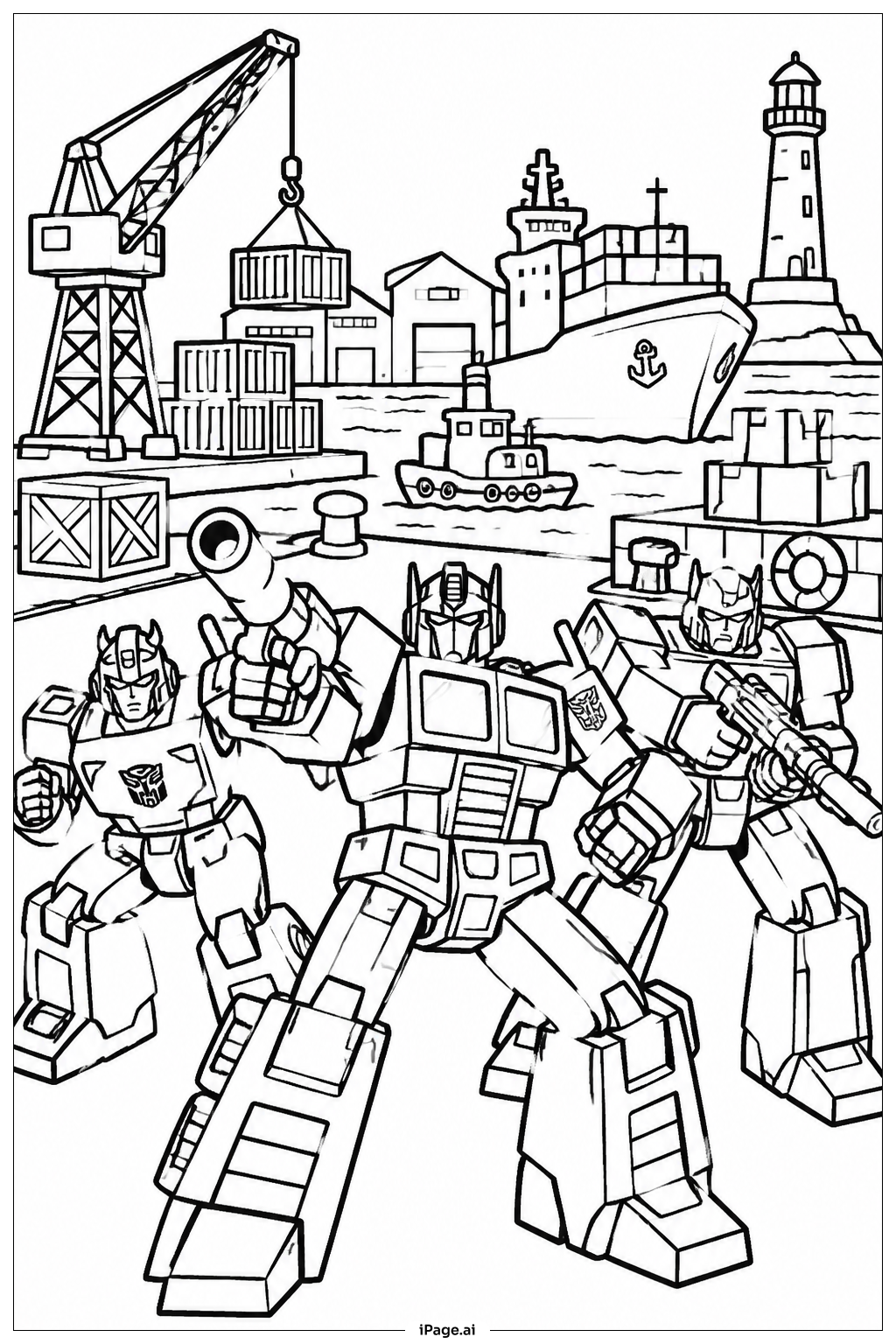
Coloring tips: How to color Transformers Harbor Siege coloring page well?
Use bold, bright colors to bring the Transformers to life. Metallic tones like silver, gray, and steel blue are great for the robots’ armor. Add reds, yellows, and blues to highlight weaponry and details. The water can be colored with different shades of blue and white to show waves and splashes. For the harbor structures, use grays and browns to mimic metal and wood. Try blending lighter and darker hues for depth on large surfaces. Keep the background a bit muted to make the Transformers stand out. Using shiny or glitter markers can add a cool effect to the metallic parts.
Coloring challenges: Which parts are difficult to color and need attention for Transformers Harbor Siege coloring page?
• Complex mechanical details: The Transformers include many small parts and intricate patterns that require careful coloring to keep lines neat.
• Overlapping elements: Different robots, ships, and harbor equipment overlap, making it important to color carefully to avoid spilling over lines.
• Water effects: Capturing the look of crashing waves and splashes involves blending colors smoothly and can be tricky for beginners.
• Shading and metallic textures: Coloring to show shiny metal surfaces needs layering and highlights to create convincing effects.
• Large background area: The harbor environment has vast spaces that might feel challenging to fill without making the image too dark or distracting from the main figures.
Benefits of coloring books: Advantages of drawing Transformers Harbor Siege coloring page
Coloring this image helps improve fine motor skills through detailed work on small mechanical parts. It encourages patience and focus, especially when dealing with complex overlaps and textures. Children learn about color blending and shading, gaining creativity in portraying metallic and natural elements like water. It also boosts attention to detail and can inspire interest in robots and machinery. Completing the coloring provides a sense of accomplishment and can be a fun way to explore color theory with bright and muted tones.