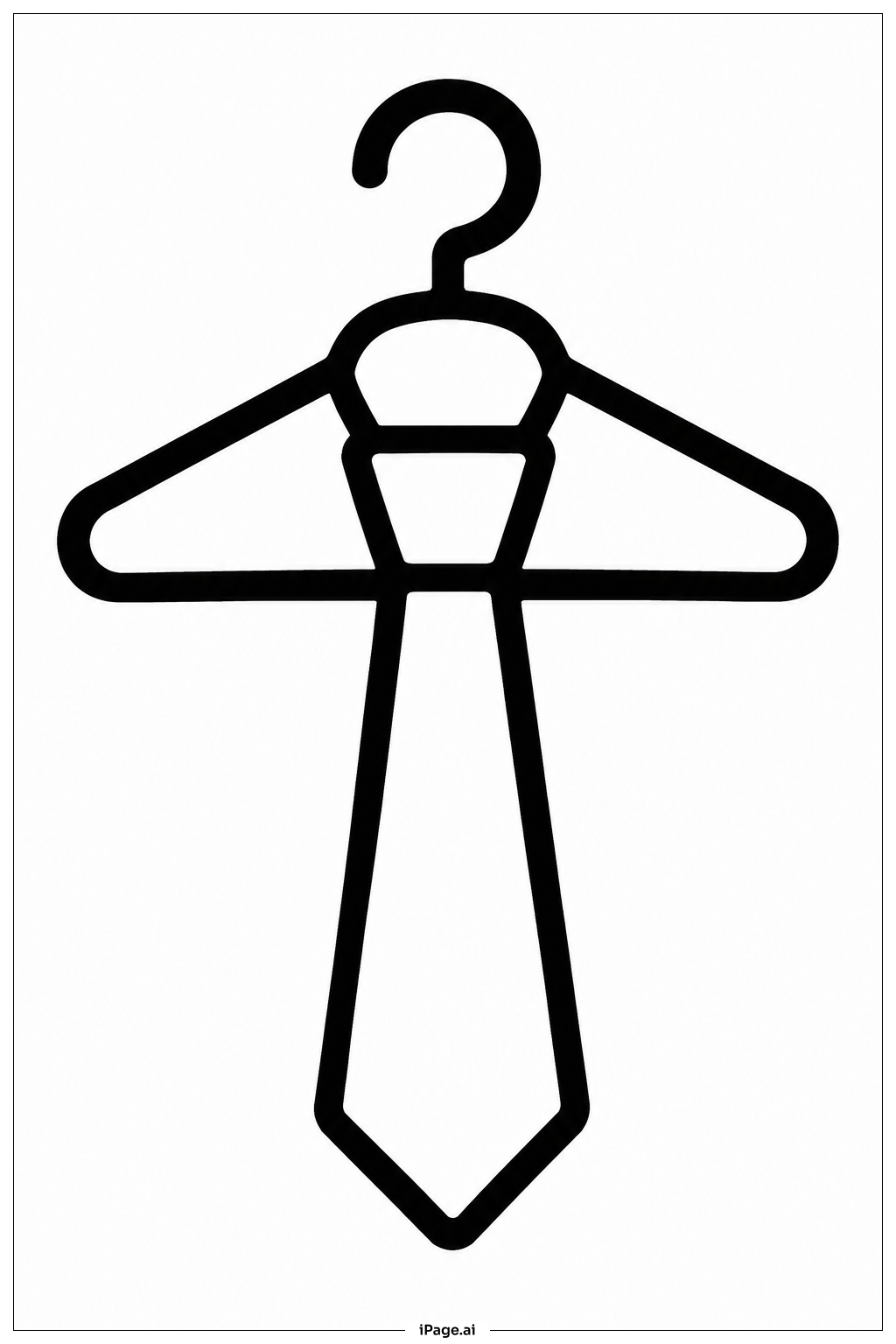
Coloring tips: How to color Tie On Hanger coloring page well?
You can use a variety of colors to make this tie look stylish and fun. Try classic colors like deep navy blue, maroon red, or dark green to give the tie a formal look. You can also use bright, cheerful colors like yellow, light blue, or pink for a playful feel. Feel free to add patterns such as stripes, polka dots, or checks in different colors to make the tie more interesting. For the hanger, consider soft colors like light gray, beige, or light brown to keep it natural and simple. Remember to color inside the lines carefully to make your Tie On Hanger look neat and clean.
Coloring challenges: Which parts are difficult to color and need attention for Tie On Hanger coloring page?
• Thin Shapes: The tie and hanger have thin parts, such as the narrow end of the tie and the hook of the hanger, which require steady hand control to color neatly.
• Small Details: The knot of the tie shows folds and creases that can be hard to fill with color without overlapping into other areas.
• Curves and Edges: The curved edges of the hanger need smooth, controlled strokes to avoid uneven coloring or going outside the lines.
• Pattern Coloring: If you choose to add patterns like stripes or dots on the tie, maintaining symmetry and spacing can be challenging.
• Shading and Texture: Showing the fabric’s flow and folds using colors can be tricky. It requires gentle blending or layering of colors to show depth while keeping details clear.
Benefits of coloring books: Advantages of drawing Tie On Hanger coloring page
Coloring this Tie On Hanger page helps improve fine motor skills and hand-eye coordination because it involves careful coloring of thin shapes and small details. It encourages creativity by allowing you to explore different color combinations and patterns on the tie. Coloring the folds and curves teaches attention to detail, which is important for learning to observe and express texture and form. This image also promotes patience and focus since coloring inside the lines and managing small spaces requires concentration. Overall, it is a fun way for children and beginners to practice precision while enjoying designing a classic clothing item.