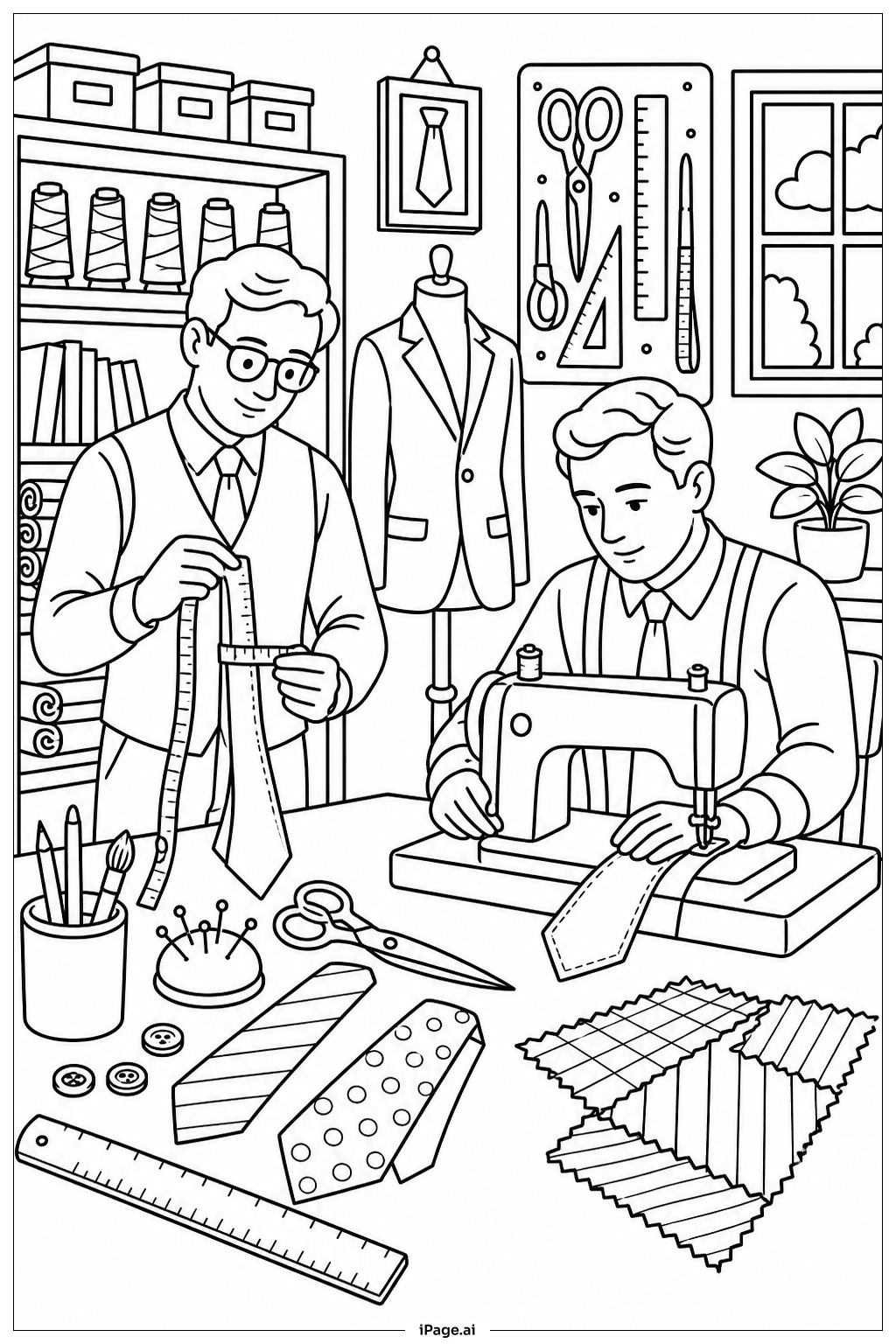
Coloring tips: How to color Tie Alteration Workshop coloring page well?
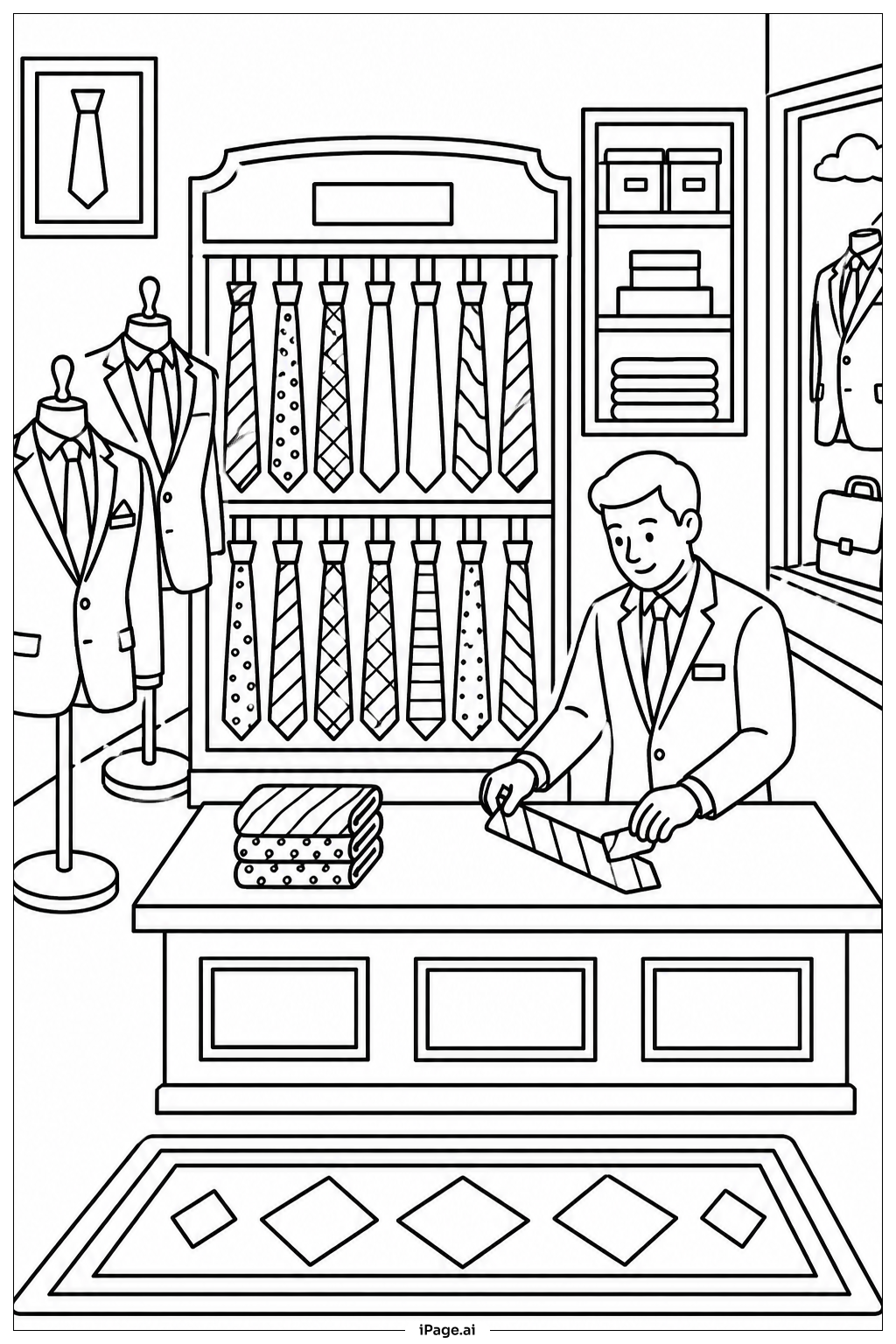
Color the ties in bright, contrasting colors like red, blue, green, and yellow to make each one stand out. Use different patterns such as stripes, dots, and checks to add variety. The tailor’s clothing can be shaded in warm tones like brown or beige to complement the wood of the table. For the tools and accessories, metallic grays and shiny silvers will bring out the details. The background wall and shelves can be soft neutral colors so the main focus stays on the ties and the tailor at work. Try using colored pencils or crayons for smooth, detailed coloring of the small objects.
Coloring challenges: Which parts are difficult to color and need attention for Tie Alteration Workshop coloring page?
• Small Details: The tiny sewing tools like needles, pins, and threads require careful coloring to avoid smudging or coloring outside the lines. Precision is needed here.
• Pattern Variety: Each tie has different patterns such as stripes and dots. Keeping the patterns consistent and neat while choosing colors that contrast well can be challenging.
• Depth and Texture: Representing the texture of the fabric tie versus the smooth wooden table and metal sewing machine means using shading techniques, which can be tricky for younger children.
• Overlapping Objects: Some objects, like the ties hanging behind or the tailor’s hands on the tie, overlap. Coloring these overlapping parts clearly without mixing colors helps maintain the image’s clarity.
• Limited Large Areas: Many parts of the image are small or narrow, requiring patience and control when coloring to avoid going outside the lines.
Benefits of coloring books: Advantages of drawing Tie Alteration Workshop coloring page
Coloring this image helps children develop fine motor skills and hand-eye coordination by working on small precise areas. It encourages attention to detail as they carefully color the different tie patterns and sewing tools. The image also sparks creativity by letting kids choose colors for the ties and workshop setting. It teaches patience and focus since the objects are intricate and overlapping. Additionally, it introduces basic concepts of tailoring and craftwork, broadening children’s understanding of how clothes are made and altered. Overall, it makes coloring a fun way to learn about craftsmanship and design.