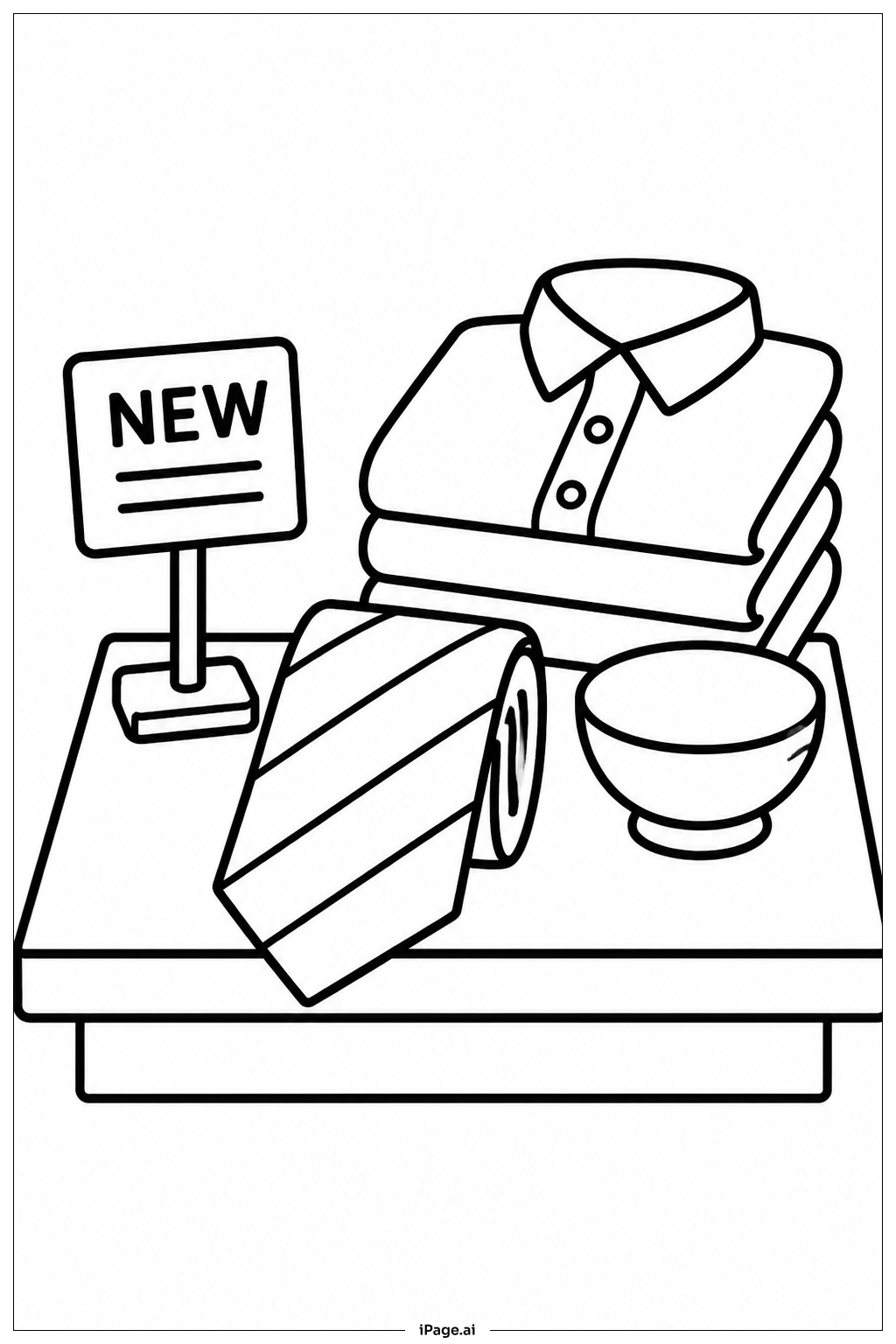
Coloring tips: How to color Tie On Display Table coloring page well?
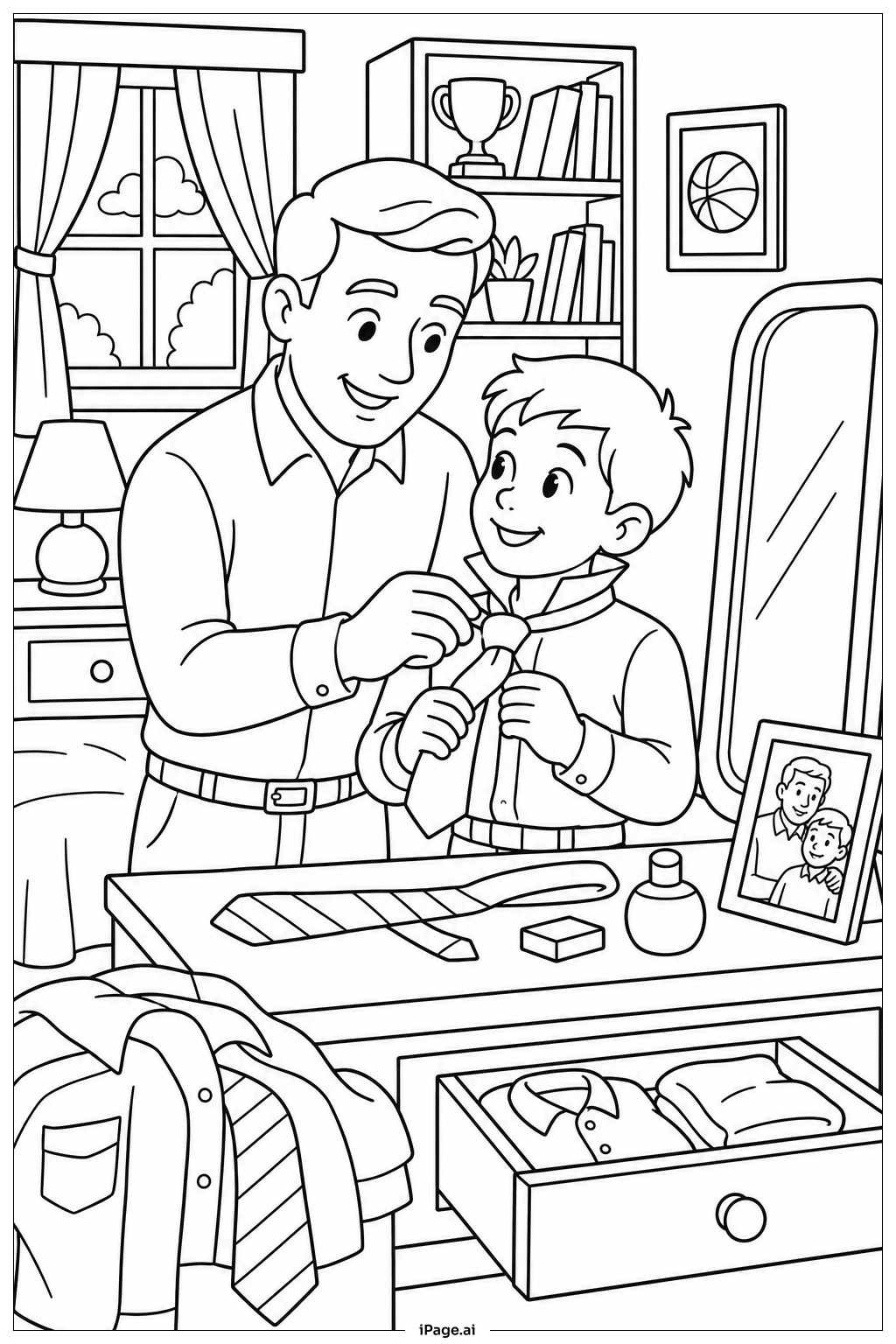
Start with the tie itself. Choose a bold base color like deep red, navy blue, or forest green to give it a classic, formal look. Use a slightly lighter shade of the same color to fill in the diagonal stripes, creating contrast without making it too busy. For a fun twist, kids can try bright colors like orange or purple to make it pop. Color the knot area a shade darker than the main body to show depth. For the display table, use neutral tones like light brown, beige, or soft gray. Add a thin shadow line along the table edges using a slightly darker version of the table color. Keep the background simple with white or a very pale color so the tie stays the star of the page.
Coloring challenges: Which parts are difficult to color and need attention for Tie On Display Table coloring page?
• Stripe Pattern Accuracy: The diagonal stripes on the tie are closely spaced and run at an angle. Staying inside the stripe lines without crossing over into adjacent sections takes a steady hand and careful control. Younger colorists may find it easier to use a thin marker or a sharpened colored pencil for this area.
• Knot Shading: The knot at the top of the tie has a three-dimensional shape with folds and overlapping fabric. Showing depth here requires using at least two shades of the same color, one lighter and one darker, to separate the surfaces. Without shading, the knot can look flat and undefined.
• Color Transitions on the Tie Body: The tie gradually narrows from the wide blade down to the narrow tail. Keeping the color smooth and even across this changing shape, especially around curves, can be tricky. Uneven pressure with pencils may create patchy areas.
• Display Table Surface and Edges: The table has straight, sharp edges that border the tie. Coloring right up to these lines cleanly without going over takes patience. The flat tabletop also benefits from subtle tonal variation to look realistic rather than flat.
• Overall Color Harmony: Choosing colors that work well together for both the tie and the table is a creative challenge. If the tie and table are too similar in color, they blend together. Picking contrasting but complementary tones ensures the tie stands out clearly against the table surface.
Benefits of coloring books: Advantages of drawing Tie On Display Table coloring page
Coloring this Tie On Display Table image offers a range of great benefits for kids and young learners. First, it builds fine motor skills. The narrow stripes and clean edges of the tie require careful, controlled movements that strengthen hand muscles and improve pencil grip. Second, it encourages color theory learning. Choosing shades for the tie and the table teaches kids how colors interact, how contrast works, and how to create depth using light and dark tones. Third, it sparks creativity. There is no single right way to color a tie, so children are free to experiment with bold patterns and unique color combinations. Fourth, it introduces kids to the world of fashion and formal accessories in a fun and approachable way, building vocabulary and real-world awareness. Finally, focusing on detailed areas of the image improves concentration and patience, skills that carry over into schoolwork and everyday tasks. Completing the page also gives a satisfying sense of accomplishment, boosting confidence and encouraging kids to keep creating.