Coloring tips: How to color Tie Care Instructions coloring page well?
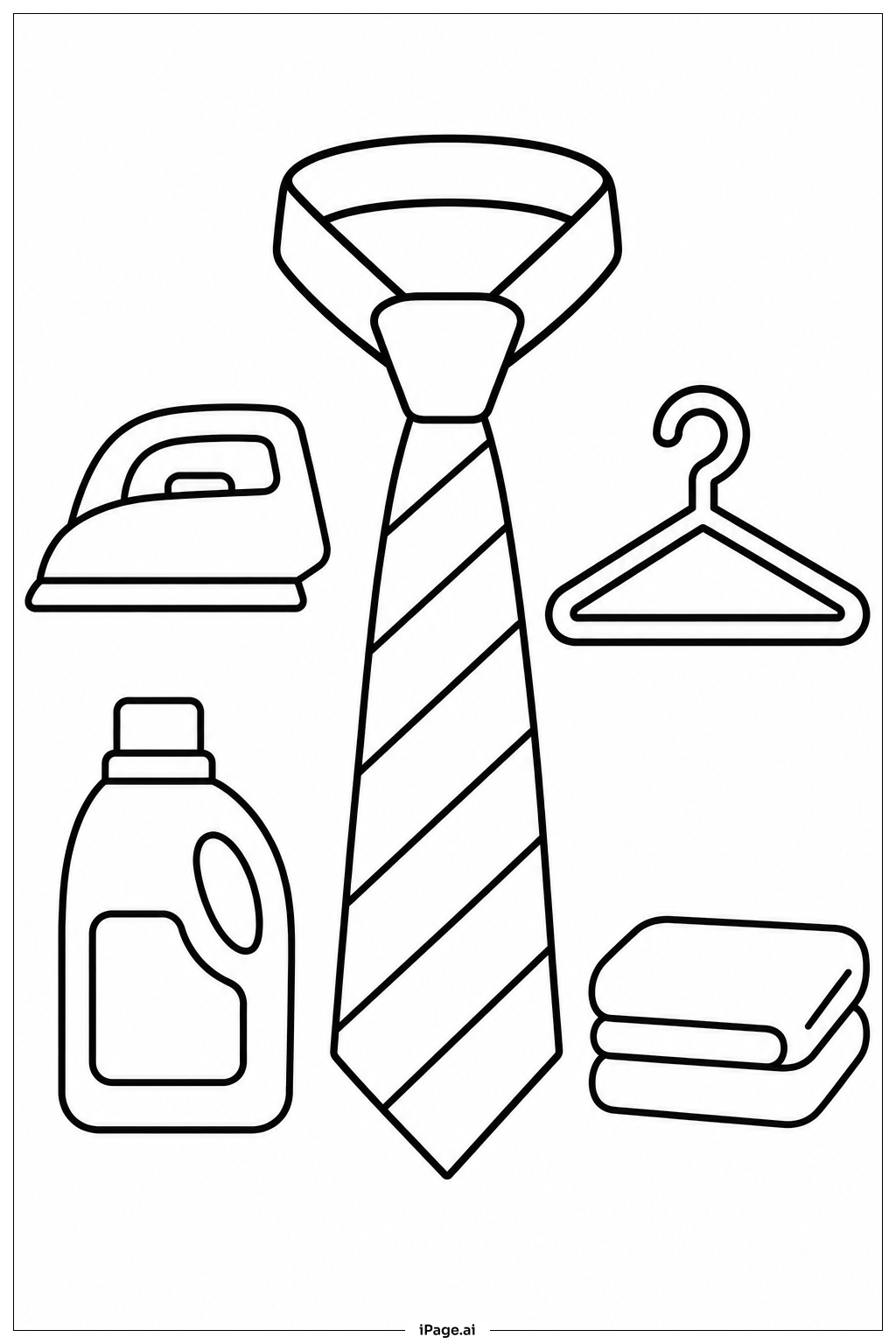
For coloring this Tie Care Instructions page, choose rich, classic colors for the tie such as deep blue, burgundy, or emerald green to make it stand out. The care icons can be colored with bright but soft shades like light blue, yellow, or pink to highlight each step clearly. Consider using different colors for each icon to differentiate the care tips easily. The background can be left white or filled gently with pastel tones to keep the focus on the tie and the care instructions. Using neat coloring inside the lines will help emphasize the clean and organized look of the instructions.
Coloring challenges: Which parts are difficult to color and need attention for Tie Care Instructions coloring page?
• Small Icon Details: The care symbols are detailed but small, requiring careful coloring to avoid spilling outside the lines, which might distract from clarity.
• Fine Lines on the Tie: The tie includes subtle patterns or folds that need precision to color neatly and avoid mixing colors unintentionally.
• Uniform Color Balance: Choosing colors that contrast well but complement each other is a challenge to maintain visual harmony across the tie and icons.
• Limited Space: The confined space in some icons demands fine motor skills, especially for younger children, to color within tight boundaries.
• Maintaining Cleanliness: Because this is an instructional page, smudging or coloring outside the lines can reduce readability, so steady hand control is required.
Benefits of coloring books: Advantages of drawing Tie Care Instructions coloring page
Coloring this Tie Care Instructions image helps children and adults alike focus on fine motor skills as they work within small, precise spaces. It encourages attention to detail, especially with the small care icons and the tie’s folds. The activity also reinforces memory of clothing care routines by visually associating colors with care steps. For younger users, coloring simple yet meaningful images like this can improve concentration and patience. Coloring a useful and practical subject adds an educational layer, making the process more engaging and reinforcing good habits through visual learning.